
INTEGRATED MAINS AND PRELIMS MENTORSHIP (IMPM) 2025 Daily KEY
| Exclusive for Subscribers Daily: legally binding and Global Warming for the UPSC Exam? Why are topics like Monkeypox virus important for both preliminary and main exams? Discover more insights in the UPSC Exam Notes for December 04, 2024 |
🚨 UPSC EXAM NOTES presents the December edition of our comprehensive monthly guide. Access it to enhance your preparation. We value your input - share your thoughts and recommendations in the comments section or via email at Support@upscexamnotes.com 🚨
Critical Topics and Their Significance for the UPSC CSE Examination on December 04, 2024
Daily Insights and Initiatives for UPSC Exam Notes: Comprehensive explanations and high-quality material provided regularly for students
|
Answer (B)
|
- September 16 is recognized by the United Nations as the International Day for the Preservation of the Ozone Layer. This day is meant to raise awareness about the importance of protecting the ozone layer, which serves as a protective shield for Earth, preventing harmful ultraviolet (UV) radiation from reaching the planet's surface. India has been marking this occasion since 1995, and the theme for this year is "Montreal Protocol: Advancing Climate Actions."
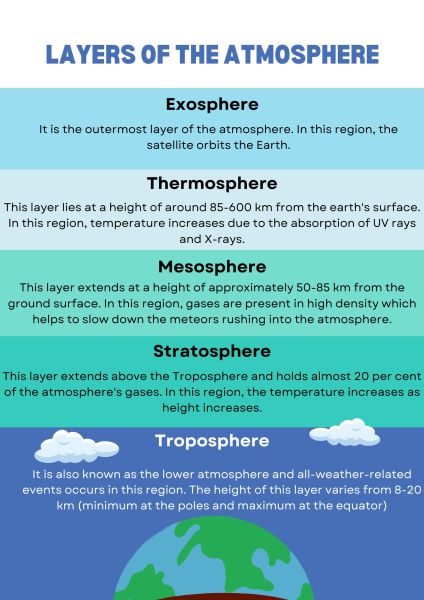
- Ozone (O3) is a reactive gas made up of three oxygen atoms, which can occur both naturally and through human activities. It is found in the upper atmosphere (stratosphere), and the term "ozone hole" refers to regions where the ozone layer has been damaged, allowing more UV radiation to penetrate.
- The stratospheric ozone, located between 15 and 30 km above the Earth's surface, forms naturally when solar ultraviolet light interacts with molecular oxygen (O2). In contrast, ground-level ozone, found in the troposphere, primarily forms through chemical reactions involving volatile organic compounds (VOCs) and nitrogen oxides.
- Ozone depletion occurs in both hemispheres, notably over Antarctica in the Southern Hemisphere and to a lesser extent over the Arctic in the Northern Hemisphere.
- The depletion is more prominent in Antarctica, where the ozone hole is closely linked to stratospheric temperatures. When the temperature drops below -78°C, stratospheric clouds form, which exacerbates the ozone depletion.
- The size of the ozone hole over Antarctica fluctuates yearly, typically forming in August and closing by November or December. Certain industrial activities and consumer products release "halogen source gases" into the atmosphere, weakening the ozone layer by releasing chlorine and bromine.
- For example, air conditioning and refrigeration systems often contain chlorofluorocarbons (CFCs), which eventually break down in the stratosphere, releasing chlorine atoms that damage the ozone.
- Additionally, halons, used in fire extinguishers, contain bromine atoms that also contribute to ozone depletion. The Montreal Protocol plays a crucial role in regulating the global production and consumption of these harmful halogen gases generated by human activity
1.What is the ‘Greenhouse Gas Protocol’? (UPSC 2016)
(a) It is an international accounting tool for government and business leaders to understand, quantify and manage greenhouse gas emissions
(b) It is an initiative of the United Nations to offer financial incentives to developing countries to reduce greenhouse gas emissions and to adopt eco-friendly technologies.
(c) It is an inter-governmental agreement ratified by all the member countries of the United Nations to reduce greenhouse gas emissions to specified levels by the year 2022
(d) It is one of the multilateral REDD+ initiatives hosted by the World Bank
|
Answer (a)
(a) It is an international accounting tool for government and business leaders to understand, quantify and manage greenhouse gas emissions. The Greenhouse Gas Protocol is a widely used international framework to help businesses, governments, and organizations measure and manage their greenhouse gas emissions. It provides standards and tools to assess emissions from various sectors and guide mitigation strategies |
Why is the spread of mpox concerning?
Mpox, first identified in humans in 1970, has gained attention due to the spread of a new variant, Clade Ib. Organisms in a clade share a common evolutionary origin, and for mpox, there are two distinct clades: Clade I and Clade II, with Clade I being more severe. The Clade Ib variant appears to spread more quickly among humans than earlier variants, including transmission through sexual contact. In contrast, Clade Ia primarily originates from animals, as reported by Nature. The new variant has also impacted more women and children in African countries, raising concerns. Scientists are still investigating the factors driving this change in transmission patterns.
What vaccines are being used against mpox?
- Currently, three vaccines are available to combat mpox, all of which are modified versions of vaccinia, a live virus that was also the foundation of the smallpox vaccine. Although mpox is less severe and has lower fatality rates compared to smallpox, its rapid spread is attributed to its animal reservoirs, which smallpox lacked.
- The most widely used vaccine is Modified Vaccinia Ankara (MVA), produced by Bavarian Nordic in Denmark. This vaccine is approved for mpox by both the U.S. Food and Drug Administration (FDA) and the European Medicines Agency (EMA), and has been distributed in the Democratic Republic of Congo (DRC).
- Another vaccine, LC16m8, is manufactured by KM Biologics in Japan and has been approved for mpox by Japan’s regulatory body.
- The third vaccine, ACAM2000, is produced by U.S.-based Emergent BioSolutions and was recently approved for mpox by the FDA.
- In addition to these, new mpox vaccines are under development. BioNTech, a German biotech firm, has a vaccine in early clinical trials. Serum Institute of India (SII) has also announced it is working on an mpox vaccine and expects positive results within a year. Furthermore, the Indian Council of Medical Research (ICMR) has called for pharmaceutical companies and research organizations to collaborate on developing mpox vaccines and diagnostic kits on a royalty basis
Why did Africa face delays in receiving mpox vaccines?
- Mpox vaccines currently available are priced between $50 and $75 per dose, making them prohibitively expensive for many African countries, according to the World Health Organization (WHO). Consequently, these nations usually depend on donations from wealthier countries and vaccine manufacturers or on purchases facilitated by organizations like the Global Alliance for Vaccines and Immunization (Gavi) and UNICEF.
- However, Gavi and UNICEF can only procure vaccines that have received either full approval or an Emergency Use Listing from the WHO. For this approval, vaccine manufacturers must submit data on the efficacy and safety of their products. Some experts have criticized the WHO for being slow to grant these approvals.
- In response, WHO Director-General Tedros Adhanom Ghebreyesus stated that the delay was due to vaccine companies not completing the necessary documentation. He assured that once the paperwork is complete, the WHO would issue approvals within weeks and had already given Gavi and UNICEF permission to begin the procurement process in the meantime
1.Which of the following are the reasons for the occurrence of multi-drug resistance in microbial pathogens in India? (UPSC CSE 2019)
- Genetic predisposition of some people
- Taking incorrect doses of antibiotics to cure diseases
- Using antibiotics in livestock farming
- Multiple chronic diseases in some people
Select the correct answer using the code given below.
(a) 1 and 2
(b) 2 and 3 only
(c) 1, 3 and 4
(d) 2, 3 and 4
|
Answer (b)
|
How are elections conducted in Indian states?
Elections in Indian states begin with seat allocation as determined by the Delimitation Commission, followed by election announcements, nomination processes, campaigning, polling, vote counting, and the constitution of the House. Here's a breakdown of the procedure for electing Members of Parliament (MPs) and Members of Legislative Assemblies (MLAs).
Delimitation Commission:
Articles 82 and 170 of the Indian Constitution mandate that after each Census, the number of seats in the Lok Sabha and State Legislative Assemblies be reassessed, along with the division of constituencies. The process also designates reserved seats for Scheduled Castes (SCs) and Scheduled Tribes (STs) as per the Delimitation Commission’s recommendations, which are followed by the Election Commission of India (ECI).
The Delimitation Commission, established by an Act of Parliament, has conducted this process after every Census, adjusting the population per seat as India's population grew. For example, the Lok Sabha's seats increased from 494 in 1951 to 543 in 1971 to accommodate population growth.
Election Announcement and Nomination:
The ECI allocates seats based on the Delimitation Commission’s findings, reserves constituencies for SCs/STs, and announces the election schedule, including nomination dates, voting, vote counting, and results declaration. Candidates file nominations after voter lists are prepared and dates announced.
Key criteria for nomination include receiving a "ticket" from the political party and completing the necessary documentation, which involves submitting information about background, assets, liabilities, education, and caste. The nomination process can be done both online (via the Suvidha Portal) and offline. Candidates must also take an oath as per the Indian Constitution’s third schedule.
Eligibility Criteria for Contesting Elections:
As per Article 84 of the Constitution, a candidate must be an Indian citizen and at least 25 years old to contest in Lok Sabha elections. Similar provisions apply to State Legislative Assembly elections under Article 173. Additionally, the Representation of the People Act, 1951, requires that the candidate must be an elector in any parliamentary or assembly constituency.
Candidates must also make a security deposit—₹25,000 for general candidates and ₹12,500 for SC/ST candidates for Lok Sabha elections. Assembly candidates deposit ₹10,000, with SC/ST candidates paying ₹5,000. A person can contest elections from any constituency except Assam, Lakshadweep, and Sikkim, and cannot stand from more than two constituencies at once.
Campaigning and Scrutiny:
After the nominations, election officials scrutinize candidates to ensure compliance with legal requirements. Invalid nominations are rejected, and candidates can withdraw their names within a specified time. Once the final candidate list is confirmed, formal campaigning begins. Candidates and political parties promote their agendas and seek voter support through various strategies and tactics to influence voters
1.Consider the following statements: (UPSC 2017)
Which of the statements given above is/are correct?
A. 1 and 2 only
B. 2 only
C. 2 and 3 only
D. 3 only
|
Answer (D)
|
What is the Unified Lending Interface by the RBI?
For Preliminary Examination: Current events of national and international importance
For Mains Examination: GS II & III - Unified Payment interface, NPCI
Context:
The Reserve Bank of India (RBI), as part of its strategy to create digital public infrastructure in the country, has announced that a new technology platform called the Unified Lending Interface (ULI) would be introduced by the Reserve Bank Innovation Hub, Bengaluru which will enable friction-less credit to farmers and MSME borrowers to begin with.
Read about:
What is Unified Lending Interface (ULI)?
What is the National Payment Corporation of India (NPCI)?
Key takeaways:
As part of its initiative to develop digital public infrastructure, the Reserve Bank of India (RBI) has announced the introduction of a new technological platform called the Unified Lending Interface (ULI). This platform, developed by the Reserve Bank Innovation Hub in Bengaluru, aims to facilitate hassle-free credit for farmers and MSME borrowers.
What is ULI?
- The Unified Lending Interface (ULI) is designed to enable the smooth transfer of both financial and non-financial digital data from various service providers to lenders, making credit assessments easier and borrower experiences more streamlined.
- According to Rajesh Bansal, CEO of the Reserve Bank Innovation Hub, this platform supports the consent-based flow of digital information, including state land records. This will significantly reduce the time required for credit evaluation, particularly for smaller, rural borrowers without a credit history.
- ULI's architecture features common and standardized Application Programming Interfaces (APIs) that allow for a 'plug and play' model, facilitating digital access to information from multiple sources. This approach simplifies technical integrations and enables borrowers to access credit more quickly, reducing the need for extensive documentation.
- Lenders will be able to access customer data from diverse sources, including government databases like land records and satellite images, through standardized APIs. FinTech companies will also have the opportunity to connect with multiple lenders via the platform, allowing for better customer insights and service.
How will it work?
- First-time loan applicants, often without a credit history or necessary documentation, usually find it challenging to secure bank loans. With ULI, however, digital credit information can be accessed through a single platform, providing data providers and lenders with the information needed to meet the needs of prospective borrowers.
- ULI not only allows access to data about a loan applicant’s financial activities but also provides financial institutions with this data through a straightforward 'plug and play' connection to the platform. Consequently, loan applicants no longer need to spend weeks gathering documents, as banks, NBFCs, or FinTechs can directly retrieve the necessary information from sources linked to the ULI platform.
- For example, a dairy farmer seeking a loan could have their cash flow assessed from data provided by milk cooperatives, verify land ownership through state land records, and evaluate financial status through farming patterns.
- What was once an unclear area for lenders now becomes transparent, enabling informed business decisions. Using ULI, lenders can quickly determine a loan applicant’s income and creditworthiness, leading to automated decision-making and the rapid approval and disbursement of loans.
- Even tenant farmers, who typically struggle to obtain agricultural loans due to a lack of land titles, will be able to access credit. By tracking the use of funds for purchasing agricultural inputs, the ULI platform can reassure banks about the borrower’s identity and credit use, independent of land ownership.
How did it start?
- On August 10, 2023, the RBI announced the creation of a Public Tech Platform for Frictionless Credit, now known as the ULI. The central bank recognized that as digitalization advances, the data necessary for credit evaluation should be readily available at a single point to facilitate digital credit delivery.
- To address this, a pilot project for digitalizing Kisan Credit Card (KCC) loans under ₹1.6 lakh was launched in September 2022.
- The project began in select districts across Madhya Pradesh, Tamil Nadu, Karnataka, Uttar Pradesh, and Maharashtra, with promising initial results. According to the RBI, the pilot enabled loans to be disbursed directly to borrowers at their doorstep, either through assisted or self-service modes, eliminating the need for paperwork
Follow Up Question
|
Answer (C)
|
- The Green Credits Programme (GCP), launched by the Union government in October 2023, aims to award credits for environmentally beneficial activities. This program, described as a pioneering "innovative market-based mechanism," supports initiatives such as tree planting, water conservation, sustainable agriculture, waste management, air pollution reduction, mangrove conservation, and sustainable infrastructure projects, as well as the identification of eco-friendly products under the Ecomark scheme.
- To date, the Union Ministry of Environment, Forest and Climate Change (MOEFCC) has provided detailed guidelines solely for tree planting under the GCP. While these guidelines appear to promote afforestation, experts have raised concerns about their clarity, suggesting that they may potentially cause more issues than benefits.
- According to the guidelines issued earlier this year, the Indian Council of Forestry Research and Education (ICFRE), Dehradun, will oversee the GCP.
- Entities wishing to invest, including companies, organizations, or individuals, must apply to the ICFRE Director-General and, upon approval, make payments to state forest departments responsible for establishing the plantations. These departments are tasked with selecting "degraded" land of at least 5 hectares for the plantations.
- Investors receive one green credit per tree two years after the successful establishment of the plantation.
- These credits can be used to meet corporate social responsibility (CSR) or environmental, social, and governance (ESG) requirements, or they can be traded to fulfill compensatory afforestation requirements under the Forest (Conservation) Act, 1980, which mandates new plantations in exchange for forestland diversion.
- However, the guidelines have raised several issues. There is no clear information on how project payments will be determined or how calculations will be made. Additionally, the guidelines do not specify the status of green credits if a plantation fails, such as whether they will be revoked or retained.
1.Regarding “carbon credits”, which one of the following statements is not correct? (UPSC CSE 2011)
(a) The carbon credit system was ratified in conjunction with the Kyoto Protocol
(b) Carbon credits are awarded to countries or groups that have reduced greenhouse gases below their emission quota
(c) The goal of the carbon credit system is to limit the increase of carbon dioxide emission
(d) Carbon credits are traded at a price fixed from time to time by the United Nations Environment Programme.
|
Answer (d)
Carbon credits are indeed part of a system ratified by the Kyoto Protocol and are awarded to entities that reduce greenhouse gas emissions below their allocated quota. The goal of the carbon credit system is to limit the increase of carbon dioxide emissions. However, the prices of carbon credits are not fixed by the United Nations Environment Programme (UNEP). Instead, carbon credits are traded on various carbon markets, and their prices are determined by market forces of supply and demand
|
| Subject | Topic | Description |
| History | Modern Indian History | Company rule and Crown rule 1773 - 1947 |
| History | Modern Indian History | Fall of Mughals |
| History | Modern Indian History | Establishment of British rule in India |
| History | Modern Indian History | Economic Policies of the British |
|
UPSC EXAM NOTES will be conducting both Prelims and Mains exams every Sunday as part of the Integrated Mains and Prelims (IMPM) Program. This program provides a comprehensive approach to UPSC exam preparation, ensuring that candidates are well-prepared for both stages of the exam. Program Highlights:
Duration: The IMPM plan is a one-year program, ensuring continuous and structured preparation over 12 months. With regular testing and consistent study guidance, this program is designed to maximize your chances of success in the UPSC exams |
