
INTEGRATED MAINS AND PRELIMS MENTORSHIP (IMPM) 2025 Daily KEY
| Exclusive for Subscribers Daily: Hierarchy in Judiciary System and International Solar Alliance (ISA) for the UPSC Exam? Why are topics like Right to Information Act (RTI) important for both preliminary and main exams? Discover more insights in the UPSC Exam Notes for December 11, 2024 |
🚨 UPSC EXAM NOTES presents the December edition of our comprehensive monthly guide. Access it to enhance your preparation. We value your input - share your thoughts and recommendations in the comments section or via email at Support@upscexamnotes.com 🚨
Critical Topics and Their Significance for the UPSC CSE Examination on December 11, 2024
Daily Insights and Initiatives for UPSC Exam Notes: Comprehensive explanations and high-quality material provided regularly for students
The code of conduct judges need to follow
For Preliminary Examination: Collegium System, Supreme Court, High Court, NJAC vs Collegium
For Mains Examination: GS II - Indian Polity & Governance
Context:
The comments made by Allahabad High Court judge, Justice Shekhar Kumar Yadav, against the Muslim community at an event organised by the Vishwa Hindu Parishad on December 8, has drawn public flak. Justice Yadav has said that the country would function as per the wishes of the majority living in Hindustan.
Read about:
Hierarchy in Judiciary System
Supreme Court
High Court
Key takeaways:
Judicial Ethics
- Judicial power stems from the public’s trust in the judiciary’s authority and the integrity of its judges. Over time, the judiciary has codified standards for judicial conduct, both in and out of the courtroom. The 'Restatement of Values of Judicial Life,' adopted by the Supreme Court in 1997, is a key code that governs judicial behavior.
- The first rule of this code stresses that judges should act in a way that reinforces public confidence in the impartiality of the judiciary.
- Any behavior that undermines this trust, whether in a judge's official or personal capacity, must be avoided. Unfortunately, Justice Yadav’s actions appear to contradict this, as the code also mandates that judges remain aware of their public visibility at all times.
- The Bangalore Principles of Judicial Conduct (2002) set out a comprehensive framework for judicial conduct, requiring judges to conduct themselves in a manner that enhances public trust in their impartiality and independence.
- While these guidelines affirm a judge’s right to freedom of expression, they also stress the need to preserve the dignity and impartiality of the judicial office and recognize society’s diversity.
Judicial Impeachment Process
- According to the Constitution, judges of the Supreme Court and High Courts can be removed by the President following a successful impeachment process on grounds of proven misbehavior or incapacity.
- A motion for the removal of a constitutional court judge requires the support of a special majority in the House, which includes two-thirds of the members present and voting.
- The Constitution limits discussions about judicial misconduct to motions for removal and forbids such discussions in other contexts.
- However, the Supreme Court has developed an internal procedure that allows judges facing serious allegations to opt for voluntary retirement, avoiding the public embarrassment of impeachment.
- This procedure, established in 1999 and made public in 2014, provides a pathway for addressing complaints against High Court judges. Complaints can be submitted to the President, Chief Justice of India (CJI), or the Chief Justice of the concerned High Court.
- If necessary, the complaint is escalated to the CJI, who can then appoint a fact-finding committee to investigate the allegations.
- If the committee finds sufficient grounds for removal, the CJI can ask the judge to retire. Should the judge refuse, the matter is forwarded to the President and the Prime Minister, paving the way for impeachment
Follow Up Question
|
Answer (A)
In India, judicial review refers to the power of the judiciary to examine and determine whether legislative and executive actions are consistent with the Constitution. The judiciary has the authority to invalidate laws and executive actions that are found to be unconstitutional. This power is a key aspect of the system of checks and balances in the Indian constitutional framework. This was established by the Supreme Court of India in several landmark cases such as Kesavananda Bharati v. State of Kerala (1973) and Minerva Mills v. Union of India (1980) |
What is the extent of the global share of solar energy?
For Preliminary Examination: Solar radiation, photovoltaic (PV) cells, solar thermal energy, National Solar Mission (NSM), Pradhan Mantri Kisan Urja Suraksha evam Utthaan Mahabhiyan (PM-KUSUM)
For Mains Examination: Understanding the economic, social, and environmental impacts of solar energy, challenges faced by India in scaling solar energy, and India’s role in global solar energy initiatives like ISA.
Context:
On November 5, the World Solar Report 2024 by the International Solar Alliance (ISA) was released. From 1.22 GW in 2000, the world’s solar capacity has surged to 1,419 GW in 2023, charting a CAGR of about 36%. Today, solar capacity represents three-quarters of all renewable capacity additions worldwide.
Read about:
International Solar Alliance (ISA)
Key takeaways:
Government Initiatives and Policies
- National Solar Mission: Launched to promote solar power generation, with an ambitious target of generating 100 GW of solar power by 2022.
- Jawaharlal Nehru National Solar Mission (JNNSM): Focuses on increasing solar power generation capacity in India.
- State-Level Policies: Several states in India offer incentives for installing solar power systems.
- Solar Energy Corporation of India (SECI): Plays a key role in implementing solar energy projects across India.
- Atmanirbhar Bharat and Solar Manufacturing: The government is focusing on reducing dependency on imported solar panels and increasing domestic solar manufacturing through the PLI (Production-Linked Incentive) scheme.
Solar Energy Applications
- Power Generation: Solar power plants (both utility-scale and rooftop installations) to generate electricity.
- Solar Pumping for Irrigation: Using solar-powered pumps for irrigation, especially in rural areas where access to electricity is limited.
- Solar Heating: Used in water heaters, industrial heating, and other thermal applications.
- Solar Rural Electrification: Solar power systems to provide electricity in off-grid and remote areas, promoting sustainable development.
Solar Energy Technologies and Advancements
- Quantum Dot Solar Cells: Next-generation technology promising higher efficiency.
- Perovskite Solar Cells: Emerging technology that could lower costs and improve efficiency.
- Bifacial Solar Panels: Panels that capture sunlight on both sides for better energy efficiency.
- Solar Energy Storage: Advancements in battery technology, such as lithium-ion and solid-state batteries, to store solar energy for later use.
| Category | China | U.S.A | Japan / Germany / India | Brazil / Australia / Italy / Spain | Global Overview |
| Share of Global Solar PV Installed Capacity (2023) | 43% (609 GW) | 10% (137.73 GW) | 5-6% | ~2% | Total global solar PV capacity distributed. |
| Solar PV Manufacturing (2023) | - | - | - | - | Manufacturing capacity nearly doubled. |
| Share in Component Manufacturing (2023) | 97% (wafers) | - | - | - | China leads: 97% (wafers), 89% (cells), 83% (modules). |
Key Objectives of ISA:
- Promoting Solar Energy: The ISA aims to increase the use of solar energy in its member countries, especially in developing nations.
- Reducing Dependency on Fossil Fuels: By promoting solar energy, the ISA seeks to reduce reliance on fossil fuels and mitigate climate change.
- Attracting Investments: The alliance works to attract investments in solar energy projects, particularly in developing countries.
- Technological Innovation: The ISA fosters research and development in solar technologies to reduce costs and improve efficiency.
- Capacity Building: The organization provides technical and financial support to member countries to build capacity in solar energy
1.Which of the following statements regarding the International Solar Alliance (ISA) is/are correct?
- The ISA is a coalition of solar-rich countries aimed at promoting solar energy globally.
- The ISA was established under the framework of the United Nations.
- The ISA’s headquarters is located in New Delhi, India.
- The ISA focuses on reducing the cost of solar energy and enhancing cooperation between member countries.
Select the correct answer from the options below:
A. 1 and 3 only
B. 1, 3, and 4 only
C. 1, 2, 3, and 4
D. 2 and 4 only
|
Answer (B)
Analyzing the options: A. 1 and 3 only - Incorrect (statement 3 is wrong) B. 1, 3, and 4 only - Incorrect (statement 3 is wrong) C. 1, 2, 3, and 4 - Incorrect (statements 2 and 3 are wrong) D. 2 and 4 only - Incorrect (statement 2 is wrong) |
The Right to Information (RTI) Act, 2005 is a landmark Indian legislation that empowers citizens to access information from public authorities, thereby promoting transparency and accountability in governance. The Act allows individuals to request information from government bodies, helping curb corruption and ensuring that citizens are informed about government activities and decisions.
Key Features of the RTI Act:
- The RTI Act grants citizens the right to request information from any "public authority," which includes government departments, ministries, public sector companies, and institutions that receive substantial government funding. Citizens can seek details related to policies, projects, public spending, and any other matter of public interest.
- Public authorities are obligated to respond to RTI applications and provide the requested information within a specified timeframe, typically 30 days. If the information concerns a person’s life or liberty, the information must be provided within 48 hours.
Exemptions:
Certain information is exempt from disclosure under the RTI Act. This includes:
- Matters related to national security and sovereignty.
- Personal information, unless it is related to public activity or interest.
- Information that could harm relations with foreign states, lead to the breach of parliamentary privileges, or endanger the life or safety of any individual.
- Cabinet papers and certain law enforcement or investigative records
|
Answer (C)
This case is related to the Right to Information (RTI) Act, 2005. In the Namit Sharma v/s Union of India case, the Supreme Court of India dealt with the qualifications and appointment processes of the Information Commissioners under the RTI Act. The judgment highlighted the need for transparency and qualifications of the commissioners to ensure the effective implementation of the RTI Act
|
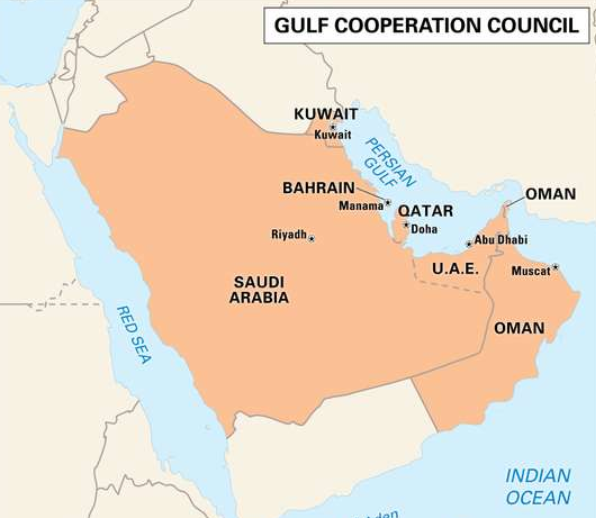
The Gulf Cooperation Council (GCC) is a regional political and economic union consisting of six member states: Bahrain, Kuwait, Oman, Qatar, Saudi Arabia, and the United Arab Emirates. Established in 1981, the GCC aims to promote economic integration, enhance political cooperation, and address common challenges among its members in the context of regional stability and security.
Key Objectives:
- Economic Cooperation: Facilitate trade and investment among member states, aiming for a unified economic framework.
- Security Collaboration: Enhance collective security measures to address regional threats, including counterterrorism and defense initiatives.
- Cultural Exchange: Promote cultural ties and people-to-people connections across the Gulf region.
Major Initiatives:
- Common Market: Efforts to establish a single market allowing for the free movement of goods, services, and labor.
- Joint Defense Programs: Collaborative military exercises and initiatives to strengthen defense capabilities against external threats.
- Sustainable Development: Initiatives aimed at tackling climate change, energy sustainability, and food security
Strategic Ties Between India and the Gulf Cooperation Council (GCC)
India and the Gulf Cooperation Council (GCC) have forged robust strategic ties, driven by shared economic interests, security concerns, and cultural connections. The relationship encompasses various sectors, including trade, defense, energy, and technology, reflecting the growing interdependence between India and GCC member states—Bahrain, Kuwait, Oman, Qatar, Saudi Arabia, and the UAE.
Key Aspects of Strategic Ties:
-
Economic Collaboration:
- Trade Relations: Bilateral trade has seen significant growth, with India being one of the largest trading partners for the GCC. In 2023-24, bilateral trade reached approximately $161.82 billion.
- Investment Opportunities: GCC countries are major sources of Foreign Direct Investment (FDI) in India, contributing over $24 billion between April 2000 and June 2024. Indian businesses have also established a strong presence in the GCC, further enhancing economic ties.
-
Energy Security:
- The GCC is vital for India’s energy needs, supplying a substantial portion of its oil and gas imports. While efforts are underway to diversify energy sources, GCC nations remain key suppliers, especially Saudi Arabia and the UAE.
- Collaborations in renewable energy and sustainable practices are also emerging as priorities, aligning with global shifts towards cleaner energy solutions.
-
Defense and Security Cooperation:
- Joint military exercises, training programs, and counterterrorism initiatives have strengthened defense ties between India and GCC countries. This cooperation is crucial given the regional security challenges, including terrorism and geopolitical tensions.
- The changing dynamics in the Middle East, including conflicts in neighboring regions, have underscored the importance of collaborative security measures.
-
Cultural and People-to-People Connections:
- The GCC is home to one of the largest Indian expatriate communities, fostering cultural exchange and social ties. Indian nationals significantly contribute to the economies of GCC countries, enhancing the bilateral relationship.
- Initiatives aimed at promoting cultural understanding, tourism, and educational exchanges further solidify these ties.
-
Addressing Global Challenges:
- India and the GCC share common goals in tackling pressing global issues such as climate change, food security, and digital transformation. Collaborative efforts in technology, research, and innovation are increasingly prioritized.
- Both parties recognize the need for joint responses to emerging challenges in the evolving geopolitical landscape.
Which of the following statements about the Gulf Cooperation Council (GCC) is/are correct?
- The GCC was established in 1981 with the aim of fostering economic, political, and security cooperation among its member states.
- The GCC consists of six member countries: Bahrain, Kuwait, Oman, Qatar, Saudi Arabia, and Iraq.
- The GCC has initiated efforts towards establishing a common market and monetary union among its members.
Select the correct answer using the code given below:
|
Answer (b)
|
The unemployment rate for individuals aged 15 and above remained steady at 3.2% from July 2023 to June 2024, according to the annual labour force survey report released on Monday.
Unemployment rate (UR) refers to the percentage of unemployed individuals within the labour force. The report noted a slight drop in the UR for males, from 3.3% in the period July 2022 – June 2023 to 3.2% in July 2023 – June 2024, while for females, the rate rose from 2.9% to 3.2% over the same timeframe.
Labour Force Participation Rate (LFPR)
The Labour Force Participation Rate (LFPR) for individuals aged 15 years and above was 60.1% in the period July 2023 – June 2024, an increase from 57.9% in the previous year. The LFPR for males and females was 78.8% and 41.7%, respectively.
LFPR refers to the proportion of individuals in the labour force (either working or actively seeking work) within the overall population. For females in the same age group, LFPR rose from 37% in the period July 2022 – June 2023 to 41.7% in July 2023 – June 2024. The male LFPR saw a smaller increase, from 78.5% to 78.8% in the same timeframe.
Worker Population Ratio (WPR)
The Worker Population Ratio (WPR) in usual status stood at 58.2% during July 2023 – June 2024, up from 56% in the previous year. For males, WPR was 76.3%, and for females, it reached 40.3%. The WPR for females aged 15 and above increased from 35.9% during July 2022 – June 2023 to 40.3% in July 2023 – June 2024.
WPR refers to the percentage of employed individuals within the overall population.
Periodic Labour Force Survey (PLFS)
Recognizing the need for frequent labour force data, the National Sample Survey Office (NSSO) introduced the Periodic Labour Force Survey (PLFS) in April 2017.
Objectives of the PLFS
The PLFS aims to achieve two key goals:
-
To estimate key employment and unemployment indicators, such as the Worker Population Ratio, Labour Force Participation Rate, and Unemployment Rate, on a quarterly basis for urban areas using the ‘Current Weekly Status’ (CWS).
-
To provide annual estimates of employment and unemployment indicators in both rural and urban areas using both the ‘Usual Status’ and ‘CWS’ metrics. Six annual reports have already been published, based on data from July 2017 – June 2018 to July 2022 – June 2023.
The seventh annual report, covering July 2023 – June 2024, is now being released by the NSSO based on data from the Periodic Labour Force Survey
Types of LFPR:
-
- Overall LFPR: Reflects the total percentage of people working or seeking work in the population.
- Gender-specific LFPR: Differentiates between male and female participation in the workforce.
- Age-specific LFPR: Focuses on particular age groups, such as those 15 years and above
|
Answer (B)
However, the drop in female LFPR cannot be fully explained by these factors alone. Other reasons, such as the lack of suitable employment opportunities, social norms, and the burden of unpaid domestic work, also play significant roles. Thus, while both statements are true, (R) does not completely explain (A). |
What is Environmental Impact Assessment (EIA)?
The ongoing debate between development and environmental conservation centers on the challenge of balancing economic growth with the need to protect natural ecosystems. This is particularly significant in developing countries like India, where efforts to improve living standards must be reconciled with the risks of environmental degradation and climate change.
Environmental Impact Assessment (EIA) has emerged as a tool to help countries navigate this delicate balance, ensuring that economic growth is achieved without compromising environmental sustainability. EIA is a structured approach used to assess the potential environmental, social, and economic impacts of a proposed project before it receives approval. Its main goals are to anticipate and evaluate both positive and negative consequences of development, helping decision-makers take informed actions by offering a comprehensive analysis of the project. Additionally, it supports sustainable growth by identifying potential harmful effects early in the planning phase and suggesting alternatives or mitigation strategies.
Public participation is also a key component of EIA, as it allows citizens to voice their concerns through public consultations regarding a project.
Evolution of EIA in India
EIA originated in the U.S. in 1969, but in India, it was first introduced in 1976 when the Planning Commission directed the Department of Science & Technology to evaluate the environmental impacts of river valley projects. Initially, India's EIA process focused on large infrastructure projects like dams and power plants. Over time, it expanded to include a broader range of projects such as industrial operations, mining, and urban development. In 1986, EIA became legally mandatory under the Environment (Protection) Act, requiring large projects to obtain Environmental Clearance (EC).
The Environmental Impact Assessment Notification, 2006 provided detailed guidelines for EIA implementation in India and serves as the key legal document for granting environmental approval for projects.
EIA Process in India
The EIA Notification of 2006 classifies projects based on their environmental impact into two categories: Category ‘A’ and Category ‘B’. Category 'A' projects require national-level appraisal and mandatory environmental clearance without undergoing the screening process. These projects are reviewed by the Impact Assessment Agency (IAA) and the Expert Appraisal Committee (EAC).
Category ‘B’ projects are subjected to a screening process and are further divided into B1 and B2 categories. Category B1 projects are appraised at the state level by the State Level Environment Impact Assessment Authority (SEIAA) and the State Level Expert Appraisal Committee (SEAC). In contrast, Category B2 projects are exempt from the Environmental Clearance (EC) requirement
1.With reference to the Environmental Impact Assessment (EIA) in India, consider the following statements:
- EIA was made statutory in India under the Environment (Protection) Act, 1986.
- The EIA Notification of 2006 classifies projects into Category ‘A’ and Category ‘B’ based on their potential environmental impacts.
- Category ‘B’ projects are appraised exclusively at the national level by the Expert Appraisal Committee (EAC).
Which of the above statements is/are correct?
A. 1 and 2 only
B. 1 and 3 only
C. 2 and 3 only
D. 1, 2, and 3
|
Answer (A)
|
| Subject | Topic | Description |
| History | Modern Indian History | Company rule and Crown rule 1773 - 1947 |
| History | Modern Indian History | Fall of Mughals |
| History | Modern Indian History | Establishment of British rule in India |
| History | Modern Indian History | Economic Policies of the British |
|
UPSC EXAM NOTES will be conducting both Prelims and Mains exams every Sunday as part of the Integrated Mains and Prelims (IMPM) Program. This program provides a comprehensive approach to UPSC exam preparation, ensuring that candidates are well-prepared for both stages of the exam. Program Highlights:
Duration: The IMPM plan is a one-year program, ensuring continuous and structured preparation over 12 months. With regular testing and consistent study guidance, this program is designed to maximize your chances of success in the UPSC exams |
