
INTEGRATED MAINS AND PRELIMS MENTORSHIP (IMPM) 2025 Daily KEY
| Exclusive for Subscribers Daily: Italy - India realtionship and State Food Safety Index (SFSI) for the UPSC Exam? Why are topics like Non Returning Indian (NRI) important for both preliminary and main exams? Discover more insights in the UPSC Exam Notes for November 26, 2024 |
🚨 UPSC EXAM NOTES presents the November edition of our comprehensive monthly guide. Access it to enhance your preparation. We value your input - share your thoughts and recommendations in the comments section or via email at Support@upscexamnotes.com 🚨
Critical Topics and Their Significance for the UPSC CSE Examination on November 26, 2024
Daily Insights and Initiatives for UPSC Exam Notes: Comprehensive explanations and high-quality material provided regularly for students
- In this era of 'polycrisis,' Italy and India share mutual interests as well as common challenges in the Indo-Mediterranean region. This area is crucial for global trade, particularly for Italy, which is the world's sixth-largest exporter.
- Additionally, it plays an important role in digital connectivity, with the Blue-Raman submarine data cables soon linking Genoa and Mumbai.
- Issues such as piracy in the Red Sea, conflicts in Gaza and Lebanon, and the impact of Russia’s aggression against Ukraine on agricultural and oil trade demand collaborative efforts to ensure a free, open, and prosperous Indo-Mediterranean.
- As a result, Italy has intensified its security and defense engagement in the Indian Ocean and West Asia. In addition to joining the Group of Friends of UNCLOS in 2021, Italy is the second-largest contributor to the EU Naval Force (EU NAVFOR) Atalanta and the European Maritime Awareness in the Strait of Hormuz (EMASoH).
- From February 2024, Italy has taken a leading role in the EU military operation, EUNAVFOR ASPIDES, which safeguards freedom of navigation in the Red Sea, Indian Ocean, and Gulf.
Naval Presence
- Italy has also increased its naval presence in India. After joining the Indian Ocean Region's Information Fusion Centre in March 2023, the patrol ship ITS Francesco Morosini visited Mumbai in August 2023.
- Currently, the Italian Carrier Strike Group, comprising the aircraft carrier ITS Cavour and frigate ITS Alpino, is stationed in Goa.
- The tall ship ITS Amerigo Vespucci, the training vessel of the Italian Navy, is expected to visit Mumbai from November 28 to December 2. An "Italy village" is also planned, offering cultural, fashion, and culinary events, as well as conferences and exhibitions.
- The ITS Cavour, built by the Italian shipyard Fincantieri and in service since 2009, is a short take-off and vertical landing ship.
- This versatile vessel can project maritime power, provide logistical support, and assist in environmental and humanitarian missions.
- During its stay, it is hosting PASSEX exercises to enhance mariner skills and strengthen interoperability, and a workshop on defense industry cooperation.
- Additionally, as part of the "Operation Smile" initiative organized by the Smile House Foundation, Italy, the ship is serving as a hospital where Indian and Italian doctors are performing surgeries on children with facial deformities.
Defense Ties
- On a bilateral level, Italy and India's defense cooperation is based on an agreement signed in October 2023, which lays the foundation for expanding ties in areas such as research, industrial cooperation, maritime domain awareness, information sharing, and military-related environmental issues. This cooperation is reinforced by regular discussions like the Italy-India Military Cooperation Group meeting, held in March in New Delhi.
- In terms of defense production, Italy is an important partner for India. Two Italian companies, Leonardo and Fincantieri, are among the top 50 defense firms globally (SIPRI 2022), and other firms like Beretta, Elettronica, and KNDS possess advanced technical expertise.
- Italian defense companies have been open to joint ventures and co-production in recent years, with Fincantieri partnering with Cochin Shipyard since 2020 and Elettronica signing a Memorandum of Understanding with Bharat Electronics Limited in 2019. These partnerships align with India's 'Make in India' initiative and address the growing needs of the Indian armed forces.
- Italy also views India as a key partner in the development of the Indian Ocean region, from East Africa to India's coastlines. Both countries actively promote Africa in international forums and jointly advocated for the African Union's inclusion in the G20.
- During the Italy-Africa Summit in January, Italy introduced the Mattei Plan, a new initiative aimed at fostering a mutually beneficial partnership for important projects across Africa, mobilizing €5.5 billion in public investments.
- Among the first countries selected for this plan are Egypt, Ethiopia, Kenya, and Mozambique, all located near the Indo-Mediterranean area.
- The goal is to engage with partners to implement sustainable projects that promote economic and social development in Africa.
- Simultaneously, Italy has supported the India-Middle East-Europe Economic Corridor (IMEC). Amid ongoing conflicts in Gaza and rising tensions in West Asia, Italy sees IMEC as part of a long-term strategy for shared prosperity in the region.
- The corridor’s railway links, ports, logistics, and customs systems can foster peace and trade that are vital for both Italy and India.
People-to-People Ties
Italy values its friendship with India, hosting the second-largest Indian diaspora within the EU. As a reliable economic and defense partner, Italy is the second-largest manufacturing country in Europe and a key security provider as part of the EU and NATO. The enduring strength of this relationship lies in the deep-rooted people-to-people connections between the two civilizations, which continue to grow through cultural exchanges, integration, and business achievements
-
Individuals planning to start a food business must either register or obtain a license from the Food Safety and Standards Authority of India (FSSAI). This authority was established under the Food Safety and Standards Act (FSSA) to oversee and develop regulations for the processing, distribution, sale, and importation of food to guarantee that it is “safe and wholesome.”
-
According to the Food Safety and Standards (Licensing and Registration of Food Businesses) Rules, 2011 (established under the FSSA), “Petty Food Manufacturers” such as small-scale food enterprises, hawkers, vendors, and stall operators are mandated to register with the FSSAI.
-
Upon successful registration, the Petty Food Manufacturer is issued a registration certificate and a photo identity card, which must be displayed prominently at all times within their premises, vehicle, or cart.
-
Additionally, operators of larger food enterprises are required to obtain a license from the food authority. This license must also be displayed prominently at all times within the location where the Food Business Operator conducts their operations. In both instances, the identity of the owner and the establishment's location must be clearly shown (via photo ID and FSSAI license).
-
According to Section 63 of the FSSA, any operator running a food business without a license may face up to six months in prison and a fine of up to ₹5 lakh. Section 94(1) of the FSSA states: “Subject to the powers of the Central Government and the Food Authority to make rules and regulations respectively, the State Government may, after prior publication and with the approval of the Food Authority, create rules to fulfill the functions and duties assigned to the State Government and the State Commissioner of Food Safety under this Act and its associated rules and regulations.”
-
Section 94(2) outlines the areas on which state governments can establish rules. Under Section 94(2)(a), states can formulate regulations regarding the “other functions of the Commissioner of Food Safety under clause (f) of sub-section (2) of section 30.”
-
The Commissioner of Food Safety, appointed by the state government as per Section 30, is responsible for ensuring the “efficient implementation” of the FSSA along with its rules and regulations. Sections 30(2)(a) to (e) detail specific responsibilities of the Commissioner, such as conducting surveys, organizing training programs, and approving prosecutions for violations. Section 30(2)(f) grants the Commissioner a broader mandate for “such other functions as the State Government may, in consultation with the Food Authority, prescribe.”
-
Furthermore, Section 94(2)(c) permits the state government to formulate rules for “any other matter which is required to be, or may be prescribed or in respect of which provision is to be made by rules by the State Government.” Section 94(3) mandates that the rule be presented to the state legislature for approval “as soon as possible.”
|
Answer (C)
|
Who is an Overseas Citizen of India?
For Preliminary Examination: Current events of national and international importance
For Mains Examination: GS II - Indian Polity & Governance
Context:
In the wake of several Overseas Citizen of India (OCI) card holders complaining about being reclassified as “foreigners”, the Ministry of External Affairs on Saturday (September 28) said that there were no changes made to the OCI rules
Read about:
Who is Non Returning Indian (NRI)?
Who is Overseas Citizen of India (OCI)?
Person of Indian Interest
Key takeaways:
- The Overseas Citizen of India (OCI) scheme, launched in August 2005, was designed for the registration of Persons of Indian Origin (PIOs) who were either Indian citizens as of January 26, 1950, or became eligible to acquire Indian citizenship after that date. When introducing the bill, Home Minister LK Advani explained that the aim was to provide dual citizenship to the Indian diaspora.
- OCI cardholders, who generally hold foreign passports, are granted a multiple-entry, multi-purpose visa that allows lifelong visits to India without the need to register with the local police, regardless of the length of their stay.
- According to government data, by 2023, over 4.5 million OCI cardholders were registered across 129 countries. The United States had the highest number at 1.68 million, followed by the UK (934,000), Australia (494,000), and Canada (418,000).
- Initially, OCI cardholders were given the same status as Non-Resident Indians (NRIs) in areas such as economic, financial, and educational rights, except in the ownership of agricultural or plantation property. NRIs are Indian citizens residing permanently abroad.
Recent Changes to OCI Rules
- On March 4, 2021, the Ministry of Home Affairs issued an updated notification with new rules for OCI cardholders, which are still in effect today. These updates mandate that OCI cardholders must obtain permission or permits to visit protected areas in India, similar to the rules that apply to foreign nationals visiting places like Jammu & Kashmir and Arunachal Pradesh.
- Additionally, new restrictions were introduced, requiring OCI cardholders to secure special permits for conducting research, engaging in missionary or journalistic activities, or visiting any region classified as “protected,” “restricted,” or “prohibited.”
- The notification also aligned OCI cardholders with foreign nationals under the Foreign Exchange Management Act (FEMA), 2003, in terms of their rights in the economic, financial, and educational sectors. This marked a change from the previous position, where OCI cardholders enjoyed the same benefits as NRIs in these areas.
Previous Amendments to OCI Rules
- This 2021 notification replaced earlier amendments issued on April 11, 2005, January 5, 2007, and January 5, 2009. The 2005 order granted lifelong, multiple-entry visas and exempted OCI cardholders from registering with the FRRO, while also giving them NRI-like access to most economic, financial, and educational opportunities, excluding agricultural and plantation properties.
- In 2007, new clauses were added, allowing OCI cardholders to be treated like NRIs for inter-country adoptions, domestic airfare rates, and entry fees at wildlife sanctuaries.
- The 2009 amendments further extended parity with NRIs to entry fees at historical monuments, museums, and access to professions such as doctors, architects, and lawyers, as well as eligibility for national-level exams like PMT.
Restrictions and Ineligibility for OCI
- Certain individuals are ineligible for OCI cards. This includes anyone whose parents or grandparents were citizens of Pakistan or Bangladesh. However, a foreign-origin spouse of an Indian citizen or OCI cardholder, provided their marriage has been registered and has lasted for at least two years, can apply for an OCI card. Additionally, active or retired foreign military personnel are not eligible for OCI status.
- OCI cardholders do not have voting rights and cannot serve in the Indian Parliament or state legislatures.
- They are also ineligible for key constitutional positions, such as President, Vice President, or Judge of the Supreme Court or High Courts, and typically cannot hold employment in Indian government institutions
Follow Up Question
1.Consider the following statements: (2018)
Which of the statements given above is/are correct?
(a) 1 only
(b) 2 only
(c) Both 1 and 2
(d) Neither 1 nor 2
|
Answer (D)
|
Trade deficit widens India’s Q1FY25 CAD to $9.7 billion
For Preliminary Examination: Current account deficit, fiscal deficit
For Mains Examination: GS III - Indian Economy
Context:
India’s current account deficit (CAD) widened marginally to $9.7 billion (1.1% of GDP) in Q1 FY25 from $8.9 billion (1% of GDP) in the year-earlier period and a surplus of $4.6 billion (0.5% of GDP) in Q4FY24, as per Reserve Bank of India (RBI) data
Read about:
What is the Current account deficit (CAD)?
What is Fiscal Deficit?
Key takeaways:
- India's current account deficit (CAD) slightly increased to $9.7 billion (1.1% of GDP) in Q1 FY25, compared to $8.9 billion (1% of GDP) in the same quarter last year and a surplus of $4.6 billion (0.5% of GDP) in Q4 FY24, according to data from the Reserve Bank of India (RBI).
- The RBI attributed the year-on-year rise in CAD primarily to an increase in the merchandise trade deficit, which grew to $65.1 billion in Q1 FY25 from $56.7 billion in Q1 FY24.
- Net services receipts rose to $39.7 billion in Q1 FY25 from $35.1 billion, while private transfer receipts, largely reflecting remittances from Indians working abroad, increased to $29.5 billion from $27.1 billion.
- Net foreign direct investment (FDI) inflows rose to $6.3 billion in Q1 FY25, up from $4.7 billion the previous year
A fiscal dilemma refers to the challenging situation that arises when a government faces competing objectives or constraints in managing its public finances. This typically involves the need to balance between stimulating economic growth, controlling public debt, maintaining fiscal discipline, and addressing social welfare needs.
Governments may encounter fiscal dilemmas in situations such as:
-
Deficit vs. Austerity: Governments may need to choose between running a budget deficit to stimulate the economy through spending, or implementing austerity measures to reduce public debt, which may slow down growth.
-
Welfare vs. Investment: Balancing immediate social welfare spending, like subsidies or pensions, with long-term investments in infrastructure or education that drive sustainable growth can create a fiscal dilemma.
-
Revenue Generation vs. Public Support: Increasing taxes to generate revenue might be necessary for fiscal sustainability, but it can also face resistance from the public and harm political popularity.
-
Short-term vs. Long-term Fiscal Goals: Governments might face pressure to implement short-term policies for immediate relief or electoral gains, which could undermine long-term fiscal stability.
|
Answer (C)
|
For Preliminary Examination: Current events of national and international importance
For Mains Examination: GS III - Science & Technology
Context:
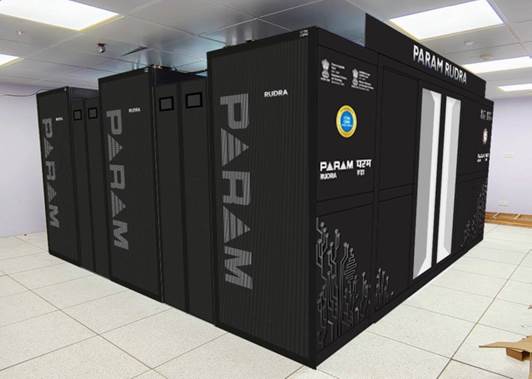
The inauguration of the PARAM Rudra supercomputer at the S.N. Bose National Centre for Basic Sciences (SNBNCBS) in Kolkata by the Prime Minister Shri Narendra Modi brings high performance computing facilities to the Eastern Region, benefitting around 10-12 institutions and thousands of researchers working in this region
Read about:
What is Supercomputer?
Significance of PARAM Rudra
Key takeaways:
- Developed as part of the National Supercomputing Mission (NSM), the PARAM Rudra series, under the leadership of the Ministry of Electronics and IT (MeitY) and the Department of Science and Technology (DST), is set to transform research in areas like advanced materials, high-energy physics, earth sciences, and cosmology. With installations in Pune and Delhi, this series represents a major leap forward in India's scientific and technological capabilities.
- The PARAM Rudra supercomputer at the S.N. Bose Centre, an autonomous institute under DST, will provide critical high-performance computing (HPC) resources to institutions in Eastern India.
- This facility will enable collaboration among researchers from institutions such as Bose Institute, Saha Institute of Nuclear Physics (SINP), Indian Institute of Chemical Biology (IICB), and IISER Kolkata, allowing scientists to perform complex simulations and calculations more efficiently, thereby accelerating the resolution of intricate scientific challenges.
- The 838 TFLOPS system is set to significantly boost research across a range of scientific fields by offering advanced HPC capabilities.
- In materials science, it will accelerate high-throughput computational materials design, expediting the discovery and development of new materials. In Earth science, it will support computational modeling of planetary and Earth materials, combining first-principles calculations with LHDAC (Laser Heated Diamond Anvil Cell) experiments.
- In biological sciences, machine learning will be leveraged to study biomolecular functions, aiding in disease research and treatment development. In chemical science, the supercomputer will help explore molecular electronic structures, advancing quantum chemistry research and improving the understanding of chemical reactivity.
- Additionally, the system will be essential for high-energy astrophysics research, offering insights into the universe's fundamental properties and enabling studies on dense matter, as seen in the ALICE experiment at CERN. It will also facilitate modeling the universe's structure and dynamics, including the interplay of gravitational waves, high-energy photons, and astrophysical neutrinos.
- The benefits of PARAM Rudra extend beyond scientific research. As noted by the Prime Minister, these high-performance computing technologies will bolster India’s global competitiveness in fields like space exploration and semiconductor manufacturing, while also impacting daily life.
- These capabilities are expected to play a pivotal role in disaster management, economic growth, and enhancing business operations, contributing to India’s progress in Industry 4.0.
- Moreover, PARAM Rudra will significantly enhance India's weather and climate prediction abilities, further showcasing its broad utility.
- The PARAM Rudra supercomputer reflects India's dedication to achieving self-reliance in HPC. By investing in such cutting-edge technologies, the country is equipping its scientific community with the tools to drive innovation and contribute globally.
- The inauguration of this supercomputer marks a key milestone in India's scientific journey, where advanced computational power will not only fuel research but also improve the lives of its citizens.
- As India continues to prioritize technological progress, the PARAM Rudra series will play an integral role in shaping the nation's future in science, industry, and beyond
Follow Up Question
1.Which of the following statements regarding supercomputers in India is/are correct?
- The National Supercomputing Mission (NSM) was launched to enhance India's capacity in high-performance computing.
- PARAM Rudra is a supercomputer developed by the Indian Space Research Organisation (ISRO) for space exploration.
- The Centre for Development of Advanced Computing (C-DAC) is the implementing agency for supercomputer development under NSM.
Select the correct answer using the code given below:
a) 1 and 2 only
b) 2 and 3 only
c) 1 and 3 only
d) 1, 2, and 3
|
Answer (c)
|
| Subject | Topic | Description |
| History | Modern Indian History | Company rule and Crown rule 1773 - 1947 |
| History | Modern Indian History | Fall of Mughals |
| History | Modern Indian History | Establishment of British rule in India |
| History | Modern Indian History | Economic Policies of the British |
|
UPSC EXAM NOTES will be conducting both Prelims and Mains exams every Sunday as part of the Integrated Mains and Prelims (IMPM) Program. This program provides a comprehensive approach to UPSC exam preparation, ensuring that candidates are well-prepared for both stages of the exam. Program Highlights:
Duration: The IMPM plan is a one-year program, ensuring continuous and structured preparation over 12 months. With regular testing and consistent study guidance, this program is designed to maximize your chances of success in the UPSC exams |
