
INTEGRATED MAINS AND PRELIMS MENTORSHIP (IMPM) 2025 Daily KEY
| Exclusive for Subscribers Daily: Line of Actual Control and Old Pension Scheme for the UPSC Exam? Why are topics like Gulf Cooperation Council (GCC) and South China Sea important for both preliminary and main exams? Discover more insights in the UPSC Exam Notes for September 27, 2024 |
🚨 UPSC EXAM NOTES presents the July edition of our comprehensive monthly guide. Access it to enhance your preparation. We value your input - share your thoughts and recommendations in the comments section or via email at Support@upscexamnotes.com 🚨
Critical Topics and Their Significance for the UPSC CSE Examination on September 27, 2024
Daily Insights and Initiatives for UPSC Exam Notes: Comprehensive explanations and high-quality material provided regularly for students
Storms brewing in East, South China seas
For Preliminary Examination: Current events of national and international importance
For Mains Examination: GS II - International relations
Context:
China asserts sovereignty over the East China Sea, particularly the Senkaku/Diaoyu islands, which are controlled by Japan, and pushes its claims in the South China Sea, leading to heightened tensions with several Southeast Asian nations
Key takeaways:
In recent years, maritime East Asia has become a hotspot for escalating power struggles. The East China Sea, which borders China, Taiwan, Japan, and South Korea, is a key area of contention. China claims sovereignty over the Senkaku/Diaoyu islands, currently under Japanese administration, leading to numerous disputes over time. Similarly, the South China Sea, situated between China, Taiwan, and five Southeast Asian nations — Vietnam, Malaysia, Brunei, the Philippines, and Indonesia — has become a crucial flashpoint in the Indo-Pacific region. China's assertive approach in asserting its claims in this area has drawn widespread attention.
Why are these maritime areas crucial for China?
China views the East and South China Seas through the lens of sovereignty, territorial integrity, and national defense. According to its 2019 Defence White Paper, China considers the South China Sea islands and Diaoyu Islands as inseparable parts of its territory. It justifies its actions in these regions as exercises of sovereignty, including building infrastructure, deploying defense systems, and conducting patrols, though neighboring countries see these activities as aggressive.
Significance of these maritime regions
These seas are central to East Asia's trade routes, with the Taiwan Strait acting as a vital chokepoint. The region also hosts undersea cables essential to the global digital economy. In 2023, the South China Sea saw the transit of approximately 10 billion barrels of petroleum and 6.7 trillion cubic feet of liquefied natural gas, highlighting its economic importance. Furthermore, it holds significant untapped oil and gas reserves.
China’s Actions in the Region
China's aggressive territorial claims manifest through the construction of military infrastructure, such as ports, airstrips, and artificial islands, and by challenging the claims of neighboring countries. In the East China Sea, China has clashed with Japan over the Senkaku/Diaoyu islands, with both nations taking firm stances in several incidents. Although tensions have eased somewhat recently, China's Coast Guard remains highly active around these islands, indicating ongoing friction with Japan, South Korea, and Taiwan.
In the South China Sea, China's influence is expanding, backed by the largest navy worldwide. China's deployment of its Coast Guard and maritime militia has employed "grey zone" tactics — maneuvers designed to alter the status quo without triggering open conflict. This has led to increasing incidents, especially with the Philippines, where recent clashes over areas like the Second Thomas Shoal and Sabina Shoal indicate rising tensions.
Regional Responses
Countries in the region have responded in three primary ways:
-
Enhancing Defense Capabilities: Nations like Japan and the Philippines have ramped up defense spending, acquiring advanced weaponry such as anti-ship BrahMos missiles from India.
-
Challenging China’s Maritime Activities: Regional nations have taken a more vocal stance against Chinese actions. The Philippines, for example, has increased transparency by publicizing China's activities and involving international media to build a narrative.
-
Strengthening Alliances with the U.S.: Countries such as Japan, South Korea, and the Philippines have deepened military cooperation with the U.S., resulting in increased joint exercises and defense dialogues. These alliances aim to counterbalance China's influence, though questions persist regarding the long-term reliability of U.S. commitments.
Despite these efforts, debates continue over whether the U.S.'s involvement stabilizes or escalates tensions in the region
Follow Up Question
|
Answer (B)
The Senkaku Islands, known as "Diaoyu" in China, are a group of uninhabited islands located in the East China Sea. These islands have been a source of ongoing tension and maritime disputes between China and Japan. Here's a detailed explanation of the issue: Background of the Dispute
Reasons for the Dispute
Current Situation
Why Option B is CorrectOption B correctly identifies that "China and Japan engage in maritime disputes over these islands in the East China Sea." This reflects the reality of the ongoing disagreement over territorial claims, frequent patrols, and potential confrontations in the region |
An opportunity to rethink India’s pension system
For Preliminary Examination: Current events of national and international importance
For Mains Examination: GS II - Indian Polity & Governance
Context:
The pension system in India has undergone a significant transformation over the years with three major schemes, the Old Pension Scheme (OPS), New Pension Scheme (NPS), and the proposed Unified Pension Scheme (UPS), marking the different phases of government policy
Read about:
What is Old Pension Scheme?
What is Unified Pension Scheme?
Key takeaways:
The pension landscape in India has experienced a notable evolution through the years, highlighted by three principal schemes: the Old Pension Scheme (OPS), the New Pension Scheme (NPS), and the recently proposed Unified Pension Scheme (UPS). Each of these has had distinct implications for retirees, with the OPS often regarded as a more secure option compared to the NPS, which is influenced by unpredictable market dynamics. As the global trend shifts away from neoliberal policies, there's a renewed focus on welfare-oriented approaches. Within this framework, the UPS needs substantial revisions to effectively cater to the needs of retirees.
A Shift Towards Increased Individual Risk
- Before 2004, the OPS guaranteed a defined benefit pension for government employees, calculated based on the last salary drawn. This ensured that retirees received consistent, risk-free financial support from the government, allowing them to plan their post-retirement years with certainty. The scheme underscored the government's commitment to social security by keeping market influences at bay.
- However, in 2004, the Indian government transitioned to the NPS, moving from a defined-benefit to a defined-contribution model. Both employees and the government began contributing to a pension fund that was subsequently invested in financial markets. Consequently, the NPS introduced a level of uncertainty, as retirees' incomes became tied to market performance.
- This shift from OPS to NPS reflected a neoliberal inclination to reduce state intervention in welfare programs, transferring financial risks to individuals. Critics argue that the NPS has made retirees more susceptible to market volatility, which can erode their financial stability, especially during economic downturns.
- This model has sparked concerns about the increasing commercialization of public welfare and the declining role of the state in ensuring social security.
The Return to a Welfare-Oriented Approach
- Globally, there’s an observable retreat from neoliberal economic policies, particularly since the 2008 financial crisis exposed the dangers of over-reliance on market forces. This has sparked calls for stronger social safety nets.
- The COVID-19 pandemic further emphasized the need for government intervention to safeguard public welfare. In line with this global trend, India is also witnessing demands for a return to more robust state-backed welfare measures.
- The proposed UPS by the Narendra Modi government seeks to establish a universal pension system, attempting to strike a balance between government involvement and market-driven mechanisms.
- Although this shift signals an effort to address criticisms of the NPS, the UPS is still in its early stages and requires significant modifications before it can be seen as a credible alternative.
- Critics highlight concerns such as lower returns compared to the OPS, exposure to market uncertainties, and a requirement of 25 years of service for a full pension, which may disadvantage those who enter the workforce later. Furthermore, the scheme primarily covers Union government employees, excluding key public sector workers like teachers, and could potentially hinder future pay commissions.
- For the UPS to be effective, it needs more substantial state intervention to shield retirees from market risks. Incorporating features like a minimum guaranteed pension, similar to what the OPS offered, could be an essential safeguard.
Government Contribution and Inclusivity
- The structure of government contributions within the UPS also requires reconsideration. As a hybrid model, the UPS may not entirely protect retirees from market-related risks, raising questions about whether it can provide a balanced and secure pension system. Moreover, ensuring that the UPS is inclusive, especially for India’s vast informal workforce, is crucial.
- Currently, informal workers lack sufficient pension coverage, and broadening the scope of the UPS to offer pension security across all sectors would align with the growing trend towards welfarism.
- The comparison among the OPS, NPS, and UPS underscores the ongoing debate between state-led welfare and market-driven approaches in India’s pension policies. While the OPS offered predictable financial security, the NPS introduced market-induced uncertainties.
- The current global shift away from neoliberalism presents an opportunity for India to reassess its pension framework.
- By reimagining the UPS with adequate restructuring, India can potentially offer retirees greater financial stability and safeguard them against the uncertainties of market forces, fostering a more comprehensive and resilient welfare system
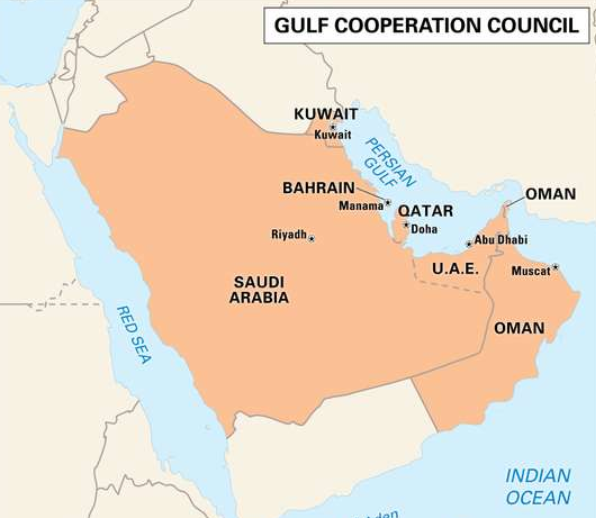
The Gulf Cooperation Council (GCC) is a regional political and economic union consisting of six member states: Bahrain, Kuwait, Oman, Qatar, Saudi Arabia, and the United Arab Emirates. Established in 1981, the GCC aims to promote economic integration, enhance political cooperation, and address common challenges among its members in the context of regional stability and security.
Key Objectives:
- Economic Cooperation: Facilitate trade and investment among member states, aiming for a unified economic framework.
- Security Collaboration: Enhance collective security measures to address regional threats, including counterterrorism and defense initiatives.
- Cultural Exchange: Promote cultural ties and people-to-people connections across the Gulf region.
Major Initiatives:
- Common Market: Efforts to establish a single market allowing for the free movement of goods, services, and labor.
- Joint Defense Programs: Collaborative military exercises and initiatives to strengthen defense capabilities against external threats.
- Sustainable Development: Initiatives aimed at tackling climate change, energy sustainability, and food security
Strategic Ties Between India and the Gulf Cooperation Council (GCC)
India and the Gulf Cooperation Council (GCC) have forged robust strategic ties, driven by shared economic interests, security concerns, and cultural connections. The relationship encompasses various sectors, including trade, defense, energy, and technology, reflecting the growing interdependence between India and GCC member states—Bahrain, Kuwait, Oman, Qatar, Saudi Arabia, and the UAE.
Key Aspects of Strategic Ties:
-
Economic Collaboration:
- Trade Relations: Bilateral trade has seen significant growth, with India being one of the largest trading partners for the GCC. In 2023-24, bilateral trade reached approximately $161.82 billion.
- Investment Opportunities: GCC countries are major sources of Foreign Direct Investment (FDI) in India, contributing over $24 billion between April 2000 and June 2024. Indian businesses have also established a strong presence in the GCC, further enhancing economic ties.
-
Energy Security:
- The GCC is vital for India’s energy needs, supplying a substantial portion of its oil and gas imports. While efforts are underway to diversify energy sources, GCC nations remain key suppliers, especially Saudi Arabia and the UAE.
- Collaborations in renewable energy and sustainable practices are also emerging as priorities, aligning with global shifts towards cleaner energy solutions.
-
Defense and Security Cooperation:
- Joint military exercises, training programs, and counterterrorism initiatives have strengthened defense ties between India and GCC countries. This cooperation is crucial given the regional security challenges, including terrorism and geopolitical tensions.
- The changing dynamics in the Middle East, including conflicts in neighboring regions, have underscored the importance of collaborative security measures.
-
Cultural and People-to-People Connections:
- The GCC is home to one of the largest Indian expatriate communities, fostering cultural exchange and social ties. Indian nationals significantly contribute to the economies of GCC countries, enhancing the bilateral relationship.
- Initiatives aimed at promoting cultural understanding, tourism, and educational exchanges further solidify these ties.
-
Addressing Global Challenges:
- India and the GCC share common goals in tackling pressing global issues such as climate change, food security, and digital transformation. Collaborative efforts in technology, research, and innovation are increasingly prioritized.
- Both parties recognize the need for joint responses to emerging challenges in the evolving geopolitical landscape.
Which of the following statements about the Gulf Cooperation Council (GCC) is/are correct?
- The GCC was established in 1981 with the aim of fostering economic, political, and security cooperation among its member states.
- The GCC consists of six member countries: Bahrain, Kuwait, Oman, Qatar, Saudi Arabia, and Iraq.
- The GCC has initiated efforts towards establishing a common market and monetary union among its members.
Select the correct answer using the code given below:
|
Answer (b)
|
The Line of Actual Control (LAC) is the de facto border that separates Indian-administered territories from Chinese-administered territories in the disputed regions along the India-China border. It is not a formally agreed-upon boundary but a demarcation that serves as a ceasefire line between the two countries, and it has been a point of contention since the 1962 Sino-Indian War.
Key Features of the LAC:
-
Length and Segments:
- The LAC spans approximately 3,488 kilometers, running through three sectors:
- Western Sector: Ladakh (India) and Aksai Chin (China)
- Middle Sector: Himachal Pradesh and Uttarakhand (India)
- Eastern Sector: Arunachal Pradesh (India), which China claims as part of South Tibet
- The LAC spans approximately 3,488 kilometers, running through three sectors:
-
Disputed Nature:
- The LAC is not clearly demarcated in several areas, leading to differing perceptions by India and China about its exact alignment. This often results in military standoffs and incursions, especially in the Western and Eastern sectors.
-
Border Agreements:
- Despite the lack of a mutually agreed-upon boundary, both countries have signed various agreements over the years to maintain peace along the LAC, such as:
- 1993 Agreement on Maintenance of Peace and Tranquility along the LAC
- 1996 Agreement on Confidence Building Measures in the Military Field
- 2013 Border Defence Cooperation Agreement
- Despite the lack of a mutually agreed-upon boundary, both countries have signed various agreements over the years to maintain peace along the LAC, such as:
1.The Line of Actual Control (LAC) separates (Karnataka Civil Police Constable 2020)
A.India and Pakistan
B.India and Afghanistan
C.India and Nepal
D.India and China
|
Answer (D)
The Line of Actual Control (LAC) is the demarcation that separates Indian-administered territories from Chinese-administered territories. It is not a formally agreed boundary but serves as the de facto border between India and China
|
| Subject | Topic | Description |
| History | Modern Indian History | Company rule and Crown rule 1773 - 1947 |
| History | Modern Indian History | Fall of Mughals |
| History | Modern Indian History | Establishment of British rule in India |
| History | Modern Indian History | Economic Policies of the British |
|
UPSC EXAM NOTES will be conducting both Prelims and Mains exams every Sunday as part of the Integrated Mains and Prelims (IMPM) Program. This program provides a comprehensive approach to UPSC exam preparation, ensuring that candidates are well-prepared for both stages of the exam. Program Highlights:
Duration: The IMPM plan is a one-year program, ensuring continuous and structured preparation over 12 months. With regular testing and consistent study guidance, this program is designed to maximize your chances of success in the UPSC exams |
