
INTEGRATED MAINS AND PRELIMS MENTORSHIP (IMPM) 2025 Daily KEY
| Exclusive for Subscribers Daily: One Nation One Election and EPFO for the UPSC Exam? Why are topics like Mission Mausam and India Meteorological Department (IMD) important for both preliminary and main exams? Discover more insights in the UPSC Exam Notes for September 16, 2024 |
🚨 UPSC EXAM NOTES presents the July edition of our comprehensive monthly guide. Access it to enhance your preparation. We value your input - share your thoughts and recommendations in the comments section or via email at Support@upscexamnotes.com 🚨
Critical Topics and Their Significance for the UPSC CSE Examination on September 16, 2024
Daily Insights and Initiatives for UPSC Exam Notes: Comprehensive explanations and high-quality material provided regularly for students
For Preliminary Examination: Current events of national and international importance
For Mains Examination: GS II - Indian Polity & Governance
Context:
The idea of One Country One Election -- under discussion for long in the corridors of parliament -- will be implemented during the current tenure of the Narendra Modi government, sources have said. Prime Minister Narendra Modi had mentioned this in his Independence Day speech this year and the government is committed to implementing it
Read about:
What is One Nation and One Election?
Advantages and Disadvantages of Simultaneous elections
Key takeaways:
- "One Nation, One Election" refers to the idea of holding simultaneous elections across India for both the Lok Sabha (the national parliament) and all state legislative assemblies. Currently, elections in India are staggered, with various states holding assembly elections at different times, which results in continuous election cycles across the country.
- The proposal for simultaneous elections aims to reduce the constant political campaigning and the use of government resources for election purposes, ensuring greater administrative efficiency.
- Proponents argue that it would lead to more consistent policy-making and reduce the disruption caused by frequent elections.
- Critics, however, raise concerns about its impact on federalism, regional political dynamics, and the logistics of organizing such a massive election in a country as large and diverse as India
Historical Perspective on Simultaneous Elections in India:
-
Initial Implementation (1952–1967): After India's independence, the first few general elections were held simultaneously. From 1952 to 1967, both Lok Sabha and state legislative assembly elections were conducted together. This practice continued smoothly because the central and state governments generally completed their five-year terms concurrently.
-
Divergence from Simultaneous Elections (Post-1967): The shift from simultaneous elections began in 1968 and 1969, when some state legislative assemblies were dissolved prematurely. For example, in 1967, the political landscape started to become unstable in various states due to coalition politics and factional conflicts. This led to the dissolution of several state assemblies before their terms ended. Similarly, the dissolution of the Lok Sabha in 1970 and mid-term elections in 1971 further complicated the election cycle.
-
Post-Emergency Elections (1977 Onwards): After the Emergency (1975–77), political upheavals led to more frequent premature dissolutions of state assemblies and the Lok Sabha. This caused the election cycles for various states and the center to become unsynchronized. From this point, elections in India became staggered, leading to continuous elections across different states and the center.
-
Revival of the Idea: Over the years, political leaders and commissions have periodically revisited the idea of restoring simultaneous elections to bring back stability in governance. For instance:
- The Law Commission of India (in its 170th Report in 1999) and the Election Commission of India have supported discussions on simultaneous elections.
- In 2016, the NITI Aayog also released a report outlining the feasibility of simultaneous elections.
- Successive governments, including under Prime Minister Narendra Modi, have explored the concept as part of electoral reforms.
Follow Up Question
|
Answer (B)
|
What are the issues faced by EPFO pensioners?
For Prelims Examination: Current events of national and international importance
For Mains Examination: GS II - Indian Polity & Governance
Context:
Nearly 78 lakh Provident Fund (PF) pensioners across the country under the Employees’ Pension Scheme, 1995 (EPS-95) of the Employees’ Provident Fund Organisation (EPFO) will receive their pension through any bank, any branch from January 1, 2025. The Union Labour Ministry cleared the proposal earlier this month for a Centralised Pension Payment System (CPPS) as part of the EPFO’s ongoing IT modernisation project, the Centralised IT Enabled System
Read about:
What is a Unified Pension System?
What is Employees’ Provident Fund Organisation (EPFO)?
Key takeaways:
Starting January 1, 2025, nearly 7.8 million Provident Fund (PF) pensioners under the Employees’ Pension Scheme, 1995 (EPS-95) will be able to receive their pensions from any bank branch across the country. This development comes following the Union Labour Ministry's approval earlier this month for a Centralised Pension Payment System (CPPS), part of the EPFO’s broader IT modernization initiative known as the Centralised IT Enabled System.
What prompted this new arrangement?
Currently, pensioners need to transfer their Pension Payment Orders (PPO) when moving to a new location, often leading to complaints about delays and disruptions in payments. Additionally, pensioners can only access their monthly pensions through a limited number of banks approved by the EPFO in each region.
The introduction of CPPS, which has been endorsed by the Union Ministry of Labour and Employment, will facilitate a shift to an Aadhaar-based payment system in the next phase. This will streamline the pension initiation process, eliminating the need for in-branch verification and allowing for immediate crediting of pensions. The EPFO anticipates significant cost savings with this new system.
Will this change benefit pensioners?
While the development is generally welcomed, K.P. Babu, General Secretary of the Chennai EPF Pensioners’ Welfare Association, emphasizes that the practical impact will depend on the implementation details. Many pensioners, like other bank customers, already use ATMs for transactions due to the core banking system.
How has the announcement been received?
Many pensioners are disappointed with the Union Ministry’s decision, as they had hoped for a more favorable outcome, similar to the unified pension scheme offered to government employees, which combines features from both the Old Pension Scheme (OPS) and the New Pension Scheme (NPS).
Trade unions and Members of Parliament across party lines have been advocating for an increase in the minimum pension amount of ₹1,000. Recently, BJP MP Shobhanaben M. Baraiya requested a raise to ₹7,500, including dearness allowance (DA) and medical allowance. Several pensioner associations have called for a minimum of ₹9,000 plus DA, a demand also made by trade unions during pre-Budget consultations with the Union Finance Minister.
What about applications for higher pension based on wages?
PF members and pensioners are growing increasingly concerned about the processing of their applications for pensions based on higher wages. Many had expected higher pensions following the Supreme Court’s November 2022 ruling in favor of pension payments on wages exceeding the PF ceiling. However, as of August 7, 2024, only 8,401 PPOs have been issued, and 89,235 demand notices have been sent for arrears transfer. Out of nearly 17.5 lakh online applications, about 1.5 lakh were rejected.
What is the Union government’s stance?
The government cites financial constraints for not increasing the minimum pension amount, despite raising its annual allocation for EPS-95. The government contributes 1.16% of employees’ basic wages to the Pension Scheme, along with budgetary support and 8.33% of employer PF contributions. Contributions were approximately ₹8,785 crore for 2022-23, ₹9,760 crore for 2023-24, and are projected to reach ₹10,950 crore for 2024-25. It remains to be seen how the government will address the minimum pension amount issue.
On higher wages, the EPFO initially opposed this due to concerns about fairness and fund sustainability. Despite no cash flow problems reported, there is criticism that the EPFO’s demands for old documents from pensioners are impractical.
What should be done?
To address these issues, the government should consider increasing its EPS-95 contributions and revising the PF contribution ceiling, which has remained at ₹15,000 for a decade. Additionally, implementing former Finance Minister Arun Jaitley’s suggestion from 2015 to offer employees the option to invest in EPF or NPS could address investment returns concerns. Since 2015, the EPFO has been investing in exchange-traded funds (ETFs), and the restriction on EPS-95 for those joining after September 1, 2014, should be reconsidered to ensure pensions are available to all employees regardless of salary
Follow Up Question
-
Discuss the key features of the Centralised Pension Payment System (CPPS) introduced by the Employees’ Provident Fund Organisation (EPFO). How is this system expected to improve pension disbursement?
-
Evaluate the impact of the proposed shift to a Centralised Pension Payment System on the efficiency of pension disbursement and its potential benefits for pensioners.
Will Mission Mausam improve weather forecasts?
For Preliminary Examination: Current events of national and international importance
For Mains Examination: GS II - Governance
Context:
On September 11, the Cabinet cleared a ₹2,000 crore programme called Mission Mausam to upgrade infrastructure used to make atmospheric observations. It will involve a major upgrade of instruments used by the India Meteorological Department (IMD), the National Centre for Medium Range Weather Forecasting, and the Indian Institute of Tropical Meteorology
Read about:
What is Mission Mausam?
What is India Meteorological Department (IMD)?
Key takeaways:
On September 11, the Cabinet approved a ₹2,000 crore initiative named Mission Mausam aimed at enhancing infrastructure for atmospheric observations. This program will involve a significant upgrade to the instruments used by the India Meteorological Department (IMD), the National Centre for Medium Range Weather Forecasting, and the Indian Institute of Tropical Meteorology.
Objectives of the Mission
Mission Mausam aims to advance atmospheric observation capabilities to improve the accuracy of monsoon forecasts, enhance alerts for deteriorating air quality, and provide warnings for extreme weather events and cyclones. Key components of the mission include the deployment of advanced radars, satellite systems with high-performance sensors, and supercomputers. It also involves developing sophisticated earth-system models and a GIS-based automated Decision Support System for real-time data dissemination. The Ministry of Earth Sciences (MoES) will oversee the mission, which plans to acquire and install up to 60 weather radars, 15 wind profilers, and 15 radiosondes by 2026. These instruments will offer regular updates on wind speeds, atmospheric pressure, humidity, and temperature at various atmospheric levels.
Historical Context
This mission follows the earlier 'Monsoon Mission' launched in 2012. Traditionally, the IMD used statistical methods to predict monsoon performance, which often led to broad estimates and missed regional variations and drought probabilities. The Monsoon Mission introduced a novel approach, employing high-performance computing and dynamical models to simulate weather patterns and provide more accurate medium-range forecasts. These models, developed since 2004, can be adjusted for various forecasting needs, including daily weather and seasonal monsoon predictions, and can also be adapted for heatwaves, cold waves, and localized forecasts. However, this method is costly and demands sophisticated technology and equipment.
Innovations in Mission Mausam
Mission Mausam not only continues the advancement of dynamical models but also proposes ambitious plans for "weather management," including cloud seeding to alter weather conditions and attempts to control lightning. Lightning strikes are a major cause of natural deaths in India, with a significant number of fatalities recorded in recent years. The mission includes plans to set up a large ‘cloud chamber’ at IITM to study and potentially control lightning by modifying the electrical characteristics of clouds. While weather modification research has been ongoing since the 1950s and has included various experiments, managing the outcomes of cloud seeding remains a challenge. Mission Mausam aims to enhance understanding of these processes and refine weather modification techniques
Follow Up Question
1.In the context of which of the following do some scientists suggest the use of cirrus cloud thinning technique and the injection of sulphate aerosol into stratosphere? (UPSC CSE 2019)
(a) Creating the artificial rains in some regions
(b) Reducing the frequency and intensity of tropical cyclones
(c) Reducing the adverse effects of solar wind on the Earth
(d) Reducing the global warming
|
Answer (d)
Some scientists suggest the use of cirrus cloud thinning and the injection of sulphate aerosols into the stratosphere as techniques to reduce global warming. These methods are considered forms of geoengineering aimed at reflecting more sunlight away from Earth or altering cloud properties to influence the global climate
|
A recent advisory from the Finance Ministry has taken an initial step to address some of the challenges faced by queer couples who are not legally married. This clarification, along with a Reserve Bank of India (RBI) circular, instructs all commercial banks that LGBTQIA+ individuals and queer couples must be allowed to open joint bank accounts and name their partners as beneficiaries.
Challenges Faced by Unrecognized Queer Relationships
Beyond caregiving issues, the lack of legal recognition complicates everyday matters. Queer couples cannot obtain a family ration card, access benefits like gratuity or insurance as dependents, or receive tax advantages for payments made on behalf of a partner. They also face challenges in legal matters such as succession, inheritance, and maintenance. Their communications lack the evidentiary privilege afforded to married couples, potentially forcing them to testify against one another in court. Additionally, they cannot donate organs to each other or adopt a child together.
Supreme Court’s Stance
- In its October 2023 ruling, the Supreme Court did not recognize same-sex marriage, stating that such issues should be handled by the legislature. However, the Court acknowledged that the Constitution protects the freedom of individuals, including queer couples, to form unions.
- It noted that failing to recognize the entitlements that come with such unions could lead to disparities for queer couples. The Court also highlighted the Union government's plan to establish a committee chaired by the Cabinet Secretary to define these entitlements.
- This six-member panel, which includes Secretaries from various ministries, was set up in April, had its first meeting in May, and started consultations in July. LGBTQIA+ community members are encouraged to provide input directly to the committee.
- The Supreme Court’s directives include considering how to recognize queer partners as part of the same family for purposes such as ration cards, and ensuring medical practitioners consult next of kin or partners in terminal situations. The panel is also tasked with reviewing issues like jail visitation rights, access to deceased partners' bodies, succession rights, financial benefits, and employment-related entitlements.
Required Rule Changes
- Prior to the recent advisories, some banks had already allowed queer couples to open joint accounts and designate each other as beneficiaries, but these policies were often undermined by a lack of sensitivity training among staff. Chakraborty critiques these as “marketing gimmicks” and stresses the importance of legal backing for enforcing rights.
- Further changes may be needed through advisories from insurance regulators, public distribution systems, medical boards, and the Income Tax department to enhance benefits for queer couples.
- More substantial legal reforms may require amendments to family and inheritance laws, the Juvenile Justice Act, and the Income Tax Act, which would need to be passed by Parliament and State legislatures for deeper, lasting changes
The Union Budget 2024 and the Finance Bill introduced several updates to taxation policies.
Equities
- When the Finance Minister revealed an increase in the long-term capital gains (LTCG) tax rate from 10% to 12.5%, there was a strong negative reaction, leading to a drop in stock prices and indices.
- While this was disappointing for many, the government is only increasing its share of your gains slightly, from 10% to 12.5%. Key market factors like economic growth, new investors, and fresh capital remain unaffected.
- In the context of equities, tax harvesting is still possible. Since equity investments are generally long-term, investors typically stay invested for extended periods. As stock prices or mutual fund net asset values (NAV) rise, one can sell (realize gains) and repurchase the same asset.
- For instance, if you originally acquired the stock at ₹100 and later sell it in 10 years when it's priced at ₹200, you'll pay taxes on the ₹100 gain, following the prevailing tax rules for that financial year.
- The annual tax-free threshold, previously ₹1 lakh, has been increased to ₹1.25 lakh. If the stock's price rises to ₹130, you could sell and repurchase the asset. As long as the ₹30 gain falls within the ₹1.25 lakh limit, no tax is owed.
- This adjustment raises the acquisition cost for future tax purposes from ₹100 to ₹130. Consequently, when you eventually sell at ₹200, the taxable gain would be ₹70 instead of ₹100.
- Suppose you invested ₹10 lakh in equity mutual funds over a year ago, and today, the portfolio is valued at ₹11 lakh. You can redeem the portfolio tax-free as the gains fall within the ₹1.25 lakh exemption. If the portfolio value is ₹12 lakh, you can sell enough to ensure your gains remain within ₹1.25 lakh, thereby avoiding taxes.
- This assumes a lump sum investment and withdrawal. However, for investments made through Systematic Investment Plans (SIPs) or withdrawals via Systematic Withdrawal Plans (SWPs), the NAV from the earliest investment is considered (First In, First Out).
Bonds
- For bonds, returns primarily come from interest, unlike equities where dividends are minimal, and most returns are from price appreciation. Bond interest continues to be taxed at the marginal slab rate (MSL), while the tax on capital gains remains relatively lower.
- For listed bonds held for over a year, capital gains are now taxed at 12.5%, up from 10%, still significantly lower than the MSL, which is typically 30% plus surcharge and cess for most investors.
- One key change is that capital gains on unlisted bonds are now taxed at MSL, regardless of the holding period.
- In equity mutual funds, the taxation is largely unchanged, with LTCG now taxed at 12.5%, up from 10%, and short-term capital gains (STCG) taxed at 20%, up from 15%.
- For debt funds, there is no significant change, with gains still taxed at MSL. However, a notable detail is that for investments made in debt funds by March 31, 2023, and redeemed after July 23, 2024, after a two-year holding period, they will be taxed at 12.5%, without the benefit of indexation. Investments in debt funds from April 1, 2023, onwards will be taxed at MSL.
REITs and InvITs
For REITs and InvITs, the required holding period for LTCG eligibility has been reduced from three years to one year, with the LTCG tax rate now set at 12.5%, up from 10%. This shorter holding period is a positive development
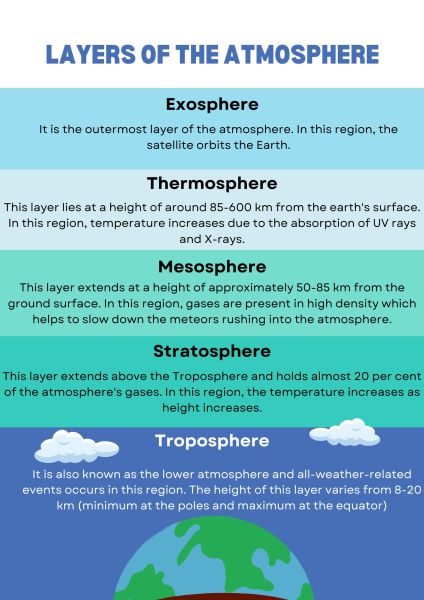
- September 16 is recognized by the United Nations as the International Day for the Preservation of the Ozone Layer. This day is meant to raise awareness about the importance of protecting the ozone layer, which serves as a protective shield for Earth, preventing harmful ultraviolet (UV) radiation from reaching the planet's surface. India has been marking this occasion since 1995, and the theme for this year is "Montreal Protocol: Advancing Climate Actions."
- Ozone (O3) is a reactive gas made up of three oxygen atoms, which can occur both naturally and through human activities. It is found in the upper atmosphere (stratosphere), and the term "ozone hole" refers to regions where the ozone layer has been damaged, allowing more UV radiation to penetrate.
- The stratospheric ozone, located between 15 and 30 km above the Earth's surface, forms naturally when solar ultraviolet light interacts with molecular oxygen (O2). In contrast, ground-level ozone, found in the troposphere, primarily forms through chemical reactions involving volatile organic compounds (VOCs) and nitrogen oxides.
- Ozone depletion occurs in both hemispheres, notably over Antarctica in the Southern Hemisphere and to a lesser extent over the Arctic in the Northern Hemisphere.
- The depletion is more prominent in Antarctica, where the ozone hole is closely linked to stratospheric temperatures. When the temperature drops below -78°C, stratospheric clouds form, which exacerbates the ozone depletion.
- The size of the ozone hole over Antarctica fluctuates yearly, typically forming in August and closing by November or December. Certain industrial activities and consumer products release "halogen source gases" into the atmosphere, weakening the ozone layer by releasing chlorine and bromine.
- For example, air conditioning and refrigeration systems often contain chlorofluorocarbons (CFCs), which eventually break down in the stratosphere, releasing chlorine atoms that damage the ozone.
- Additionally, halons, used in fire extinguishers, contain bromine atoms that also contribute to ozone depletion. The Montreal Protocol plays a crucial role in regulating the global production and consumption of these harmful halogen gases generated by human activity
1.What is the ‘Greenhouse Gas Protocol’? (UPSC 2016)
(a) It is an international accounting tool for government and business leaders to understand, quantify and manage greenhouse gas emissions
(b) It is an initiative of the United Nations to offer financial incentives to developing countries to reduce greenhouse gas emissions and to adopt eco-friendly technologies.
(c) It is an inter-governmental agreement ratified by all the member countries of the United Nations to reduce greenhouse gas emissions to specified levels by the year 2022
(d) It is one of the multilateral REDD+ initiatives hosted by the World Bank
|
Answer (a)
(a) It is an international accounting tool for government and business leaders to understand, quantify and manage greenhouse gas emissions. The Greenhouse Gas Protocol is a widely used international framework to help businesses, governments, and organizations measure and manage their greenhouse gas emissions. It provides standards and tools to assess emissions from various sectors and guide mitigation strategies |
| Subject | Topic | Description |
| History | Modern Indian History | Company rule and Crown rule 1773 - 1947 |
| History | Modern Indian History | Fall of Mughals |
| History | Modern Indian History | Establishment of British rule in India |
| History | Modern Indian History | Economic Policies of the British |
|
UPSC EXAM NOTES will be conducting both Prelims and Mains exams every Sunday as part of the Integrated Mains and Prelims (IMPM) Program. This program provides a comprehensive approach to UPSC exam preparation, ensuring that candidates are well-prepared for both stages of the exam. Program Highlights:
Duration: The IMPM plan is a one-year program, ensuring continuous and structured preparation over 12 months. With regular testing and consistent study guidance, this program is designed to maximize your chances of success in the UPSC exams |
