
SOUTHWEST MONSOON
- The southwest monsoon is a seasonal weather pattern that brings significant rainfall to large parts of South Asia, particularly India, between June and September
- The southwest monsoon typically begins in early June and lasts until late September. It starts with the arrival of the monsoon winds in the southern part of India, usually marked by the onset over the state of Kerala
- The southwest monsoon brings about 70-90% of India’s annual rainfall. The distribution of rainfall varies, with some regions receiving heavy rains, while others may experience scanty showers.
- The Western Ghats, the northeastern states, and the Himalayan foothills typically receive very heavy rainfall.
- The monsoon is critical for the Kharif crop season in India, which includes crops like rice, maize, pulses, and cotton. Adequate and timely monsoon rains are essential for a good harvest
- The monsoon starts retreating from northwestern India in early September and completely withdraws from the Indian subcontinent by mid-October. This phase is also known as the retreating or northeast monsoon
Mechanism:
- High-Pressure Area: During the summer, intense heating of the landmass in the Indian subcontinent creates a low-pressure area over northern India and the Tibetan Plateau.
- Low-Pressure Area: The Indian Ocean remains relatively cooler, creating a high-pressure area.
- Wind Movement: Air moves from the high-pressure area over the ocean to the low-pressure area over the land, carrying moisture from the ocean and resulting in rainfall.
- Easterly and westerly winds refer to the direction from which the winds originate
- Easterly winds are winds that blow from the east towards the west
- Easterly winds can affect weather patterns, including the development of tropical storms and cyclones. For instance, easterly waves in the tropics can lead to the formation of tropical cyclones in the Atlantic and Pacific Oceans
Characteristics:
- Trade Winds: One of the most well-known examples of easterly winds are the trade winds. These winds blow from the east towards the west in the tropics, from the subtropical high-pressure areas toward the equatorial low-pressure areas.
- Tropical Regions: In the tropical regions, particularly between 30 degrees north and south of the equator, easterly winds are prevalent. These are crucial for the weather patterns and climatic conditions in these regions.
- Monsoon Winds: During certain seasons, such as the northeast monsoon in India, easterly winds play a significant role. These winds bring dry air from the land towards the ocean during the winter months.
- Westerly winds are winds that blow from the west towards the east
- Westerly winds play a significant role in the weather of temperate regions, influencing the climate and the movement of storm systems.
- They are also responsible for carrying warm and moist air from the oceans inland, affecting precipitation patterns in coastal and inland regions.
- The westerlies can affect transoceanic travel and weather prediction due to their influence on the movement of high and low-pressure systems
Characteristics:
- Prevailing Westerlies: These winds are predominant in the mid-latitudes (between 30 and 60 degrees north and south of the equator). They blow from the subtropical high-pressure belts towards the poles.
- Jet Streams: High-altitude westerly winds known as jet streams are important in influencing weather patterns and the movement of weather systems across the globe. They are fast flowing and occur in the upper levels of the atmosphere.
- Polar Front: In the mid-latitudes, the westerlies interact with polar easterlies near the polar front, leading to the development of extratropical cyclones and storms
.jpg)
Monsoons in India occur due to seasonal changes in wind patterns and temperature differences between land and sea.
Here's a concise explanation of the process:
- Differential heating: During summer, the Indian landmass heats up more quickly than the surrounding Indian Ocean.
- Low pressure system: The heated land creates a low-pressure area over the Indian subcontinent.
- Wind direction shift: This low pressure draws in moisture-laden winds from the cooler Indian Ocean towards the land.
- Orographic lift: As these winds encounter geographical features like the Western Ghats or the Himalayas, they are forced to rise.
- Condensation and precipitation: The rising air cools, causing water vapor to condense and form clouds, leading to heavy rainfall.
- Duration: This pattern typically lasts from June to September, bringing the majority of India's annual rainfall.
- The primary driver is the temperature difference between the land and the surrounding sea. During summer, the land heats up faster than the ocean, creating a low-pressure area over the land and a high-pressure area over the ocean. This pressure difference leads to the movement of moist air from the ocean to the land
- Warm sea surface temperatures are crucial as they increase the evaporation rate, contributing to the formation of moist air masses that drive the monsoon rains.
- The monsoon winds, which are part of the larger atmospheric circulation, shift according to the seasonal temperature differences. The southwest monsoon, for instance, is driven by the southwest winds that carry moisture from the Indian Ocean to the Indian subcontinent.
- The geographical features, such as mountain ranges, play a significant role. For example, the Western Ghats in India force moist air to rise, cool, and condense, leading to heavy rainfall on the windward side
- The movement and strength of the high-pressure systems over the oceans and low-pressure systems over the land influence the intensity and timing of the monsoon.
- Phenomena such as El Niño and La Niña can affect the strength and timing of the monsoon. For example, El Niño can lead to weaker monsoons due to altered wind patterns and sea surface temperatures
- El Niño is generally associated with a weaker Indian monsoon. The warming of the central and eastern Pacific Ocean during El Niño tends to disrupt the normal atmospheric circulation patterns, leading to reduced rainfall over the Indian subcontinent.
- The onset of the monsoon can be delayed, and the overall intensity of the rainfall during the monsoon season might be lower than usual
- El Niño often brings drier conditions to Southeast Asia and northern Australia, leading to droughts and reduced rainfall
- Eastern and southern Africa may experience drier conditions as well
- La Niña, characterized by cooler-than-average sea surface temperatures in the central and eastern Pacific Ocean, is typically associated with a stronger Indian monsoon. It often leads to increased rainfall over the Indian subcontinent
- The enhanced monsoon can lead to heavier rains and potentially more frequent and intense flooding
- La Niña tends to bring wetter conditions to Southeast Asia and northern Australia, potentially causing heavy rains and flooding
- La Niña can lead to wetter conditions in parts of northern South America
|
For Prelims: Indian and World Geography
For Mains: GS-I, GS-III: Important Geophysical phenomena and environment
|
|
Previous Year Questions
1.Consider the following statements: (UPSC CSE 2012)
1. The duration of the monsoon decreases from southern India to northern India.
2. The amount of annual rainfall in the northern plains of India decreases from east to west.
Which of the statements given above is/are correct?
A. 1 Only
B. 2 Only
C. Both 1 and 2
D. Neither 1 nor
Answer (C)
|
INDIANS AND H1-B
- The H-1B visa program for skilled workers was introduced in 1990. These visas are initially issued for three years but can be extended to a maximum of six years.
- Since 2004, the issuance of new H-1B visas has been capped at 85,000 annually, with 20,000 reserved specifically for foreign students who hold master’s degrees or higher from U.S. universities.
- This cap, however, does not apply to certain entities like universities, think tanks, and other non-profit research organizations, allowing additional visas to be issued beyond the limit.
- Applicants for H-1B visas must have a job offer from a U.S.-based sponsor, such as a company or institution. The U.S. government also grants extensions for individuals already working under H-1B visas.
- During the fiscal year 2023 (October 2022 to September 2023), over 386,000 H-1B applications were approved. This figure includes nearly 119,000 new visas and approximately 267,000 extensions.
- The total number of approvals in 2023 reflects a decline from over 474,000 in the previous fiscal year, 2022
- Immigration remains one of the most divisive political topics in the United States. An October YouGov poll revealed that 14.6% of registered voters considered it the most critical issue in the upcoming election, a significant increase from just 2.1% in 2012.
- During election campaigns, much of the anti-immigration discourse centered on low-skilled labor migration. Beyond its inherent racial undertones, this narrative is driven by the perception that such immigration lowers wages and displaces jobs that might otherwise benefit the American working class.
- This demographic has long struggled with challenges like high unemployment, stagnant wages, inflation, a housing crisis, and other economic difficulties.
- Donald Trump effectively leveraged these concerns, pledging to improve conditions for the average American worker by restricting immigration.
- The current debate echoes many of the same themes as Trump’s rhetoric about Mexicans "stealing American jobs," though the focus has shifted to the immigration of skilled workers competing for higher-paying positions

- The H-1B visa program enables U.S. employers to hire foreign workers for roles requiring "a high level of skill" and "at least a bachelor’s degree," as outlined by the U.S. Department of Labor.
- Established in 1990, the program was designed to assist employers in filling roles that demand specialized skills not readily available within the U.S. workforce, allowing qualified foreign individuals to work temporarily in the United States.
- H-1B visas are typically issued for a maximum of six consecutive years. After this period, visa holders must either leave the U.S. for at least 12 months before returning or apply for permanent residency (a Green Card).
- Currently, the program has an annual limit of 65,000 new visas (the regular cap), with an additional 20,000 visas available for applicants holding master’s degrees or higher from U.S. universities. However, not all H-1B applications are subject to this cap, resulting in the total number of approved petitions often exceeding the cap.
- For example, in the fiscal year 2023, the United States Citizenship and Immigration Services (USCIS), under the Department of Homeland Security, approved 118,948 petitions for initial employment and 267,370 petitions for continuing employment.
- Certain applicants, such as those employed by higher education institutions, nonprofit organizations affiliated with such institutions, nonprofit research organizations, or government research entities, are exempt from the annual cap
- Indian nationals are the primary beneficiaries of the H-1B visa program, consistently accounting for over 70% of all approved H-1B petitions annually since 2015, according to U.S. government data. Chinese nationals rank a distant second, making up 12-13% of approvals since 2018.
- This significant representation of Indian professionals has drawn the attention of nativist MAGA Republicans, who have extended their anti-immigration rhetoric from low-skilled labor migration by Mexicans and Central Americans to include Indian workers in the tech industry.
- Their argument revolves around the claim that the H-1B program, originally designed to attract exceptional global talent, is being exploited by tech companies to fill lower- to mid-level positions at wages much lower than those expected by American workers.
- While proponents like Elon Musk argue that H-1B visas address a "permanent shortage of excellent engineering talent," critics counter that the issue is not a lack of skilled American workers but that they are deemed "too expensive to hire" by tech firms.
- This critique is supported by data. An analysis of 60,000 H-1B approvals from USCIS in the 2023 fiscal year, conducted by Bloomberg, revealed that nearly 70% of Indian H-1B recipients earned annual salaries below $100,000.
- For comparison, the median salary for IT professionals in the U.S. was $104,420 in May 2023, as reported by the U.S. Bureau of Labor Statistics. Approximately 25% of H-1B approvals for Indian professionals fell within the $100,000 to $150,000 salary range, while only 5% exceeded $150,000
|
For Prelims: H-1B visa, United States, U.S. Citizenship and Immigration Services, STEM fields, lottery system,
For Mains:
1. What are the implications of the new H-1B visa regime for US-India relations?
Discuss the measures can the Indian government take to support Indian IT workers affected by the new H-1B visa regime. (250 Words)
|
|
Previous Year Questions
1. Consider the following statements: (UPSC 2019)
1. Coal sector was nationalized by the Government of India under Indira Gandhi.
2. Now, coal blocks are allocated on lottery basis.
3. Till recently, India imported coal to meet the shortages of domestic supply, but now India is self-sufficient in coal production.
Which of the statements given above is/are correct?
A. 1 only B. 2 and 3 only C. 3 only D. 1, 2 and 3
Answer: A
2. Which of the following statements about town planning in British India in early 19th century is/are correct? (UPSC CAPF 2018)
1. The funds for town improvement were also raised through public lotteries.
2. The threats of epidemics gave an impetus to town planning in the early decades of 19th century.
Select the correct answer using the code given below
A.1 only B. 2 only C. Both 1 and 2 D. Neither 1 nor 2
Answer: C
|
TENTH SCHEDULE
During the 1960s and 70s, a wave of defections by legislators from their original political parties led to political instability in several states. This phenomenon resulted in the downfall of elected governments, raising concerns about the fragility of the political landscape. To address this issue and ensure the stability of elected governments, the 52nd constitutional amendment introduced the 'anti-defection' law through the Tenth Schedule in 1985.
Introduction of the Tenth Schedule (1985)
The Tenth Schedule was implemented with the primary objective of curbing defections and promoting political stability. It outlined specific provisions to discourage legislators from voluntarily leaving their political parties or voting against party instructions in a House.
Key Provisions of the Tenth Schedule
-
Defection Definition: The Tenth Schedule defines defection as voluntarily giving up the membership of a political party or voting against the party's instructions in a House.
-
Role of the Whip: Party discipline is enforced through the 'whip,' a member of the 'legislature party' appointed by the political party. The whip issues instructions on how party members should vote.
-
Disqualification Clause: Legislators who defy party instructions or voluntarily leave their party are liable for disqualification from the House, aiming to deter defections and maintain party cohesion.
Exceptions in the Original Tenth Schedule (1985)
The Tenth Schedule initially included two exceptions:
a. Splitting of Legislature Party (Para 3): One-third members could split from the 'legislature party' to form a separate group without facing disqualification.
b. Merger Clause (Para 4): The merger of a political party with another, approved by two-thirds of its 'legislature party,' did not lead to disqualification.
Recognizing the need for a more robust 'anti-defection' law, the Tenth Schedule underwent amendments in 2003. Notably, Paragraph 3, which allowed one-third members to split, was omitted to reinforce party unity and discourage arbitrary divisions.
3. Issues Arising from Para 3 Deletion
- Practical Defection by Two-Third Members: Removal of Para 3 led to instances where two-thirds of a legislature party 'practically' defected while claiming to be the original party. This loophole allows members to avoid disqualification despite engaging in actions that defy the spirit of the anti-defection law.
- Mergers to Escape Disqualification: Some State legislature parties, with more than two-thirds members, strategically merged with other parties to evade disqualification. Instances in Rajasthan (2019) and Goa (2022) where members from Bahujan Samajwadi Party and Congress, respectively, merged with the ruling party.
Challenges in Disqualification Decision-Making
- Speaker's Authority: The power to decide on member disqualification rests with the Speaker of the House. Past instances indicate a lack of confidence in the neutrality of Speakers, with perceptions of favoritism toward the ruling party.
- Need for Independent Tribunal: In the case of K. M. Singh versus Speaker of Manipur (2020), the Supreme Court recommended a constitutional amendment. The court proposed transferring the authority to an independent tribunal led by judges, aiming to ensure impartiality in decisions related to disqualification.
Instances of Concern
- Rajasthan (2019): All six Bahujan Samajwadi Party MLAs merged with the Congress Party. The merger, involving more than two-thirds of a legislature party, raised questions about the integrity of party defection rules.
- Goa (2022): Eight out of 11 Congress MLAs merged with the BJP.The strategic merger, involving a significant portion of the Congress legislature party, highlighted challenges in preventing defection tactics.
- Supreme Court's Recommendation: The Supreme Court suggested amending the Constitution to transfer disqualification powers from the Speaker to an independent tribunal. The amendment aims to enhance the credibility of the decision-making process and minimize potential biases.
4. Shiv Sena Factional Dispute in Maharashtra
In June 2022, Maharashtra witnessed a significant political turmoil within the Shiv Sena, marked by a factional split and conflicting claims of legitimacy. The key developments in this episode involved the following:
- Factional Split and Claim to Authenticity: A faction of the Shiv Sena, led by Eknath Shinde, asserted its legitimacy and moved with 37 out of 55 MLAs, declaring itself as the genuine Shiv Sena. The UBT faction contested, asserting that they were the original political party, maintaining Sunil Prabhu as their designated whip.
- Appointment of Whips:Shinde Faction: Appointed Bharat Gogawale as their whip. UBT Faction: Affirmed Sunil Prabhu as their whip.
- Speaker's Recognition and Decision: The Speaker officially acknowledged the Eknath Shinde faction as the authentic Shiv Sena based on the group's numerical strength and the party's constitution from 1999. The Speaker deemed the appointment of Bharat Gogawale as whip by the Shinde faction as valid.
- Disqualification Rulings: The Speaker, based on the faction's recognition, declined to disqualify 40 MLAs from the Shinde faction. The Speaker also refused to disqualify 14 MLAs from the UBT group, citing challenges in physically serving whip instructions from Bharat Gogawale.
- Basis of Speaker's Decision: The Speaker's rulings were grounded in an assessment of both the numerical strength of the Shinde faction and the party's internal constitution. The Speaker found merit in the claims of the Eknath Shinde faction and, accordingly, endorsed the legitimacy of their whip appointment.
Challenges and Unresolved Issues
- Disputed Whip Instructions: The Speaker's refusal to disqualify UBT faction MLAs was influenced by the perceived difficulty in physically serving whip instructions from Bharat Gogawale, the whip appointed by the Shinde faction.
- Continued Factional Tensions: The recognition of one faction over the other, coupled with the Speaker's decisions, may exacerbate existing tensions within the Shiv Sena, raising questions about the party's unity and stability.
5. Reforms Needed in Political Party Recognition and Anti-Defection Laws
The existing challenges and ambiguities surrounding political party recognition and the implementation of anti-defection laws in India suggest the necessity for comprehensive reforms. Several key reforms are crucial to enhance transparency, uphold democratic principles, and address issues arising from factional disputes.
Clarification through Supreme Court Ruling- In the Sadiq Ali versus Election Commission of India (1971) case, the Supreme Court established a three-test formula for determining the legitimate faction of a political party.
- The tests include aims and objects of the party, adherence to the party's constitution reflecting inner-party democracy, and majority in legislative and organizational wings.
- An authoritative Supreme Court judgment is needed to address competing claims by rival groups, providing a clear framework for the Election Commission to ascertain the authentic faction.
- The authority to decide on the disqualification of members currently rests with the Speaker of the House.
- Concerns about the impartiality of Speakers have led to calls for transferring this authority to an independent tribunal.
- Establish an independent tribunal, headed by judges, to decide on disqualification cases. This would ensure a more neutral and unbiased approach, enhancing the credibility of the decision-making process.
- Lack of inner-party democracy is identified as a significant factor contributing to defections and factional disputes within political parties.
- Institutionalize internal democracy by mandating regular inner-party elections in political parties.
- The Election Commission should play a proactive role in monitoring these elections, ensuring fairness, transparency, and adherence to democratic principles.
- The Election Commission recognized the Eknath Shinde faction as the authentic Shiv Sena based solely on votes polled in the Maharashtra Assembly elections of 2019.
- Strengthen the role of the Election Commission in overseeing political party recognition, ensuring that decisions are based on a comprehensive evaluation of factors beyond just election results.
|
For Prelims: Tenth Schedule, Anti defection law, governor, whip, Election Commission of India, Supreme Court
For Mains:
1. Critically analyze the objectives and effectiveness of the Tenth Schedule in promoting political stability in India. Discuss whether it hinders the democratic right of elected representatives or acts as a safeguard against political horse-trading. (250 words)
|
INTERCONTINENTAL BALLISTIC MISSILE
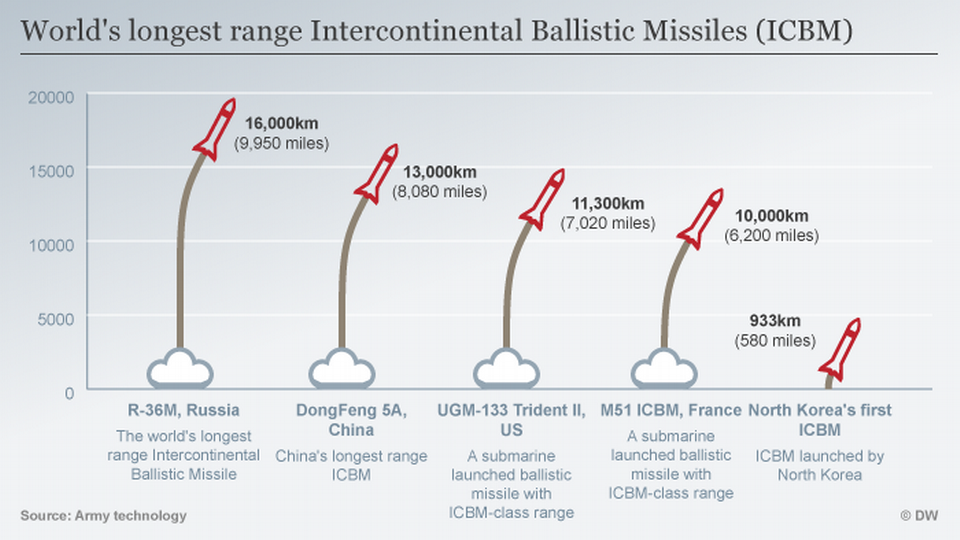
- An intercontinental ballistic missile (ICBM) is a long-range missile system designed to deliver nuclear or conventional warheads over very long distances. These missiles are capable of traveling thousands of kilometers, typically between continents, hence the term "intercontinental."
- ICBMs are one of the key components of a country's strategic nuclear arsenal and serve as a deterrent against potential adversaries. They are designed to be launched from land-based silos, mobile platforms, or submarines and can travel at high speeds, often reaching hypersonic velocities during their flight trajectory.
- The basic components of an ICBM system include the missile itself, the launch platform, and a guidance system to ensure precise targeting.
- Once launched, the missile follows a ballistic trajectory, which means it travels into space, then reenters the Earth's atmosphere to reach its target. The accuracy and reliability of ICBMs are of paramount importance in their role as a deterrent.
- ICBMs have been a significant part of the nuclear arms race during the Cold War, with the United States and the Soviet Union (and later Russia) developing extensive arsenals of these missiles. Other countries, such as China, France, and the United Kingdom, have also developed their own ICBMs.
- The possession of ICBMs provides a nation with the capability to strike targets on the other side of the globe, making them a critical element in the calculus of international security and arms control.
- A missile is a general term used for any guided weapon that is launched toward a target. Think of it as a broad family of weapons that includes many different types, such as air-to-air missiles, surface-to-air missiles, cruise missiles, anti-ship missiles, and ballistic missiles.
- What makes a missile different from an ordinary rocket or artillery shell is that it has some form of guidance system that helps it reach its target accurately.
- A ballistic missile, on the other hand, is a specific type of missile that follows a unique method of flight. After launch, powerful rocket engines propel it upward at very high speed.
- Once the fuel is exhausted, the engines stop working, and the missile continues its journey mainly under the influence of gravity, following a curved path known as a ballistic trajectory.
- This trajectory is similar to the path followed by a cricket ball thrown into the air, except that a ballistic missile travels much farther and much faster, often reaching the edge of space before descending toward its target.
- To understand the difference more clearly, imagine two ways of traveling from one city to another. In the first method, an aircraft keeps its engine running throughout the journey and can change direction whenever needed.
- This is similar to a cruise missile, which remains powered during most of its flight and continuously adjusts its course. In the second method, a projectile is launched with tremendous force, rises high into the sky, and then falls toward its destination along a predetermined path. This resembles a ballistic missile.
- For example, India's BrahMos is a cruise missile. It flies relatively low, remains powered during flight, and can maneuver to avoid detection. In contrast, Agni-V is a ballistic missile.
- It is launched vertically, climbs to a very high altitude, and then re-enters the atmosphere at extremely high speed before striking its target.
- Therefore, the relationship between the two is simple: a ballistic missile is a type of missile, but not all missiles are ballistic missiles. The key distinction lies in how they travel.
- Ordinary missiles may remain powered and guided throughout their flight, whereas ballistic missiles are powered mainly during the initial launch phase and then follow a gravity-driven ballistic path for most of their journey
Some of the countries known to have ICBMs include:
United States: The United States operates a variety of ICBMs, including the Minuteman III, which is a land-based ICBM, and the Trident II D5, which is a sea-launched ICBM.
Russia: Russia's Strategic Rocket Forces operate a range of ICBMs, including the RS-24 Yars, RS-12M Topol, and RS-28 Sarmat (nicknamed Satan 2).
China: China has developed and deployed ICBMs such as the DF-5, DF-31, and DF-41.
France: France has the M51 SLBM (Submarine-Launched Ballistic Missile) as part of its nuclear deterrent.
United Kingdom: The United Kingdom's nuclear deterrent is based on the Trident II D5 SLBM.
India: India's Agni-V is considered an ICBM, with the ability to reach intercontinental distances.
Pakistan: Pakistan has developed the Shaheen-III missile, which is capable of reaching intercontinental distances.
North Korea: North Korea has claimed to possess ICBMs, with the Hwasong-15 being one of their most advanced and longest-range missiles.
Israel: Israel has not officially confirmed the possession of ICBMs, but it is widely believed to have developed such capabilities as part of its nuclear deterrent.
5.Cruise Missiles and Ballistic Missiles: How Are They Different?
- Although both cruise missiles and ballistic missiles are designed to deliver a warhead to a target, they differ significantly in the way they fly, the technology they use, and the challenges they pose to air-defense systems.
- A ballistic missile is launched using powerful rocket engines that propel it to very high altitudes, sometimes even beyond the Earth's atmosphere.
- Once the rocket fuel is exhausted, the missile follows a curved, gravity-driven path known as a ballistic trajectory.
- It then re-enters the atmosphere and descends toward its target at extremely high speeds. In essence, a ballistic missile behaves somewhat like a stone thrown into the air: after the initial push, gravity largely determines its path.
- A cruise missile, by contrast, behaves more like a pilotless aircraft. After launch, it uses a jet engine or similar propulsion system to remain powered throughout most of its journey.
- Rather than climbing high into the sky, it typically flies at low altitudes, closely following the terrain, and continuously adjusts its course using onboard guidance systems. This allows it to navigate around obstacles and evade enemy radar.
- The difference in flight path is perhaps the most striking distinction. A ballistic missile travels in a high, arching trajectory, whereas a cruise missile flies relatively close to the ground.
- Because of this, cruise missiles are often harder to detect early, as they can remain hidden behind terrain features and below the radar horizon.
- Ballistic missiles, on the other hand, are easier to track during much of their flight because they reach very high altitudes, but they become difficult to intercept due to their tremendous speed during descent.
- Their speeds also differ considerably. Ballistic missiles are generally much faster, often traveling several times the speed of sound and, in some cases, reaching hypersonic velocities. Cruise missiles are usually slower, although some advanced systems can also achieve supersonic or hypersonic speeds.
- India provides good examples of both categories. The BrahMos is a cruise missile that remains powered throughout its flight and flies at low altitudes. In contrast, the Agni-V is a ballistic missile that follows a high-altitude ballistic trajectory before striking its target.
A Simple AnalogyImagine you want to deliver a package to a distant location:
|
- Ballistic Missile Defence (BMD) refers to a country's ability to detect, track, intercept, and destroy incoming ballistic missiles before they reach their targets. In an era when many countries possess ballistic missiles capable of carrying conventional, nuclear, chemical, or biological warheads, BMD has become a critical component of national security.
- The significance of BMD lies in the fact that ballistic missiles are among the fastest and most destructive weapons ever developed.
- Once launched, they can travel hundreds or thousands of kilometers within minutes and strike strategic targets such as cities, military bases, government installations, and critical infrastructure.
- A successful BMD system provides a defensive shield against such attacks by attempting to intercept the missile during different phases of its flight.
- For a country like India, BMD capability is particularly important because it enhances national security in a region where several countries possess ballistic missile arsenals.
- It reduces vulnerability to missile attacks and strengthens deterrence by making it more difficult for an adversary to achieve its objectives through missile strikes.
- Another major significance of BMD is the protection of population centers and strategic assets.
- Large metropolitan areas, military command centers, nuclear facilities, air bases, ports, and industrial hubs are all potential targets during a conflict.
- A functioning BMD system can provide an additional layer of security by intercepting incoming missiles before they reach these critical locations.
- BMD also contributes to strategic stability. If a country has confidence in its ability to defend against limited missile attacks, it gains greater decision-making time during crises and reduces the risk of panic-driven responses. This can help prevent escalation and provide political leaders with more options during emergencies.
- India's BMD programme, developed primarily by Defence Research and Development Organisation (DRDO), is designed as a multi-layered defense system.
- It includes interceptors capable of engaging incoming ballistic missiles both outside the atmosphere (exo-atmospheric interception) and within the atmosphere (endo-atmospheric interception).
- The objective is to create multiple opportunities to destroy an incoming missile before it reaches its target.
- However, BMD is not a perfect shield. Modern ballistic missiles may employ countermeasures such as decoys, maneuverable warheads, or multiple independently targetable reentry vehicles (MIRVs), making interception more challenging. Consequently, BMD is generally viewed as a supplement to deterrence rather than a complete replacement for it.
|
For Prelims: Current events of national importance
For Mains: General Studies-III: Achievements of Indians in science & technology; indigenization of technology and developing new technology.
|
|
Previous Year Questions
1.Consider the following statements : (UPSC CSE 2023)
1. Ballistic missiles are jet-propelled at subsonic speeds throughout their flights, while cruise missiles are rocket-powered only in the initial phase of flight.
2. Agni-V is a medium-range supersonic cruise missile, while BrahMos is a solid-fuelled intercontinental ballistic missile.
Which of the statements given above is/are correct?
A. 1 Only
B. 2 only
C. Both 1 and 2
D. Neither 1 nor 2
Answer (D)
|
THE REALITY BEHIND THE FALLING OF NET FDI
India’s net FDI has declined sharply despite strong gross inflows, underlining the impact of disinvestment/capital repatriation; investor classes, modes of entry, and exit strategies can have important implications for technology transfer, industrial development, and external sustainability
2. Background of the Situation
- India’s net Foreign Direct Investment (FDI) has witnessed a sharp decline over the past few years, sparking differing interpretations.
- Critics argue that the weakening net inflows reflect a deterioration in the country’s investment environment, whereas the Chief Economic Adviser maintains that robust gross FDI inflows and increasing investment in the manufacturing sector demonstrate the underlying strength of the economy.
- According to him, the subdued net FDI figures are largely the result of higher profit repatriation by foreign investors and growing overseas investments by Indian companies.
- However, this debate fails to address a more fundamental issue. By concentrating primarily on aggregate FDI figures, both perspectives overlook the evolving nature of international capital flows and the Balance of Payments (BoP) framework that determines how investment inflows and outflows are recorded and interpreted.
- For Balance of Payments accounting, net FDI is derived by subtracting outward investment and capital repatriation from total inward FDI inflows.
- India’s net FDI, which stood at a peak of $44.0 billion in 2020–21, declined dramatically to less than $1 billion in 2024–25 before recovering modestly to $7.6 billion in 2025–26.
- During the same period, gross FDI inflows reached $94.6 billion, highlighting the significant difference between gross and net investment figures.
- It is also important to understand the evolution of India’s FDI policy. When economic liberalization was introduced in 1991, the policy framework primarily sought to facilitate technology transfer, promote exports, and conserve foreign exchange reserves.
- Over time, however, the emphasis gradually shifted toward attracting larger volumes of foreign investment, while relatively less attention was paid to the long-term external payment obligations and the overall quality of investments entering the country
- Foreign Direct Investment (FDI) is commonly perceived as a long-term investment that transfers technology, managerial expertise, and productive capacity to the host economy.
- In reality, however, FDI consists of different categories of investors, each characterized by distinct objectives, investment strategies, and exit horizons.
- The first category is Real Foreign Direct Investment (RFDI), which includes conventional multinational corporations possessing advanced technology, globally recognized brands, and the expertise required to establish manufacturing and service operations.
- Such investments are typically strategic in nature and involve long-term commitments to the host country.
- The second category comprises financial investors, such as private equity funds, venture capital firms, sovereign wealth funds, and institutional asset managers.
- Unlike traditional multinational enterprises, these investors primarily seek capital appreciation and generally plan to exit their investments after achieving targeted returns.
- The third category consists of diaspora investments and Special Purpose Vehicles (SPVs). These investments often involve funds mobilized overseas and routed through offshore financial centres.
- In some cases, they may also include the practice of round-tripping, where Indian capital is invested abroad and subsequently reinvested into India through foreign jurisdictions.
- Data on remittance-level FDI for the four-year period from 2022–23 to December 2025–26 indicate that Real FDI accounted for approximately 41.9% of effective inflows. Financial investors contributed a comparable 40.5%, while the remaining 17.6% originated from diaspora investments and SPVs associated with India.
- The investment approach of financial investors naturally implies eventual exits, which can lead to significant capital repatriation.
- An illustrative example occurred in 2025, when Temasek of Singapore exited its investment in Schneider Electric India Ltd., reportedly earning $6.4 billion from an initial investment of $637 million made in 2020.
- During the same calendar year, total recorded divestments reached $52 billion, of which 45 major exits by foreign private equity and venture capital firms accounted for nearly $29 billion in capital outflows.
- An examination of effective FDI inflows also reveals a declining trend in investment directed toward India’s manufacturing sector over three successive four-year periods.
- Particularly noteworthy is the fact that Real FDI in manufacturing represented only 10.6% of total effective inflows during the latest four-year period, suggesting a reduced share of long-term productive investment in this crucial sector
- One significant limitation of relying on gross FDI figures is that they often combine genuine new investments with various corporate restructuring transactions.
- These include intra-group ownership transfers, mergers and acquisitions, share swaps, and the conversion of previously issued non-equity instruments, such as External Commercial Borrowings (ECBs) and convertible debentures, into equity.
- Although such transactions alter the ownership or capital structure of companies, they do not necessarily bring additional foreign capital into the Indian economy.
- As a result, gross FDI statistics may overstate the amount of fresh investment actually entering the country.
- Between 2014–15 and December 2025–26, India received approximately $560 billion in equity inflows. However, an estimated $40 billion of this total consisted of accounting and restructuring transactions rather than new capital injections.
- Consequently, these figures should be interpreted with caution when assessing the true magnitude of foreign investment.
- Moreover, a few exceptionally large corporate deals can significantly influence annual FDI numbers and sector-wise trends.
- High-value transactions involving companies such as Bosch and Meesho Technologies illustrate how individual restructuring or ownership changes can distort the overall picture of FDI inflows, even when they do not generate fresh investment for the economy
- Before examining the reasons behind India’s low or even negative net Foreign Direct Investment (FDI) in certain periods, it is important to clarify a common misconception. The official argument that profit repatriation is primarily responsible for reducing net FDI can be misleading.
- According to the Balance of Payments (BoP) framework, profits remitted abroad in the form of dividends are classified as investment income under the current account.
- While these payments contribute to widening the Current Account Deficit (CAD), they do not directly affect the calculation of net FDI.
- Instead, the principal factor behind subdued net FDI is disinvestment and the repatriation of capital, both of which are recorded in the financial account of the BoP.
- Similarly, the recent rise in Outward Foreign Direct Investment (OFDI) deserves a more nuanced interpretation than simply viewing it as evidence of the growing maturity of Indian corporations.
- Between 2023–24 and 2025–26, nearly 45% of India’s outbound investment, amounting to $65 billion, was directed toward the financial, insurance, and business services (FIB) sector.
- Among the destination countries, Singapore accounted for 27% of the total, while the United Arab Emirates (UAE) received 11%.
- A substantial portion of these investments was routed to holding companies and Special Purpose Vehicles (SPVs) rather than directly into operational businesses.
- These multidirectional capital movements, whether through GIFT City or other offshore jurisdictions, suggest that outward FDI can represent both genuine international expansion by Indian firms and the recycling or return of previously shifted capital.
- Consequently, a rise in OFDI should not automatically be interpreted as a sign of corporate maturity alone.
- While many Indian companies invest abroad to acquire technology, resources, or global market access, some investments may involve the re-routing of capital through different jurisdictions before it eventually returns to India
- Between 2022–23 and 2025–26, India witnessed substantial FDI inflows, but these were accompanied by equally significant outflows through various current and capital account transactions.
- Although gross inward equity FDI amounted to $317.8 billion (or $230.6 billion after excluding reinvested earnings), the pattern of associated outflows presents a far more intricate picture.
- A major component of these outflows was disinvestment and capital repatriation, recorded under the capital account, which totalled $178.9 billion. These outflows were largely driven by financial investors exiting their investments through mechanisms such as secondary market sales, strategic stake sales, initial public offering (IPO) exits, and share buybacks.
- They also included Offers for Sale (OFS) by foreign promoters in companies such as Hyundai and LG. In addition, some traditional foreign investors divested their holdings, as illustrated by Wistron’s sale of its Indian operations to the Tata Group.
- Another significant outflow arose from dividend remittances, which are recorded under the current account.
- During this period, multinational enterprises (MNEs) and their affiliates transferred approximately $118.9 billion abroad as profits distributed to their parent companies, excluding the portion retained as reinvested earnings.
- Outflows were also generated through payments for intellectual property rights (IPR), including royalties and licensing fees.
- These payments, attributable to MNE subsidiaries and affiliates and estimated at $46.6 billion (assuming they constituted about 75% of total IPR payments), often serve as an alternative mechanism for transferring profits to parent entities.
- Furthermore, Indian entities collectively remitted around $250 billion toward technical, consultancy, and service-related payments.
- However, distinguishing the share attributable to foreign-owned enterprises from that of purely domestic firms remains difficult due to data limitations.
- Even after excluding Outward Foreign Direct Investment (OFDI) and payments for technical and consultancy services, the combined outflows arising from disinvestment, dividend remittances, and IPR-related payments amounted to approximately $344.4 billion
- This indicates that for every dollar of fresh foreign investment entering India (excluding reinvested earnings), nearly $1.50 flowed out through these channels.
- The trend has become increasingly pronounced over the past decade. Between 2014–15 and 2017–18, about 56 cents flowed out for every dollar of fresh inflow.
- This ratio increased to 70 cents during 2018–19 to 2021–22 and has since risen to its current elevated level, reflecting a growing imbalance between fresh capital inflows and associated outflows
|
For Prelims: Foreign Direct Investment (FDI), initial public offering (IPO), Current Account Deficit (CAD)
For Mains: GS III - Economy
|
|
Previous Year Questions
1. Both Foreign Direct Investments (FDI) and Foreign Institutional Investor (FII) are related to investment in a country. (UPSC CSE 2011)
Which one of the following statements best represents an important difference between the two?
A.FII helps bring better management skills and technology, while FDI only brings in capital
B.FII helps in increasing capital availability in general, while FDI only targets specific sectors C.FDI flows only into the secondary markets, while FII targets primary market
D.FII is considered to the more stable than FDI
Answer (B)
|
COAL GASIFICATION
- Imagine coal as a solid fuel made mostly of carbon, along with hydrogen, oxygen, sulfur, and other impurities. Traditionally, coal is burned directly in the presence of oxygen to produce heat.
- Coal gasification, however, follows a different approach. Instead of completely burning the coal, it is converted into a combustible gas mixture called syngas (synthesis gas).
- In a coal gasification plant, coal is heated at very high temperatures (typically 1,000–1,500°C) in a controlled environment where there is only a limited amount of oxygen and often steam is added.
- Because oxygen is insufficient for complete combustion, the coal does not simply burn away. Instead, a series of chemical reactions break down the coal and transform its carbon and hydrogen into gases.
- A simple way to understand coal gasification is to think of it as turning a solid fuel into a gaseous fuel. Just as crude oil is refined into useful products, coal is chemically transformed into syngas, which is much more versatile than raw coal.
- Once produced, syngas can be cleaned of impurities such as sulfur compounds, ash, and mercury.
- The cleaned gas can then be used in several ways. It can be burned in gas turbines to generate electricity, converted into chemicals like ammonia and methanol, or transformed into synthetic fuels such as synthetic diesel and aviation fuel.
- For India, coal gasification is particularly important because the country possesses large coal reserves but imports significant quantities of natural gas, crude oil, and fertilizers. By converting domestic coal into syngas, India can produce chemicals, fertilizers, and fuels within the country, reducing import dependence.
- However, coal gasification is not completely free from environmental concerns. Although it allows easier removal of pollutants before combustion and can facilitate carbon capture, it still relies on coal and can generate substantial carbon dioxide emissions unless carbon capture and storage technologies are used.
|
The main products of this process are carbon monoxide (CO) and hydrogen (H₂), which together form syngas. Smaller quantities of methane, carbon dioxide, water vapor, and other gases may also be present. The basic reactions can be represented as: C+H2O→CO+H2 and C+O2→CO2 followed by reactions that convert carbon dioxide and steam into additional carbon monoxide and hydrogen. |
- Coal gasification is often promoted not merely as a way of using coal, but as a method of extracting greater value from it.
- When coal is directly burned, its primary purpose is to generate heat and electricity. Through gasification, however, the same coal can be transformed into a versatile raw material for multiple industries.
- One of the biggest advantages is energy security. Countries with abundant coal reserves, such as India, can convert domestic coal into syngas and use it to produce fertilizers, chemicals, synthetic natural gas, methanol, and transportation fuels. This reduces dependence on imports of crude oil, natural gas, and chemical feedstocks.
- Another important benefit is higher efficiency in power generation. The syngas produced can be used in advanced power plants, such as Integrated Gasification Combined Cycle (IGCC) systems, which generally achieve higher efficiencies than conventional coal-fired thermal plants. Higher efficiency means more electricity can be generated from the same quantity of coal.
- Coal gasification also offers better pollution control. Since contaminants are removed from the gas before it is burned, pollutants such as sulfur compounds, particulate matter, and certain heavy metals can be captured more easily than in traditional coal combustion. This helps reduce emissions responsible for acid rain and air pollution.
- A further advantage is the production of valuable industrial chemicals. The hydrogen and carbon monoxide in syngas serve as building blocks for manufacturing ammonia (used in fertilizers), methanol, synthetic fuels, plastics, and many other chemical products. Thus, coal becomes not just a fuel but also an industrial feedstock.
- Gasification can also support the hydrogen economy. Hydrogen can be separated from syngas and used in refineries, fertilizer plants, and potentially as a clean energy carrier in the future. This gives coal-producing countries another pathway for utilizing their resources.
- From an environmental perspective, coal gasification can facilitate carbon capture and storage (CCS). Because carbon dioxide is produced in a concentrated stream during gasification, it is often easier and potentially less expensive to capture than from conventional coal-fired power plants.
- For countries with large reserves of low-grade coal, gasification provides an opportunity to utilize resources that may not be ideal for direct combustion. This is especially relevant for India, where a significant portion of coal has high ash content.
- The large-scale adoption of coal gasification in India depends on overcoming several technical challenges. Indian coal is characterized by high ash content, fluctuating calorific value, and complex mineral composition, all of which can adversely affect gasification efficiency.
- Consequently, fluidised-bed gasification is regarded as the most suitable technology for Indian conditions. In this process, a stream of gas suspends coal particles above the ash layer, enabling efficient conversion of coal into syngas through high-temperature reactions.
- The distinctive properties of Indian coal also mean that the technologies used in countries such as China, Australia, and the United States cannot be directly replicated in India. China, despite being a global leader in coal gasification, predominantly utilizes coal with characteristics that differ significantly from Indian reserves.
- A critical factor influencing the expansion of coal gasification is the availability of indigenous technology. These projects require substantial upfront investment and typically involve long development timelines.
- A techno-economic study conducted by the Chintan Research Foundation in March 2026 highlighted that capital expenditure represents the largest component of syngas production costs in India, contributing nearly 30% of the total cost.
- This underscores the importance of ensuring financial viability through government support. In this context, the recent incentive package, which covers up to 20% of plant and machinery costs, is expected to play a significant role in encouraging investments.
- India has already made notable progress in developing domestic capabilities. Bharat Heavy Electricals Limited (BHEL) has designed a pressurised fluidised-bed gasifier specifically engineered to process Indian coal with high ash content and variable quality.
- According to NITI Aayog, BHEL’s network of 16 manufacturing facilities can produce all the major components required for coal gasification plants.
- In the private sector, companies such as Jindal Steel and Greta Energy & Metal have achieved localisation levels of approximately 80–90% in their operations.
- Industry experts note that greater indigenisation could lower overall project costs by 30–40%, thereby enhancing competitiveness.
- Despite these advancements, the sector may continue to depend on imported technologies during its developmental phase. For this reason, industry stakeholders have requested relaxation of certain Department for Promotion of Industry and Internal Trade (DPIIT) provisions to facilitate the acquisition of critical technologies, particularly from China.
- Government officials have indicated that while regulatory requirements will remain in place, the Ministry is prepared to assist project developers in obtaining the necessary approvals for technology imports
|
For Prelims: Coal gasification, synthetic natural gas (SNG), Bharat Heavy Electricals and Gas Authority of India
For Mains: GS III - Industrial Policy
|
|
Previous Year Questions
1. Consider the following statements: (2019)
Which of the statements given above is/are correct? (a) 1 only Answer (a) 2. Which of the following is/are the characteristic/characteristics of Indian coal? (2013)
Select the correct answer using the codes given below: (a) 1 and 2 only Answer (a) |


