
POCSO ACT
1. Context
2. Development of Legislation Against Child Sexual Abuse in India
- The Constitution of India includes provisions to protect children's rights.
- India has ratified international instruments like the Convention on the Rights of the Child and the Protocol on the Sale of Children.
- India lacked specific legislation addressing child sexual abuse.
- Cases were tried under various provisions of the Indian Penal Code, which were deemed insufficient.
- A child sexual abuse racket was exposed in Goa during the 1990s.
- The state government responded by enacting a law in 2003 to promote child rights.
- The Special Expert Committee under Justice VR Krishna Iyer drafted the Children's Code Bill, presenting a comprehensive framework for child rights in India.
- In 2005, the Department of Women and Child Development prepared a draft bill to address different offenses targeted against children.
- Published by the Ministry of Women and Child Development.
- Covered 13 states with a sample size of 12,447 children, 2,324 young adults, and 2,449 stakeholders.
- Found that 50.76% of children surveyed reported experiencing one or more forms of sexual abuse.
- Boys reported a higher overall percentage of sexual abuse than girls, contrary to prevailing perceptions.
- In September 2010, the Ministry of Women and Child Development prepared a draft bill.
- After several revisions, it came into force as the POCSO Act on Children's Day (November 14, 2012).
3. Analysis of POCSO Act Trials and Case Characteristics
- Acquittals and Convictions: Analysis shows that 43.44% of trials under the POCSO Act end in acquittals, while only 14.03% end in convictions. For every one conviction, there are three acquittals, indicating a significant disparity.
- State-wise Disparity in Acquittals and Convictions: Acquittals are significantly higher than convictions in all states studied. Examples: In Andhra Pradesh, acquittals are seven times more than convictions, and in West Bengal, acquittals are five times more than convictions. Kerala has a relatively lower gap, with acquittals constituting 20.5% and convictions constituting 16.49% of total disposals.
- Relationship Between Victim and Accused: Out of 138 examined judgments, only 6% of cases involved accused who were strangers to the victim. In 44% of cases, the relationship between the victim and accused was unidentified. Known acquaintances constituted 22.9% of the accused, family members accounted for 3.7%, and cases with prior romantic relationships made up 18%.
- Age Distribution of Victims and Accused: Among the 138 cases studied, 5.47% of victims were under 10 years, 17.8% were between 10-15 years, and 28% were between 15-18 years. The age of the victim was unidentified in 48% of cases. Age details of accused individuals were not identified in 63.6% of cases. Identified age ranges of accused: 11.6% between 19-25 years, 10.9% between 25-35 years, 6.1% between 35-45 years, and 6.8% above 45 years.
- Offenses and Severity: Penetrative sexual assault (31.18%) and aggravated penetrative sexual assault (25.59%) collectively account for over half of all POCSO cases. These offenses carry the most stringent punishments under the POCSO Act.
4. Analysis of POCSO Case Disposal and Pendency
- Delayed Disposal: On average, it takes 509.78 days for a POCSO case to be disposed of, exceeding the one-year stipulated timeframe under the Act.
- Increase in Pending Cases: The pendency of POCSO cases had been gradually increasing over the years. Notably, there was a sharp rise in pending cases between 2019 and 2020, attributed to the impact of the COVID-19 pandemic.
- Reasons for Delay: Slow pace of police investigation and delays in depositing samples with Forensic Science Laboratories were identified as primary reasons for case delays.
- Transfers of Cases: 22.76% of cases were disposed of through transfers from one court to another. One-fifth of the cases in the dataset ended in transfers, indicating administrative mismanagement or wrongful appreciation of facts by the police.
- Increasing Transfer Trend: The percentage of transfers out of total disposals was around 8% in 2013 but rose to a little over 19% in 2019 and a concerning 42% in 2020. This trend is seen as problematic due to the time wasted as cases are transferred between courts.
5. POCSO Trials and Case Statistics in India
- Delhi's POCSO Trials and Case Length: Delhi has the highest number of POCSO trials in the country, with 13.54 cases per 100,000 population in 2018. However, Delhi also had the highest average case length in 2020, at 1,284.33 days.
- Average Time for Convictions: Chandigarh and West Bengal are the only states where the average time taken for convictions is within one year. States like Chhattisgarh, Haryana, Kerala, Sikkim, Chandigarh, and the NCT of Delhi have a higher reporting of POCSO cases.
- Districts with the Highest Number of POCSO Trials: The five districts with the highest number of POCSO trials (pending and disposed of) are Namchi (Sikkim), New Delhi, Central Delhi, Medak (Telangana), and West Garo Hills (Meghalaya).
- Pendency and Disposal Rates: Uttar Pradesh has the highest pendency, with 77.77% of the total POCSO cases filed between November 2012 and February 2021 pending. Tamil Nadu has the highest disposal percentage at 80.2%.
- Districts with Highest Pendency Percentages: The five districts with the highest pendency percentages include Lucknow, Hardoi, Budaun, and Allahabad in Uttar Pradesh and Howrah in West Bengal.
6. Gaps in Implementation
- Absence of Support Persons: According to the study, "support persons" are not appointed in most POCSO cases. The Supreme Court highlighted that in 96% of cases, victims were not provided with a support person.
- Role of support Persons: A support person can be an individual or organization working in child rights or protection, an official from a children's home or shelter home. or a staff member of the District Child Protection Unit (DCPU). Their role is to guide and support the victim throughout the legal process.
- Insufficient Designated POCSO Courts: The analysis reveals that not all districts have designated POCSO courts. As of 2022, 408 POCSO courts have been established in 28 states under the Government's Fast Track Special Court Scheme.
- Lack of Special Public Prosecutors: There is a shortage of special public prosecutors specifically appointed to handle POCSO cases. Even when appointed, they are often engaged in non-POCSO cases, leading to a lack of dedicated focus on POCSO matters.
|
For Prelims: Protection of Children from Sexual Offences (POCSO), Convention on the Rights of the Child, and the Protocol on the Sale of Children, Children's Code Bill, 2000, Child Abuse Report (2007).
For Mains: 1. Critically analyze the findings of the analysis on convictions, acquittals, victim-accused relationships, and offense patterns in POCSO cases in India. (250 words).
|
Previous year Question
|
1. In India, the Protection of Children from Sexual Offences (POCSO) Act, ____ is a comprehensive law to provide for the protection of children from the offenses of sexual assault, sexual harassment, and pornography, while safeguarding the interests of the child. (SSC CGL 2021)
A.2012
B. 2006
C. 2010
D. 2008
Answer: A
|
GLOBAL POSITIONING SYSTEM (GPS)
- The Global Positioning System (GPS) is a network of satellites that orbit the Earth and provide precise location and time information to GPS receivers anywhere on or near the Earth. Originally developed by the United States Department of Defense for military applications, GPS has become widely used in various civilian applications like navigation, mapping, surveying, and outdoor activities.
- GPS works by triangulating signals from multiple satellites to determine the receiver's exact location, typically using signals from at least four satellites to pinpoint a specific position. Each satellite broadcasts signals containing its own location and the precise time the signal was transmitted.
- By measuring the time it takes for the signals to reach the receiver, the GPS device can calculate how far away each satellite is and use this information to determine its own location through a process called trilateration.
- Apart from navigation in vehicles and smartphones, GPS technology has found applications in agriculture, aviation, disaster management, tracking systems, and more due to its accuracy and reliability in determining precise geographic coordinates
3. History of GPS
The history of GPS dates back to the 1960s when the United States began developing the technology for military purposes. Here's a brief timeline of the significant milestones in GPS development:
1960s: The U.S. Department of Defense starts experimenting with satellite-based navigation systems. The system was initially called NAVSTAR (Navigation System with Timing and Ranging).
1973: Physicist and engineer Ivan Getting proposed the concept of a global positioning system using satellites in geostationary orbits. This idea later evolved into the GPS we know today.
1978: The first experimental Block-I GPS satellite was launched, initiating the development of the operational system.
1983: Korean Air Lines Flight 007, a passenger jet, was shot down after straying into Soviet airspace due to navigational errors. This incident accelerated the development and deployment of GPS for civilian use to prevent similar tragedies.
1993: GPS achieved full operational capability with a complete constellation of 24 satellites in orbit.
Late 1990s: Selective Availability (SA), intentional degradation of GPS signals for civilian users, was turned off, significantly improving the accuracy of civilian GPS receivers.
2000s: With advancements in technology, the use of GPS became widespread in various civilian applications, including navigation devices, smartphones, agriculture, surveying, and more.
Modern Developments: Over time, the system has seen upgrades, including the launch of new satellites (modernized Block IIR, IIR-M, IIF, and GPS III satellites), improved accuracy, and the integration of other satellite systems like GLONASS (Russia), Galileo (Europe), and BeiDou (China) for enhanced global coverage and accuracy.
GPS has evolved from a purely military technology into an integral part of everyday life, powering various industries and navigation systems worldwide. Its accuracy and reliability continue to improve with ongoing technological advancements
4. How does the Global Positioning System Work?
The Global Positioning System (GPS) works through a network of satellites orbiting the Earth. Here's a simplified breakdown of how GPS functions:
Satellite Constellation: The GPS system consists of at least 24 satellites orbiting the Earth. These satellites are placed in such a way that at any given time and place on Earth, there are usually multiple satellites visible in the sky.
Triangulation: A GPS receiver on the ground or in a device, such as a smartphone or a GPS unit, communicates with these satellites by receiving signals from them. To determine its location, the receiver needs signals from at least four satellites. This is because each satellite sends out signals containing information about its location and the exact time the signal was transmitted.
Calculating Distance: The GPS receiver calculates its distance from each satellite by measuring the time it takes for the signals to travel from the satellites to the receiver. Since the speed of the signal is known (the speed of light), the receiver can calculate how far away each satellite is based on the time it took for the signal to arrive.
Trilateration: Once the receiver has gathered distance measurements from at least four satellites, it uses a process called trilateration. Trilateration involves intersecting spheres (or in this case, spheres in three dimensions) to determine the precise location where the spheres intersect. In GPS, these spheres are representations of the distances from each satellite. By finding the intersection point of these spheres, the receiver can calculate its exact position on Earth in terms of latitude, longitude, and altitude.
Data Processing: Once the receiver has calculated its position based on signals from multiple satellites, it uses this information along with maps or other geographical data to display the location or provide navigational instructions to the user.
The accuracy of GPS depends on various factors like the number of satellites visible, the quality of the receiver, atmospheric conditions, and any obstructions (such as tall buildings or mountains) that might interfere with signal reception. However, modern GPS receivers can typically provide very accurate location information, often within a few meters
Satellites, especially those involved in navigation systems like GPS, rely on incredibly precise timekeeping. They achieve this accuracy through a combination of factors:
Atomic clocks: Each satellite carries multiple atomic clocks, considered the most accurate timekeeping devices ever created. These clocks tick based on the natural vibrations of atoms, resulting in minimal drift over time. Compared to regular quartz clocks, atomic clocks are millions of times more precise, losing only a few nanoseconds per day.
Ground control and synchronization: Despite their exceptional accuracy, even atomic clocks experience slight variations. Ground stations continuously monitor the satellite clocks, detecting any deviations from International Atomic Time (TAI), the global standard. Based on these measurements, the ground stations send correction signals to the satellites, keeping their clocks precisely aligned.
Relativity factor: Time itself runs slightly differently depending on factors like gravity and velocity. Satellites orbiting Earth experience weaker gravity and travel faster than stationary objects on the ground. This tiny difference, though minuscule, is accounted for in calculations to ensure accurate timekeeping. Regular adjustments are made to compensate for this relativistic effect.
Redundancy and backup systems: To ensure uninterrupted timekeeping, satellites have multiple atomic clocks. If one clock malfunctions, the others take over, minimizing disruptions. Additionally, regular maintenance and updates are performed on both ground stations and satellites to maintain optimal performance.
Through this intricate interplay of cutting-edge technology, meticulous monitoring, and clever calculations, satellites hold onto time with mind-boggling precision. This unwavering accuracy is vital not only for GPS navigation but also for scientific research, telecommunications, and financial transactions that rely on split-second timing
6. India's NaVIC?
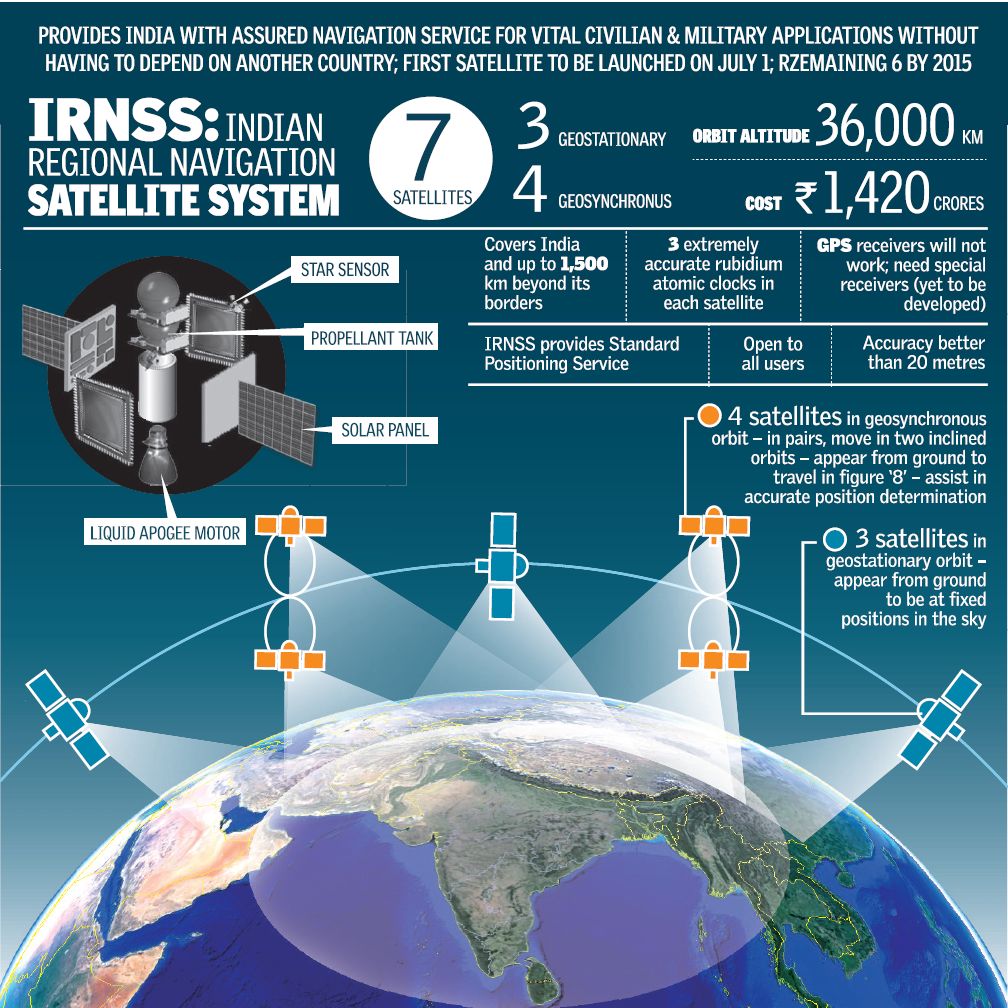
- NavIC, or Navigation with Indian Constellation, is an independent stand-alone navigation satellite system developed by the Indian Space Research Organisation (ISRO).
- NavIC was originally approved in 2006 at a cost of $174 million. It was expected to be completed by late 2011 but only became operational in 2018.
- NavIC consists of eight satellites and covers the whole of India’s landmass and up to 1,500 km (930 miles) from its boundaries.
- Currently, NavIC’s use is limited. It is being used in public vehicle tracking in India, for providing emergency warning alerts to fishermen venturing into the deep sea where there is no terrestrial network connectivity, and for tracking and providing information related to natural disasters.
- Enabling it in smartphones is the next step India is pushing for
7. Others Countries Satellites
Several countries operate or have operated satellite navigation systems similar to GPS. Some of these systems include:
-
GLONASS (Global Navigation Satellite System): Developed by Russia, GLONASS is a satellite navigation system that provides global coverage. It's similar to GPS and operates with a constellation of satellites. GLONASS is widely used in Russia and by other countries for various applications.
-
Galileo: Developed by the European Union and the European Space Agency, Galileo is another global satellite navigation system. It aims to provide highly accurate positioning and timing information. Galileo is intended to be interoperable with GPS and other systems to enhance overall navigation capabilities.
-
BeiDou Navigation Satellite System (BDS): Developed by China, BeiDou is another satellite navigation system that aims to provide global coverage. It has been operational in China and surrounding regions and has expanded its coverage to become a global system.
-
NavIC (Navigation with Indian Constellation): Developed by India, NavIC is a regional satellite navigation system designed to provide accurate positioning in India and surrounding regions.
These satellite navigation systems function similarly to GPS, employing constellations of satellites and ground control stations to provide precise positioning, navigation, and timing information to users on Earth. Many modern receivers can utilize signals from multiple satellite systems simultaneously, improving accuracy, availability, and reliability for navigation purposes
7. Way forward
GPS has evolved from a purely military technology into an integral part of everyday life, powering various industries and navigation systems worldwide. Its accuracy and reliability continue to improve with ongoing technological advancements
|
Previous Year Questions 1.In which of the following areas can GPS technology be used? (UPSC CSE 2018) 1. Mobile phone operations 2. Banking operations 3. Controlling the power grids Select the correct answer using the code given below: A.1 only B.2 and 3 only C.1 and 3 only D.1, 2 and 3 Answer (D) 2.With reference to the Indian Regional Navigation Satellite System (IRNSS), consider the following statements: (UPSC CSE 2018) 1. IRNSS has three satellites in geostationary and four satellites in geosynchronous orbits. 2. IRNSS covers entire India and about 5500 sq. km beyond its borders. 3. India will have its own satellite navigation system with full global coverage by the middle of 2019. Which of the statements given above is/are correct? A. 1 Only B.1 and 2 only C.2 and 3 only D. None Answer (A)
1.Why is Indian Regional Navigational Satellite System (IRNSS) needed? How does it help in navigation? (2018) |
Source: The Hindu
DIGITAL PERSONAL DATA PROTECTION RULES

- The Government of India issued the Digital Personal Data Protection (DPDP) Rules, 2025 on 14 November 2025, completing the implementation of the Digital Personal Data Protection Act, 2023.
- With both the Act and Rules now in place, India has a comprehensive, citizen-oriented framework that balances personal data rights with legitimate data processing requirements.
- Before finalising the Rules, the Ministry of Electronics and Information Technology sought inputs from the public. Consultations were organised across several major cities—Delhi, Mumbai, Guwahati, Kolkata, Hyderabad, Bengaluru and Chennai—drawing participation from startups, MSMEs, industry associations, civil society organisations, and government bodies.
- Citizens also contributed actively. Altogether, 6,915 suggestions and comments were submitted, significantly influencing the final version of the Rules.
- The notification of these Rules establishes a practical, innovation-supportive data protection regime for the country. It promotes clarity, encourages adherence to the law, and enhances public confidence in India’s expanding digital landscape.
- The Digital Personal Data Protection Act was passed by Parliament on 11 August 2023, establishing a comprehensive legal structure for safeguarding digital personal information in India.
- It outlines the responsibilities of organisations when they gather or process such data. The Act is built on the SARAL philosophy—Simple, Accessible, Rational and Actionable—using straightforward language and clear examples so that individuals and businesses can easily understand the requirements.
- The Act is anchored in seven foundational principles: consent and transparency, limitation of purpose, minimal collection of data, accuracy, restricted data retention, strong security measures and accountability. These principles shape each step of data handling and ensure that personal information is processed only for legitimate and defined purposes.
- A key highlight of the law is the establishment of the Data Protection Board of India, an autonomous authority responsible for monitoring compliance, investigating violations and ensuring that necessary corrective actions are taken.
- The Board is central to protecting user rights and fostering confidence in the data protection framework
Key Terms under the DPDP Act, 2023
|
The Digital Personal Data Protection Rules, 2025 operationalise the DPDP Act, 2023, creating a practical and transparent system for safeguarding personal data in India’s rapidly growing digital landscape. These Rules place strong emphasis on citizen rights and responsible data handling by organisations. Their objective is to prevent misuse of personal information, minimise digital risks, and foster an environment that supports safe innovation—thereby strengthening trust in India’s digital economy.
To achieve these goals, the Rules lay down several key provisions:
- A phased compliance period of 18 months has been introduced so organisations have adequate time to upgrade systems and adopt sound data-protection practices.
- All Data Fiduciaries must issue a separate, easy-to-read consent notice clearly stating the specific purpose for which personal data is collected and processed.
- Consent Managers—entities that help people manage their permissions—must operate as companies incorporated in India.
- The Rules also define a clear and prompt procedure for reporting data breaches. In the event of a breach, the Data Fiduciary must immediately notify every affected person in simple language, outlining what occurred, potential consequences and the corrective measures taken. The communication must also include relevant contact details for assistance.
- Each Data Fiduciary is required to provide accessible contact information for queries related to personal data—whether that is a designated officer or a Data Protection Officer. Significant Data Fiduciaries have additional responsibilities: they must conduct external audits, undertake impact assessments and implement stricter controls when using emerging or sensitive technologies.
- They may also be required to comply with government directions regarding restricted data categories, including localisation requirements when necessary.
- The Rules strengthen the rights granted under the Act. Individuals can request access to their personal information, corrections or updates, and deletion in permitted situations.
- They may also authorize another person to exercise these rights on their behalf. Data Fiduciaries must respond to such requests within 90 days.
- Additionally, the Rules provide for a fully digital Data Protection Board of India with four members. Citizens will be able to submit complaints online and track them through a dedicated website and mobile app, making grievance resolution faster and more efficient.
- Appeals against the Board’s orders will be handled by the Telecom Disputes Settlement and Appellate Tribunal (TDSAT)
The DPDP framework puts citizens at the heart of India’s data protection regime. Its core purpose is to ensure that individuals have clear authority over their personal information and can trust that it is handled responsibly. The rules are drafted in simple, user-friendly language so people can easily understand their rights, while also ensuring that organisations remain accountable for how they manage personal data.
Key Rights and Safeguards Provided to Citizens:
- Right to Give or Withhold Consent
Individuals have the freedom to agree or refuse the use of their personal data. Consent must be informed, specific, and easy to comprehend, and it can be withdrawn at any point. - Right to Know How Data is Used
People are entitled to know what information has been collected about them, the purpose of its collection, and the ways it is being processed. Organisations must share this information in a clear and straightforward format. - Right to Access Personal Data
Any individual may request a copy of the personal data that a Data Fiduciary holds about them. - Right to Correct Personal Data
Citizens can ask for corrections if their personal information is wrong, inaccurate, or incomplete. - Right to Update Personal Data
Individuals may request updates when their details change—such as a new phone number or address. - Right to Delete Personal Data
People have the option to seek erasure of their personal data under specific circumstances. The Data Fiduciary must review and act on such requests within the stipulated timeframe. - Right to Appoint a Representative
Every person may nominate someone else to exercise their data rights on their behalf—useful during illness or other situations where they cannot act themselves. - Mandatory Response Within 90 Days
Data Fiduciaries must respond to requests for access, correction, updating, or deletion within a maximum of ninety days, promoting timely redressal and accountability. - Protection in Case of Data Breaches
If a data breach occurs, affected individuals must be informed promptly. The notification must explain the incident and outline the steps they can take to reduce any potential harm. - Clear Contact Point for Help
Organisations must provide easily accessible contact details—either of a designated official or a Data Protection Officer—for queries or complaints related to personal data. - Extra Safeguards for Children
Processing children’s personal data requires verifiable consent from a parent or guardian, except when the data is used for essential services like medical care, education or immediate safety.
- As the DPDP Act and its Rules strengthen citizens’ privacy protections, they also clarify how these enhanced rights coexist with the Right to Information (RTI) Act, which ensures public access to information.
- The amendments made through the DPDP Act modify Section 8(1)(j) of the RTI Act in a manner that upholds both privacy and transparency without undermining either.
- This change is consistent with the Supreme Court’s recognition of privacy as a fundamental right in the Puttaswamy judgment.
- It aligns the RTI law with judicial reasoning that has, for years, applied reasonable limits to protect personal information.
- By formally incorporating this approach into the statute, the amendment removes ambiguity and avoids any clash between the RTI Act’s transparency mandate and the privacy protections embedded in the DPDP framework.
- Importantly, the updated provision does not prohibit the release of personal data. Instead, it requires authorities to make a careful, case-specific assessment before sharing such information, keeping the individual’s privacy interests in mind.
- Meanwhile, Section 8(2) of the RTI Act remains unchanged. It empowers public authorities to disclose information whenever the public interest is compelling enough to outweigh potential harm to protected interests.
- This ensures that the core purpose of the RTI Act—promoting openness, accountability and informed citizen participation—continues to shape how information requests are handled
|
For Prelims: Personality rights, Delhi High Court, Madras High Court, Right to property, trademark, right to privacy, Article 21, Copyright Act, 1957
For Mains:
1. Explain how can the legal framework for protecting personality rights in India be strengthened to better address the challenges of the digital age. (250 Words)
|
|
Previous Year Questions
1. What is the position of the Right to Property in India? (UPSC 2021)
A. Legal right available to citizens only
B. Legal right available to any person
C. Fundamental Right available, to citizens only
D. Neither Fundamental Right nor legal right
Answer: B
2. In order to comply with TRIPS Agreement, India enacted the Geographical Indications of Goods (Registration & Protection) Act, 1999. The difference/differences between a "Trade Mark" and a Geographical Indication is/are (UPSC 2010)
1. A Trade Mark is an individual or a company's right whereas a Geographical Indication is a community's right.
2. A Trade Mark can be licensed whereas a Geographical Indication cannot be licensed.
3. A Trade Mark is assigned to the manufactured goods whereas the Geographical Indication is assigned to the agricultural goods/products and handicrafts only.
Which of the statements given above is/are correct?
A. 1 only B. 1 and 2 only C. 2 and 3 only D. 1, 2 and 3
Answer: B
3. Which of the following statements regarding Article 21 of the Constitution of India is/ is correct? (CDS GK 2017)
1. Article 21 is violated when under-trial prisoners are detained under judicial custody for an indefinite period.
2. Right to life is one of the basic human rights and not even the state has the authority to violate that right.
3. Under Article 21, the right of a woman to make reproductive choices is not a dimension of personal liberty.
Select the correct answer using the code given below.
A. 1, 2 and 3 B. 1 and 2 only C. 1 and 3 only D. 2 only
Answer: B
4. Article 21 of Indian Constitution secures: (OPSC OAS 2018)
A. Right to life only
B. Right to personal liberty only
C. Right to liberty and privacy
D. Right to life, personal liberty and right to privacy
Answer: D
5. ‘Right to Privacy’ is protected under which Article of the Constitution of India? (UPSC 2021) (a) Article 15 Answer: C 6. Right to Privacy is protected as an intrinsic part of Right to Life and Personal Liberty. Which of the following in the Constitution of India correctly and appropriately imply the above statement? (2018) (a) Article 14 and the provisions under the 42nd Amendment to the Constitution. (b) Article 17 and the Directive Principles of State Policy in Part IV. (c) Article 21 and the freedoms guaranteed in Part III. (d) Article 24 and the provisions under the 44th Amendment to the Constitution. Answer: C |
STRAIT OF HORMUZ
.png)
-
The Strait of Hormuz is a strategically significant and narrow maritime passage situated between Iran and Oman, serving as a link between the Persian Gulf, the Gulf of Oman, and the Arabian Sea. The U.S. Energy Information Administration (EIA) has labeled it as the world’s most vital oil transit chokepoint, through which nearly 20% of global liquid petroleum fuels and a substantial portion of LNG trade pass. In May, more than 45% of India’s crude oil imports were estimated to have transited through this strait. Given that India is the third-largest consumer of crude oil globally and imports over 85% of its oil needs, the strait plays a crucial role in its energy security.
-
Data from the commodity analytics firm Kpler indicates that, as of June, India has been importing over 2.2 million barrels per day (bpd) of crude oil from Russia, which constitutes more than 41% of its total oil imports.
-
While oil imports from the U.S. have shown a steady rise, supplies from West Asian nations such as Iraq, Saudi Arabia, the UAE, and Kuwait have remained relatively consistent. Many of these shipments were likely planned prior to the recent escalation in tensions between Israel and Iran, and therefore, may not reflect the impact of the current geopolitical developments.
-
Over the past two to three years, India has notably adjusted its oil import strategy. Russia has emerged as India’s top crude supplier, overtaking traditional exporters from West Asia. Importantly, Russian oil bypasses the Strait of Hormuz, as it is mainly transported via alternative sea routes like the Suez Canal and Red Sea, and sometimes through the Cape of Good Hope or Pacific Ocean routes.
-
India’s current oil procurement approach already demonstrates a diversified and risk-mitigated strategy, especially in light of uncertainties in West Asian oil routes, with Russian crude now making up the largest share of India’s import basket.
-
After recent U.S. air strikes targeting Iranian nuclear sites, Iran’s parliament passed a resolution on Sunday advocating the closure of the Strait of Hormuz, a vital corridor for global oil transportation. The final decision on this move now lies with Iran’s Supreme National Security Council.
-
Although Iran has repeatedly issued threats in the past to shut the strait, it has never acted on them. Even in the present context, industry analysts consider the likelihood of an actual blockade to be low. Nevertheless, the increased risk perception surrounding the potential closure is expected to trigger global alarm, including in India, by raising concerns over the security of oil and gas supplies and potentially driving up global energy prices.
- The Israel-Iran conflict poses a significant threat to global oil and gas flows due to the geopolitical sensitivity and strategic location of the region. At the heart of this issue lies the Strait of Hormuz—a narrow but crucial maritime passage through which nearly 20% of the world’s petroleum and a substantial share of liquefied natural gas (LNG) are transported.
- Iran borders this strait and has, over the years, repeatedly threatened to block it during periods of heightened tension, including in response to military actions or sanctions.
- When hostilities between Israel and Iran escalate—such as through air strikes, proxy conflicts, or cyber warfare—it increases the likelihood of retaliation from Iran that could involve disrupting maritime traffic in the Strait of Hormuz.
- Even if Iran does not fully close the strait, the mere threat or perception of such an action is enough to cause volatility in global energy markets. Tanker insurance rates rise, shipping routes are reconsidered, and countries heavily dependent on oil imports, like India, become increasingly vulnerable to supply disruptions and price shocks.
- Furthermore, any military conflict in this region risks damaging key infrastructure such as refineries, pipelines, or export terminals in the broader West Asian region.
- This would constrain oil production and distribution, affecting both the availability and price of crude oil and gas worldwide. Global markets respond quickly to these risks, often resulting in immediate spikes in prices due to concerns over supply security.
- In summary, the Israel-Iran conflict amplifies the risk to global oil and gas flows by potentially destabilizing a region that is central to global energy supply chains. It heightens fears of supply disruptions, increases market speculation, and threatens the economic stability of energy-importing countries, making it a matter of both geopolitical and economic concern
|
For Prelims: Strait of Hormuz, Persian Gulf, Energy Information Administration (EIA), liquefied natural gas (LNG)
For Mains: General Studies II: Effect of policies and politics of developed and developing countries on India’s interests.
|
|
Previous Year Questions
1.Which one of the following straits is nearest to the International Date Line? (UPSC CSE 2008) (a) Malacca Strait (b) Bering Strait (c) Strait of Florida (d) Strait of Gibraltar Answer (b) The International Date Line (IDL) roughly follows the 180° longitude, which lies in the Pacific Ocean, deviating slightly to accommodate international boundaries. The Bering Strait lies between Russia and Alaska, and it is very close to the 180° meridian, making it the closest strait to the International Date Line. Here's why the other options are incorrect:
|
WORLD TRADE ORGANISATION (WTO)
1. Context
2. What is WTO?
- The World Trade Organization is the only international organization that deals with the rules of trade between countries.
- The WTO officially commenced in 1995 under the Marrakesh Agreement signed by 124 nations, replacing the General Agreement on Tariffs and Trade (GATT).
- Currently, it has 164 members and 23 observer governments (like Iran, Iraq, Bhutan, Libya, etc).
- According to its rules, all decisions are taken through consensus and any member can exercise a veto.
- It aims to promote free trade, which is done through trade agreements that are discussed and signed by the member states.
- The WTO also provides a forum for countries to negotiate trade rules and settle economic disputes between them.
3. What is WTO's Ministerial Conference?
- The Ministerial Conference is the WTO’s top decision-making body and usually meets every two years.
- All members of the WTO are involved in the Ministerial Conference and they can take decisions on all matters covered under any multilateral trade agreements.
- The WTO’s 12th Ministerial Conference was held in Geneva from 12-17 June.
- It was supposed to end on 15 June, but with intensifying negotiations, the conference was extended by two days.
4. Key takeaways from the meeting
4.1 Curtailing harmful fishing subsidies
- The WTO passed a multilateral agreement that would curb ‘harmful’ subsidies on illegal, unreported, and unregulated fishing for the next four years, to better protect global fish stocks.
- Since 2001, member states have been negotiating the banning of subsidies that promote overfishing.
- The current agreement, which establishes new trading rules, is the second multilateral agreement in WTO history.
- India and other developing countries were able to win some concessions in this agreement.
4.2 Global food security
- Members agreed to a binding decision to exempt food purchased by the UN's World Food Programme (WFP) for humanitarian purposes, from any export restrictions.
- In light of the global food shortages and rising prices caused by the war between Ukraine and Russia, the group's members issued a declaration on the importance of trade in global food security and that they would avoid bans on food exports.
- However, countries would be allowed to restrict food supplies to ensure domestic food security needs.
- India's key demand to allow it to export food from its public stockholdings to other countries will reportedly be discussed in the next Ministerial Conference in 2023.
4.3 E-Commerce transactions
- Members agreed to continue the long-standing moratorium on customs duties on e-commerce transmissions.
- It will be continued until the subsequent Ministerial Conference or until March 31, 2024, depending on whichever comes first.
4.4 Covid-19 vaccine production
- WTO members agreed to temporarily waive intellectual property patents on Covid19 vaccines without the consent of the patent holder for 5 years so that they can more easily manufacture them domestically.
- The current agreement is a watered-down version of the original proposal made by India and South Africa in 2020.
- They had wanted broader intellectual property waivers on vaccines, treatments, and tests.
- Rich pharmaceutical companies had strongly opposed this, arguing that IPs do not restrict access to Covid vaccines and that the removal of patent protections gives researchers that quickly produced life-saving vaccines, a negative message.
- The waiver agreed upon by the WTO was criticized by advocacy groups for being narrow in scope, as it did not cover all medical tools like diagnostics and treatments.
5. Significance of the Recent Agreements
- The fisheries agreement is of immense significance as it is the first time that members agreed with environmental sustainability at its heart.
- It will also help in the protection of the livelihoods of the 260 million people who depend directly or indirectly on marine fisheries. It is only the second multilateral agreement on global trade rules struck in its 27-year history.
- Second, the exemption of WFP's food from tariffs is vital for promoting global food security, especially in light of the global food shortages and rising prices caused by the war between Ukraine and Russia.
- Third, the temporary waiver will contribute to ongoing efforts to concentrate and diversify vaccine manufacturing capacity so that a crisis in one region does not leave others cut off.
6. Issues surrounding WTO
6.1 The burden for Poor countries
- The WTO rules include many Non-trade subjects as well. The subjects like environment, labor standards, fossil fuel subsidies, plastic pollution, and transparency in government procurement have been brought into the fold of the WTO.
- This is expected to raise costs for the poor and developing countries and impact the competitiveness of their goods.
- For instance, a poor country exporting cotton shirts must first meet high environmental standards at home. This will only raise costs and cut exports from poor countries.
6.2 Trade wars
- The US administration imposed steep tariffs in January 2018 on China alleging IP violations.
- In December 2019 the US also blocked the appointment of new nominees to WTO’s appellate body. This has paralyzed the WTO as a judge and enforcer of global trade rules.
6.3 Lack of consensus
- The developed nations’ game plan is to put the old obligations on the back burner and push the WTO to form rules on new areas like e-commerce.
- It is an area where the US firms have a clear edge.
- Most WTO member countries want them to first deliver on the agreed issues like reduction in agriculture subsidies.
|
For Prelims: General Agreement on Tariffs and Trade (GATT), Marrakesh Agreement, World Trade Organisation (WTO), 12th Ministerial Conference of WTO, and UN's World Food Programme (WFP).
For Mains: 1. What have been the recent issue related to dispute settlement at WTO? Have the policies at WTO worked against the interest of emerging economies like India?(250 Words)
|
Previous year Questions1. In the context of which of the following do you sometimes find the terms 'amber box, blue box, and green box' in the news? (UPSC 2016)
A. WTO affairs
B. SAARC affairs
C. UNFCCC affairs
D. India-EU negotiations on FTA
Answer: A
2. In the context of the affairs which of the following is the phrase "Special Safeguard Mechanisms" mentioned in the news frequently? (UPSC 2010)
A. United Nations Environment Program
B. World Trade Organization Agreement
C. ASEAN-India Free Trade
D. G-20 Summits
Answer: B
3. Consider the following statements: (UPSC 2017)
1. India has ratified the Trade Facilitation Agreement (TFA) of the WTO.
2. TFA is a part of WTO's Bali Ministerial Package of 2013.
3. TFA came into force in January 2016
Which of the statements given above is/are correct?
A. 1 and 2 only
B. 1 and 3 only
C. 2 and 3 only
D. 1, 2 and 3
Answer: A
|
SPECIAL ECONOMIC ZONES (SEZ)
- Special Economic Zones (SEZs) are specifically demarcated geographical areas within a country that are governed by unique economic regulations and business laws, which are different from those applicable in the rest of the country.
- These zones are established with the primary aim of attracting foreign and domestic investment, boosting exports, generating employment, and encouraging industrial growth by providing a more liberal economic environment.
- The concept of SEZs gained momentum globally after their success in countries like China, where regions such as Shenzhen transformed into massive industrial and commercial hubs.
- India adopted the SEZ model in the early 2000s with the enactment of the Special Economic Zones Act, 2005, which provided a comprehensive legal framework for their establishment, operation, and regulation.
- Within an SEZ, companies often enjoy a host of incentives and facilities. These may include tax exemptions on income, customs and excise duties, and relaxed labor and environmental norms. The idea is to reduce bureaucratic hurdles and create an investor-friendly climate that encourages industries, especially those focused on export-oriented production, to flourish.
- Moreover, SEZs are treated as foreign territories for the purpose of trade operations, duties, and tariffs. This means that goods and services entering an SEZ from the rest of the country are treated as exports, and those leaving an SEZ to the domestic tariff area are considered imports. This unique status allows businesses in SEZs to operate with greater flexibility and global competitiveness.
- However, SEZs in India have not been without criticism. While they have succeeded in some areas in boosting exports and creating jobs, concerns have been raised over land acquisition practices, uneven regional development, and the environmental impact of industrialization. Additionally, the promise of large-scale employment and export-led growth has not materialized uniformly across all SEZs.
- In recent years, the Indian government has been looking to revamp and repurpose SEZs to align them with new economic goals, including the Make in India initiative and the promotion of green and digital manufacturing.
- As India aims to become a global manufacturing and logistics hub, SEZs are likely to play a key role, provided regulatory and infrastructural bottlenecks are addressed effectively
- Semiconductors are fundamental to our increasingly digital world, serving as the core components behind technologies like artificial intelligence and machine learning—part of a broader trend of growing automation and electronic integration.
- These minute chips enable the processing of large volumes of data, powering devices such as smartphones, laptops, tablets, smart TVs, voice assistants, vehicles, and virtually all modern electronic equipment.
- In 2021, data from the Semiconductor Industry Association indicated that China produced nearly 35% of the global semiconductor output.
- The disruptions caused by the COVID-19 pandemic exposed the vulnerabilities of heavily centralized supply chains, prompting countries, including India, to recognize the strategic risk of relying on a single nation for critical components.
- As a result, many nations began efforts to strengthen and expand their own domestic semiconductor manufacturing capabilities
- On June 9, the Ministry of Commerce and Industry announced that it had recently made several changes to the Special Economic Zones (SEZ) Rules, 2006, aimed at promoting local semiconductor manufacturing.
- One key change involved amending Rule 5, which previously mandated that SEZs dedicated solely to semiconductor or electronic component production must cover a minimum of 50 hectares of contiguous land.
- This requirement has now been eased, reducing the land size threshold to just 10 hectares. This adjustment is expected to lower the entry barrier for companies, enabling smaller investments while still offering access to SEZ incentives like tax breaks, duty-free imports, and infrastructure assistance.
- Another notable revision was made to Rule 7, which earlier required SEZ land to be entirely “encumbrance-free”—meaning it should be free of any legal claims, liens, or disputes and should have a clear and transferable title.
- Given the complexities of India’s land ownership systems and often time-consuming legal procedures, this requirement posed significant delays. The updated rule now gives the Board of Approval the discretion to relax this condition, allowing SEZs to be established more efficiently.
- The third change was to Rule 18, which now permits SEZ units involved in semiconductor and electronic component production to sell within the domestic market upon payment of applicable duties.
- Traditionally, SEZs have focused on exports. This shift not only provides a safeguard against global market volatility but also strengthens domestic supply chains by enabling steady availability of these critical components in the local market
The primary aim of the policy is to:
-
Attract global semiconductor manufacturers to set up fabrication (fab) units in India.
-
Promote design, fabrication, packaging, and testing of semiconductors.
-
Create a skilled workforce for the semiconductor ecosystem.
-
Enable India’s transition from being a consumer to a producer of semiconductors.
-
Strengthen India’s position in global supply chains and reduce strategic vulnerabilities.
|
For Prelims: Semicon India Programme, India Semiconductor Mission, Micron investment, India-USA semiconductor cooperation
For Mains: Self-reliance in technology, strategic industries, manufacturing and innovation, supply chain resilience
|
RARE EARTH ELEMENTS
| The 17 rare earths are cerium (Ce), dysprosium (Dy), erbium (Er), europium (Eu), gadolinium (Gd), holmium (Ho), lanthanum (La), lutetium (Lu), neodymium (Nd), praseodymium (Pr), promethium (Pm), samarium (Sm), scandium (Sc), terbium (Tb), thulium (Tm), ytterbium (Yb), and yttrium (Y) |

- These elements are important in technologies of consumer electronics, computers and networks, communications, clean energy, advanced transportation, healthcare, environmental mitigation, and national defence, among others
- Scandium is used in televisions and fluorescent lamps, and yttrium is used in drugs to treat rheumatoid arthritis and cancer
- Rare earth elements are used in space shuttle components, jet engine turbines, and drones
- Cerium, the most abundant rare earth element, is essential to NASA’s Space Shuttle Programme
- In recent years, rare earths have become even more important because there has been an increase in demand for green energy
- Elements like neodymium and dysprosium, which are used in wind turbine motors, are sought-after more than ever as wind mills across the world continue to grow
- Moreover, the push for switching from internal combustion cars to electric vehicles has also led to a rise in demand for rare earth magnets made from neodymium, boron, and iron and batteries
- China has imposed restrictions on the export of seven rare earth elements (REEs) — dysprosium, gadolinium, lutetium, samarium, scandium, terbium, and yttrium — which are part of the 17 REEs.
- The country dominates the global refining of heavy REEs, giving it substantial control over critical supply chains, ranging from consumer electronics to defense. Although these measures do not constitute a complete export ban, they may cause temporary supply disruptions, as exporters navigate the permit process.
- India may not face an immediate disruption due to these restrictions. Despite government efforts to enhance domestic manufacturing of semiconductors and defense systems, the more sophisticated phases of production largely take place abroad, particularly in China and Japan. Japan, in anticipation of such issues, has already built stockpiles to buffer against REE-related supply shocks.
- Recognizing the strategic importance of REEs, India is aware that it holds around 6% of global deposits. However, the country’s capacity for mining and refining is minimal, largely due to the environmental challenges associated with such operations.
- India does extract some light REEs through its state-run firm, Indian Rare Earths Ltd, including monazite from coastal sands in Kerala. Nonetheless, imports still play a role.
- According to a recent statement by the Ministry of Mines in the Lok Sabha, India imported approximately 2,270 tonnes of REEs in 2023–24. Consequently, the national approach involves a mix of increasing domestic output and maintaining import channels
To support the strategic use of essential resources such as rare earth elements, India has launched the National Critical Mineral Mission (NCMM). This initiative aims to strengthen the country’s supply chain for critical minerals by boosting domestic production and establishing alternative international supply partnerships. According to a presentation by the Ministry of Mines in January, global events like China’s export restrictions, the Russia–Ukraine conflict, and other geopolitical factors have exposed vulnerabilities in the global critical mineral supply, underscoring the urgency of diversifying sources.
As part of the NCMM, the Indian government plans to oversee or support around 1,200 mineral exploration projects. It also intends to offer exploration licenses to encourage private sector participation and conduct auctions for additional critical mineral blocks
|
For Prelims: Applications of rare earths, rare earth elements
For Mains:
1.Europe’s largest known deposit of rare earth elements found in Sweden: Could the discovery change geopolitics?
|
|
Previous Year Questions
1.Recently, there has been a concern over the short supply of a group of elements called ‘rare earth metals’. Why? (2012)
Which of the statements given above is/are correct? (a) 1 only Answer (c)
|


