Current Affair

Back
DAILY CURRENT AFFAIRS, 22 JULY 2026

COMPREHENSIVE ECONOMIC AND TRADE AGREEMENT (CETA)


1. Context
 
The India-U.K. Comprehensive Economic and Trade Agreement (CETA) came into effect on July 15, a year after it was signed. At the same time, the India-U.K. Double Contribution Convention (DCC) also comes into effect. The trade deal has been hailed by both sides, with Commerce Secretary Rajesh Agrawal even calling it the “gold standard” of India’s free trade agreements.
 
 
2. What Trade Benefits Does India Receive Under CETA?
 
 
  • According to India's Chief Trade Negotiator, Rajesh Agrawal, the Comprehensive Economic and Trade Agreement (CETA) is notable not only for its extensive coverage but also for the substantial market access it provides.
  • The agreement goes beyond addressing a broad range of tariff and non-tariff measures by offering meaningful concessions across several key sectors, making it one of India's most comprehensive trade agreements.
  • Under the agreement, the United Kingdom has committed to eliminating customs duties on 96.8% of its tariff lines immediately after the agreement comes into effect. These tariff reductions account for approximately 97.7% of India's exports by value.
  • In addition, tariffs on another 2% of tariff lines, representing nearly 1.8% of trade value, will be reduced through tariff-rate quotas.
  • As a result, the agreement ultimately provides preferential market access covering 98.8% of tariff lines and approximately 99.5% of the total value of bilateral trade.
  • The scope of CETA extends well beyond tariff liberalization. Spread across 30 chapters, the agreement includes provisions relating to digital commerce, government procurement, innovation, support for micro, small and medium enterprises (MSMEs), labour standards, environmental sustainability, and gender-related issues.
  • It also establishes rules to address non-tariff barriers, including Sanitary and Phytosanitary (SPS) Measures and Technical Barriers to Trade (TBT), with the objective of ensuring that such regulations facilitate legitimate public policy goals without becoming unnecessary obstacles to international trade.
  • Services trade constitutes another major component of the agreement and is particularly significant for India, where the services sector is a key contributor to economic growth and export earnings.
  • Under CETA, the United Kingdom has provided enhanced market access by allowing Indian businesses to establish a commercial presence in sectors such as information technology and computer services, consulting, and environmental services.
  • This enables Indian enterprises to expand their operations in the U.K. through branches, subsidiaries, or representative offices, thereby strengthening their participation in the British market
 
 
3. What is the Double Contribution Convention (DCC), and How Does It Benefit Indian Workers in the United Kingdom?
 
 
  • A major achievement for India under the Comprehensive Economic and Trade Agreement (CETA) is the inclusion of the Double Contribution Convention (DCC).
  • This provision is designed to prevent Indian professionals temporarily employed in the United Kingdom from making mandatory social security contributions in both countries simultaneously.
  • Under the DCC, Indian employees who continue contributing to India's social security system, along with their employers, are exempt from paying social security contributions in the U.K. for a period of up to five years.
  • The exemption was originally proposed for three years but was subsequently extended to five years during negotiations.
  • Before the introduction of the DCC, Indian workers on temporary assignments in the United Kingdom faced the burden of contributing to social security schemes in both India and the U.K.
  • Since most Indian professionals are deputed to the U.K. for periods not exceeding five years, they rarely remained in the country long enough to qualify for U.K. social security benefits. Under British regulations, workers generally need to contribute for at least 10 years before becoming eligible to receive pension and other social security benefits.
  • Consequently, many Indian employees paid into the U.K. system without ever receiving any corresponding benefits because they returned to India before meeting the eligibility criteria.
  • The DCC addresses this long-standing concern by exempting eligible Indian workers from U.K. social security payments during their temporary stay, provided they continue making the required contributions in India.
  • This exemption is expected to cover nearly 90% of Indian professionals working in the United Kingdom, enabling them to retain around 23% of their salary that would otherwise have been deducted as U.K. social security contributions
 
 
4. What Benefits Does the United Kingdom Receive Under CETA?
 
 
  • The Comprehensive Economic and Trade Agreement (CETA) provides the United Kingdom with substantial opportunities to expand its presence in the Indian market across both goods and services.
  • While India has safeguarded certain strategically important and sensitive sectors from excessive foreign competition, the agreement nevertheless offers British businesses significantly improved access to one of the world's fastest-growing major economies.
  • Under the agreement, India has committed to eliminating customs duties immediately on products representing 30.3% of bilateral trade value.
  • Tariffs on another 47% of trade value will be phased out over a specified period, while products accounting for 12.1% of trade value will benefit from preferential tariff concessions through tariff-rate quotas.
  • Overall, the agreement provides preferential access covering 89.5% of India's tariff lines, representing approximately 89.4% of the total value of bilateral trade.
  • Among the sectors expected to benefit the most are several iconic British exports. The gradual reduction in import duties will make U.K.-made whisky more affordable for Indian consumers.
  • Similarly, tariffs on British automobiles, engineering equipment, and a range of industrial products will decline, improving their competitiveness in the Indian market and creating new export opportunities for U.K. manufacturers.
  • The agreement also strengthens market access for British service providers. India has agreed to liberalize several important service sectors, including accountancy, auditing, financial services, telecommunications, and environmental services.
  • As a result, U.K.-based firms operating in these fields will be able to provide services to Indian clients under more favourable conditions, often without the need to establish a permanent commercial presence in India.
  • In addition, India has committed to recognizing certain U.K. professional qualifications, particularly in the fields of law and accounting, thereby making it easier for qualified British professionals to engage with the Indian market and offer their expertise
 
 
5. Are There Any Unique Features of the CETA?
 
 
  • In addition to its comprehensive coverage and extensive market access commitments, the Comprehensive Economic and Trade Agreement (CETA) contains several distinctive provisions that make it different from India's earlier free trade agreements.
  • Among the most noteworthy are the provisions relating to automobile imports and government procurement, both of which represent significant policy developments.
  • One of the landmark features of the agreement is India's decision to reduce import duties on automobiles from the United Kingdom.
  • This is the first time India has agreed to provide preferential tariff treatment for imported passenger vehicles under a trade agreement.
  • As notified by the Directorate General of Foreign Trade (DGFT) on 10 July, the agreement permits the import of 20,000 fully built petrol and diesel passenger vehicles from the U.K. during the first year at concessional customs duty rates ranging from 30% to 50%, depending on factors such as engine capacity and vehicle category.
  • These preferential rates are substantially lower than the regular import duties, which generally range between 66% and 110%.
  • The agreement also establishes a phased quota mechanism for automobile imports. The annual import quota for eligible passenger vehicles will gradually increase to 37,000 units by the fifth year of the agreement.
  • Thereafter, the quota will progressively decline, eventually stabilizing at 15,000 vehicles annually from the fifteenth year onwards. During this period, the concessional tariff applicable to vehicles imported within the quota will also be reduced, reaching 10% by the fifth year and remaining at that level thereafter.
  • Separate quota limits and tariff schedules have also been negotiated for electric and other alternative-fuel passenger vehicles, as well as for commercial vehicles, reflecting the diversity of the automobile sector.
  • Government procurement is another area where the agreement introduces important changes. Under CETA, companies from the United Kingdom will be permitted to participate in procurement tenders floated by the Government of India.
  • However, their participation will be subject to specific conditions, and they will be treated as Class-II local suppliers in eligible Central Government tenders, ensuring that domestic firms continue to enjoy preferential treatment in public procurement.
  • At the same time, Indian businesses will benefit from improved access to the United Kingdom's government procurement market. Indian suppliers will continue to receive Class-I local supplier preference in the U.K., enabling them to compete more effectively for eligible public contracts.
  • Nevertheless, this access is limited to procurement by non-sensitive Central Government departments and public utilities, while contracts awarded by central public sector enterprises (PSUs) and state or local government bodies remain outside the scope of the agreement.
  • According to India's Ministry of Commerce, the arrangement grants Indian companies legal access to U.K. government procurement opportunities valued at approximately £90 billion (around US$122 billion).
  • In return, India has opened procurement opportunities worth nearly US$114 billion to eligible British firms, creating a mutually beneficial framework for public sector contracting
 
 
6. Way Forward
 

One notable aspect absent from the India–U.K. Comprehensive Economic and Trade Agreement (CETA) is a dedicated investment commitment. Unlike some of India's recent trade agreements, CETA does not contain a provision requiring the United Kingdom to facilitate a specific level of investment into India over a defined period.

For instance, the Trade and Economic Partnership Agreement (TEPA) between India and the four member countries of the European Free Trade Association (EFTA) includes an investment-related commitment under which the EFTA bloc has agreed to facilitate US$100 billion in investments in India over a 15-year period. Similarly, the India–New Zealand Free Trade Agreement contains a provision whereby New Zealand has committed to facilitating US$20 billion of investment in India during the same 15-year timeframe.


For Prelims: Comprehensive Economic and Trade Agreement (CETA), Double Contribution Convention (DCC)
 
For Mains: GS II - International relations
 
 
Previous Year Questions
 
1. Consider the following countries:
1. Australia
2. Canada
3. China
4. India
5. Japan
6. USA
Which of the above are among the free-trade partners' of ASEAN? (UPSC 2018)
A. 1, 2, 4 and 5          B.  3, 4, 5 and 6      C.  1, 3, 4 and 5       D.  2, 3, 4 and 6
 
Answer: C
 

2. Increase in absolute and per capita real GNP do not connote a higher level of economic development, if (UPSC 2018)

(a) Industrial output fails to keep pace with agricultural output.
(b) Agricultural output fails to keep pace with industrial output.
(c) Poverty and unemployment increase.
(d) Imports grow faster than exports.

Answer: C

3. The SEZ Act, 2005 which came into effect in February 2006 has certain objectives. In this context, consider the following: (2010)

  1. Development of infrastructure facilities.
  2. Promotion of investment from foreign sources.
  3. Promotion of exports of services only.

Which of the above are the objectives of this Act?

(a) 1 and 2 only     (b) 3 only         (c) 2 and 3 only           (d) 1, 2 and 3

Answer: A

4. A “closed economy” is an economy in which (UPSC 2011)

(a) the money supply is fully controlled
(b) deficit financing takes place
(c) only exports take place
(d) neither exports nor imports take place

Answer: D

5. With reference to the “G20 Common Framework”, consider the following statements: (UPSC 2022)
1. It is an initiative endorsed by the G20 together with the Paris Club.
2. It is an initiative to support Low Income Countries with unsustainable debt.
Which of the statements given above is/are correct?
(a) 1 only         (b) 2 only            (c) Both 1 and 2          (d) Neither 1 nor 2
Answer: C
 
Source: The Hindu


INDUS VALLEY CIVILISATION (IVC)


1. Context
 
  Very soon, visitors to Lothal, one of the most prominent outposts of the Indus Valley Civilisation, will be able to get a feel of walking through Harappan streets, dockyards, markets and civic spaces.
 
2. Indus Valley Civilisation (IVC)
 
The Indus Valley Civilization, also known as the Harappan Civilization, was one of the world's earliest urban civilizations. It flourished in the northwestern regions of South Asia, primarily in what is now modern-day Pakistan and northwest India, from around 3300 BCE to 1300 BCE
 
Key features of the Indus Valley Civilization include:
 
  • Cities such as Harappa, Mohenjo-Daro, and Dholavira were meticulously planned, with advanced drainage systems, well-laid-out streets, and organized housing
  • The civilization had extensive trade networks, evidenced by artifacts found in excavations, including seals, pottery, and ornaments. Trade routes extended to Mesopotamia, Afghanistan, and other regions
  • The Indus script, found on seals and pottery, remains undeciphered, so our understanding of their language and writing system is limited
  • Agriculture was the primary economic activity, with evidence of sophisticated irrigation systems and the cultivation of various crops like wheat, barley, and cotton.
  • The civilization demonstrated remarkable craftsmanship in pottery, metallurgy, and city planning. They made significant advancements in bronze metallurgy, creating tools, weapons, and ornaments from copper and bronze
  • Archaeological findings suggest a complex belief system with evidence of worship of various deities, including mother goddesses and male gods. The discovery of seals with animal motifs suggests a possible connection to ritual practices
  • The reasons for the decline of the Indus Valley Civilization are not entirely clear, but theories include environmental changes, such as drought or flooding, invasion, or the breakdown of trade networks. The civilization gradually declined around 1900 BCE to 1300 BCE
3. Phases of IVC
 

The Indus Valley Civilization (IVC) is typically divided into three main phases: the Early Harappan Phase, the Mature Harappan Phase, and the Late Harappan Phase. These phases mark the developmental stages of the civilization from its inception to its eventual decline.

  • Early Harappan Phase (3300 BCE - 2600 BCE):

    • This phase represents the initial stages of urbanization and civilization in the Indus Valley region.
    • Settlements during this phase were characterized by small villages with rudimentary forms of pottery and simple agricultural practices.
    • Evidence of early forms of craft specialization and trade begins to emerge.
    • Cities like Harappa and Mohenjo-Daro were not fully developed during this phase but show signs of early urban planning.
  • Mature Harappan Phase (2600 BCE - 1900 BCE):

    • This phase marks the peak of the civilization, characterized by fully developed urban centers with advanced infrastructure.
    • Cities such as Harappa, Mohenjo-Daro, and Dholavira reached their zenith during this period, exhibiting sophisticated city planning, advanced drainage systems, and standardized brick sizes.
    • Trade networks expanded, evidenced by the presence of Indus seals and artifacts found in Mesopotamia and other distant regions.
    • The civilization reached its cultural and technological heights during this phase, with advancements in metallurgy, pottery, and arts.
    • The Indus script was in use during this period, though it remains undeciphered.
  • Late Harappan Phase (1900 BCE - 1300 BCE):

    • This phase marks the decline and eventual collapse of the Indus Valley Civilization.
    • Urban centers began to decline, and many sites were abandoned or experienced a significant decrease in population.
    • There is evidence of environmental stress, such as changes in river courses, possibly leading to agricultural decline.
    • Increased evidence of conflict and invasions is noted, with some scholars suggesting that external pressures may have contributed to the civilization's decline.
    • The Indus script disappears, and many of the distinctive features of the Mature Harappan Phase, such as standardized weights and measures, also vanish
4. Origin of the civilization, town planning, craft, economy, religion, decline of the civilization
 

The origins of the Indus Valley Civilization (IVC) are still subject to debate among historians and archaeologists. However, it is generally believed that the civilization emerged in the northwestern region of the Indian subcontinent, particularly in present-day Pakistan and northwest India, around 3300 BCE. The civilization likely emerged from earlier Neolithic and Chalcolithic cultures in the region.

Town Planning:

  • One of the most remarkable features of the Indus Valley Civilization was its advanced urban planning.
  • Cities such as Harappa and Mohenjo-Daro were carefully laid out with grid-like street patterns, well-organized residential and industrial areas, and sophisticated drainage systems.
  • Buildings were constructed using standardized bricks, indicating a high level of central authority and organization.

Crafts:

  • The Indus Valley Civilization was known for its skilled craftsmanship in various fields.
  • Artifacts found at excavation sites include pottery, seals, sculptures, jewelry, and tools, showcasing the civilization's mastery of materials such as pottery, metal, and stone.
  • The civilization also had a sophisticated system of weights and measures, indicating a well-developed economy and trade network.

Economy:

  • Agriculture was the backbone of the economy, with the cultivation of crops such as wheat, barley, rice, and cotton.
  • The civilization had extensive trade networks, both within the subcontinent and with regions as far as Mesopotamia.
  • Indus seals, with inscriptions yet to be deciphered, were used for trade and administrative purposes, indicating the existence of a complex economic system.

Religion:

  • The religious beliefs of the Indus Valley Civilization are not fully understood due to the lack of deciphered texts or inscriptions.
  • However, archaeological evidence suggests the presence of a pantheon of deities, including mother goddesses and male gods, as well as animals such as bulls and elephants.
  • Ritualistic practices, possibly including animal sacrifice, are inferred from archaeological findings.

Decline of the Civilization:

  • The decline of the Indus Valley Civilization remains a subject of speculation and ongoing research.
  • Various factors have been proposed, including environmental changes such as climate shifts, floods, or droughts, which may have led to agricultural decline.
  • Some scholars suggest internal factors such as social unrest, political instability, or the exhaustion of natural resources.
  • External factors such as invasion or conquest by Indo-Aryan tribes have also been proposed as contributing to the decline of urban centers.
  • The decline of the Indus Valley Civilization was a gradual process, with urban centers being gradually abandoned and the civilization eventually giving way to new cultural and political entities in the region
 
5.Major sites of Indus civilisation in Gujarat and other parts of India


In addition to the well-known sites in Pakistan such as Mohenjo-Daro and Harappa, the Indus Valley Civilization also had significant sites in Gujarat and other parts of India. Some major sites in Gujarat and other regions of India associated with the Indus Valley Civilization include:

  • Lothal (Gujarat):

    • Lothal is one of the most prominent Indus Valley sites located in Gujarat, India.
    • It was a major center for trade and commerce, known for its dockyard, which is considered one of the earliest known examples of maritime architecture.
    • The site also exhibits evidence of craft production, including pottery, metalwork, and bead making.
  • Dholavira (Gujarat):

    • Dholavira is another significant Indus Valley site located in Gujarat.
    • It is one of the largest and most well-preserved Harappan sites, known for its sophisticated urban planning and water management systems.
    • The site features a fortified citadel, large reservoirs, and extensive city walls.
  • Kalibangan (Rajasthan):

    • Kalibangan is an Indus Valley site located in Rajasthan, India.
    • It is known for its distinctive fire altars and evidence of early ploughing techniques.
    • The site also features a fortified settlement with well-planned streets and houses.
  • Rakhigarhi (Haryana):

    • Rakhigarhi is one of the largest Indus Valley sites located in Haryana, India.
    • It is believed to have been one of the largest settlements of the civilization, covering an area of over 350 hectares.
    • Excavations at Rakhigarhi have revealed evidence of urban planning, including a well-structured drainage system and residential complexes.
  • Surkotada (Gujarat):

    • Surkotada is an Indus Valley site located in Gujarat, India.
    • It is known for its fortified settlement and evidence of both urban and rural life.
    • Excavations at the site have revealed evidence of craft production, including pottery and metalwork
6.Script and Religion

The script of the Indus Valley Civilization remains undeciphered, which means that scholars have not been able to fully understand or interpret the writing system used by the ancient Indus people. This script, often referred to as the Indus script, has been found on seals, pottery, and other artifacts excavated from various Indus Valley sites. Despite numerous attempts by linguists, archaeologists, and epigraphers over the years, the script remains a mystery, and its decipherment remains one of the most significant challenges in the study of the civilization.

Regarding religion, our understanding of the religious beliefs and practices of the Indus Valley Civilization is also limited due to the lack of deciphered texts or inscriptions, as well as the absence of monumental architecture or temples typically associated with later ancient civilizations.

However, archaeological evidence provides some clues about the religious aspects of the civilization:

  • Iconography: Seals and terracotta figurines found at Indus Valley sites depict various animals, including bulls, elephants, rhinoceroses, and tigers, as well as human-like figures. These images suggest the presence of a diverse pantheon of deities.

  • Mother Goddess: One of the most prominent motifs in Indus Valley art is that of the female deity, often referred to as the "Mother Goddess." This figure is depicted seated in a posture of reverence, suggesting her importance in religious beliefs.

  • Animal Worship: The presence of animal motifs on seals and other artifacts suggests that certain animals may have held religious significance. Bulls, in particular, are depicted in various contexts and may have been objects of veneration or worship.

  • Ritualistic Practices: Archaeological evidence, such as the discovery of fire altars and the presence of ritual baths in some Indus Valley sites, suggests the performance of ritualistic practices. These may have included offerings, sacrifices, or purification rituals.

  • Water Symbolism: Water management systems, including wells, reservoirs, and drainage systems, were integral to the urban planning of Indus Valley cities. The significance of water in daily life and its possible religious symbolism have been proposed by scholars

7.Craft, Technology and Artefacts
 

The craft, technology, and artifacts of the Indus Valley Civilization reveal a sophisticated and advanced society with remarkable skills in various fields.

Harappan Culture | World Civilization

Here are some key aspects:

  • Pottery: The pottery of the Indus Valley Civilization was finely made and displayed a high level of craftsmanship. It was often wheel-thrown and decorated with intricate designs, including geometric patterns, animal motifs, and plant motifs.

  • Metalwork: Metalwork was another significant aspect of craft in the Indus Valley Civilization. Copper and bronze were the primary metals used, and craftsmen created a variety of objects, including tools, weapons, ornaments, and vessels. Bronze figurines and statues have also been found at excavation sites.

  • Seals: Indus seals are among the most distinctive artifacts of the civilization. These seals were typically made of steatite and engraved with intricate designs, including depictions of animals, humans, and mythical creatures. They were used for various purposes, including trade, administrative, and possibly religious functions.

  • Bead Making: The Indus Valley Civilization was known for its bead making, with beads crafted from materials such as stone, shell, faience, and metal. These beads were used for personal adornment, trade, and possibly religious rituals.

  • Urban Planning: The technology and urban planning skills of the Indus people are evident in the layout of their cities, which featured well-planned streets, drainage systems, and standardized brick sizes. Cities like Mohenjo-Daro and Harappa are prime examples of their advanced urban planning.

  • Water Management: The civilization had sophisticated water management systems, including wells, reservoirs, and drainage systems. These systems allowed for efficient storage and distribution of water, crucial for sustaining urban life in arid regions.

  • Weights and Measures: The Indus Valley Civilization used standardized weights and measures, as evidenced by the discovery of precision-made weights and measuring instruments. This suggests a high level of organization in trade and commerce.

  • Art and Sculpture: The civilization produced a variety of art and sculpture, including terracotta figurines, pottery, seals, and sculptures depicting human and animal figures. These artifacts provide insight into the artistic and cultural life of the Indus people

8.Trade And External Contacts
Trade and external contacts were vital components of the Indus Valley Civilization's economy and cultural exchange.
 
Here are some key aspects:
  • The Indus Valley Civilization engaged in extensive trade networks, both within the Indian subcontinent and with regions as far as Mesopotamia (modern-day Iraq), Afghanistan, Oman, and the Persian Gulf. Archaeological evidence, such as the discovery of Indus seals and artifacts in distant regions, indicates the extent of these trade connections
  • Indus seals, typically made of steatite, were used as markers of ownership and for administrative purposes. These seals often depicted animals, mythical creatures, and inscriptions in the Indus script. Many of these seals have been found in Mesopotamia, suggesting the presence of trade links between the two regions
  • The Indus Valley Civilization imported and exported a wide range of goods. Imports included precious stones (such as lapis lazuli), metals (such as copper and tin), wood, and luxury items. Exports included pottery, textiles, beads, jewelry, and possibly agricultural products
  • Excavations at sites such as Shortugai in northern Afghanistan and Lothal in Gujarat, India, have revealed the presence of Harappan trade colonies or outposts. These settlements served as centers for trade and commerce, facilitating the exchange of goods between the Indus Valley and neighboring regions
  • The presence of a well-developed dockyard at Lothal suggests that maritime trade played a significant role in the Indus Valley Civilization's economy. Ships from Lothal likely sailed to the Arabian Sea and beyond, facilitating trade with coastal and overseas regions
  • Trade contacts also facilitated cultural exchange between the Indus Valley Civilization and other regions. The presence of Mesopotamian artifacts in the Indus Valley and vice versa indicates the exchange of ideas, technologies, and artistic motifs
  • The Indus Valley Civilization's ability to engage in long-distance trade indicates a level of economic organization and navigational skill. This trade not only contributed to the economy but also enriched the cultural diversity of the region
9.The End of Indus Valley Civilization

The decline and eventual end of the Indus Valley Civilization remain subjects of scholarly debate and ongoing research.

While the exact causes are not fully understood, several factors have been proposed:

  • Environmental Changes: Some scholars suggest that environmental factors, such as changes in the course of rivers, climate shifts, droughts, or floods, may have contributed to the decline of the civilization. These environmental changes could have disrupted agricultural practices and led to food shortages and population displacement.

  • Aryan Migration and Invasion: The arrival of Indo-Aryan tribes from Central Asia into the Indian subcontinent around the end of the Indus Valley Civilization is considered by some scholars as a possible factor in its decline. These migrations and invasions might have resulted in conflicts, disruptions to trade networks, and the collapse of urban centers.

  • Internal Decline: Internal factors such as social unrest, political instability, or the breakdown of centralized authority could have contributed to the decline of the civilization. Some evidence suggests the possibility of social stratification or the emergence of elites, which may have led to tensions within society.

  • Economic Factors: Economic factors, such as the exhaustion of natural resources, trade disruptions, or the decline of urban centers as economic hubs, may have played a role in the civilization's decline. Changes in trade routes or the emergence of new economic centers could have marginalized the Indus Valley cities.

  • Cultural Changes: Shifts in cultural practices, beliefs, or social structures within the Indus Valley Civilization could have contributed to its decline. The spread of new religious or ideological movements, changes in trade partners, or the integration of different cultural groups may have altered the social fabric of society

For Prelims: History of India
For Mains: GS-I: Art and Culture
 
 
Previous Year Questions
 
1. The famous female figurine known as ‘Dancing Girl’, found at Mohenjo-daro, is made of (UPSC CSE, 2025)
(a) carnelian
(b) clay
(c) bronze
(d) gold
Source: Indianexpress


                          FLASH FLOODS

1. Context
 
Floods at least 18 people, including several children, were killed, a large number of vehicles were swept away, and several residential and commercial buildings were damaged after overnight heavy rain led to flash floods and landslides in the early hours of Sunday in Jammu and Kashmir’s border districts of Poonch and Rajouri.

2. What is a Flood

  • Flood is an overflow of a large amount of water beyond its normal limits, especially over what is normally dry land.
  • Flooding is an overflowing of water onto land that is normally dry. 
  • Floods can happen during heavy rains, when ocean waves come on shore, when the snow melts quickly, or when dams or levees break. 
  • Damaging flooding may happen with only a few inches of water, or it may cover a house to the rooftop. 
  • Floods can occur within minutes or over a long period, and may last days, weeks, or longer. 
  • Floods are the most widespread of all weather-related natural disasters.


3. Common causes of floods can be divided into the factors triggering them.

These factors include -

  • Meteorological factors
  • Physical factors
  • Human factors

 3.1 Meteorological Factors

The natural causes of floods are discussed below -

  • Heavy Rainfall: The season of monsoon
  • Cloud Burst: Cloud Burst occurs due to intense precipitation in a short duration which can sometimes be accompanied by hail and storms and can cause a flood.
  • Climate Change: According to the International Panel for Climate Change, the rainfall intensity, duration and frequency are going to increase in the future.
  • Skewed Rainfall Pattern: 80% of the precipitation takes place in the monsoon months
  • Trans-National Rivers: The fact that some of the rivers (like the Brahmaputra, many tributaries of Ganga) causing damage in India to originate in neighbouring countries, adds another complex dimension to the problem
  • Cyclone & Heavy rainfall


3.2. Physical Factors.

  • Insufficient Drainage Management: Improper planning of the drainage system of an area can cause excess water due to heavy rainfall to get stuck and lead to a flood.
  • Catchment Area: Catchment area is an area from where the rainfall water flows into a river. This can be a lake or reservoir. During monsoon, when excess water exceeds the limited holding capacity of the catchment area, it leads to floods.


3.3. Human Factor

  • Siltation: Siltation refers to the flow of silt and sediments in the riverbed. As particles remain suspended in the river and accumulated in the riverbed, it disrupts the flow of the river, causing a flood.
  • Improper Agricultural Practices: If farmers are not cautious of the effects of farming practices meaning if they leave the waste material in the river or cannot handle water management properly, it can lead to a flood. 
  • Deforestation: Deforestation is one of the major human causes of floods. Trees act like a sponge that helps to hold soil and water and prevent flooding. As trees are being cut down at a fast pace to make way for urbanisation to grow, more water runs towards a river during heavy rainfall. As a result, a flood occurs.
  • Collapse of Dams: Dams are built to store water and provide water to people. As dams are human-made, these can be worn out and subsequently collapse causing floods. Also, if heavy rainfall sustains for a long time, State Governments often declare to open dam gates which can lead to a dangerous flood.- Temples of Modern India to Water Bombs
  • Unplanned Development
  • Neglect of Pre-Disaster Planning

 4.Types of Flood

  • Coastal Floods: Coastal floods occur when strong winds or storms move towards the coast during high tide.
  • Flash Floods: Flash floods usually occur in hilly areas in limited space. Here the sudden heavy rainfall or snow thaws are the causes of flooding. The fast-moving torrent of Flash floods can sweep large objects such as cars, rocks and everything that comes in their path.
  • River Floods: River floods occur due to the inflow of water from heavy rainfall, snowmelt or powerful storms.
  • Pluvial Floods: Pluvial floods occur in areas that cannot hold rainwater and end up forming puddles and ponds. eg- rural areas.
  • Urban Floods: When the drainage system of urban areas fails to absorb rainwater.
5. Damages Caused by Floods in India

The impacts of floods affect both individuals and communities and have social-environmental consequences. 

  • Human Loss and Property Loss: Every year, millions of people become homeless and washed away due to floods.
  • Spread of Communicable Diseases: Waterborne diseases like cholera, typhoid fever, hepatitis, and leptospirosis spread in flood-affected areas. Floods also lead to vector-borne diseases, transmitted through parasites and pathogens such as a mosquito. As a result, the health of flood victims deteriorates.
  • Destruction of Crops: Every year, floods destroy a large number of crops.
  • Loss of Livestock: Like humans, livestock also get displaced during floods and dies due to the loss of their habitats.
  • Disruption of Communication Link and Transportation: Flood causes damage to transportation links such as bridges, rail, power plants etc., thus causing communication disruption in those areas.
  • Economic and Social Disruption: The economy comes to a standstill as people are forced to move to another place, and revival of this situation takes time.
6. Flood Management

Approaches to dealing with floods may be any one or a combination of the following available options:

  • Attempts to modify the flood
  • Attempts to modify the susceptibility to flooding damage
  • Attempts to modify the loss burden
  • Bearing the loss.
  • The main thrust of the flood protection programme undertaken in India so far has been an attempt to modify the flood in the form of physical (structural) measures to prevent the floodwaters from reaching potential damage centres and modify susceptibility to flooding damage through early warning systems.

6.1 Structural measures

The following structural measures are generally adopted for flood protection:

  • Embankments, flood walls, sea walls
  • Dams and reservoirs
  • Natural detention basins
  • Channel improvement
  • Drainage improvement
  • Diversion of flood waters.


6.2 Non-structural measures

Non-structural measures include:

  • Flood forecasting and warning
  • Floodplain zoning
  • Flood fighting
  • Floodproofing
  • Flood insurance.

7.What are Flash Floods

  • Flash floods are the most dangerous kind of floods because they combine the destructive power of a flood with incredible speed. 
  • Flash floods occur when heavy rainfall exceeds the ability of the ground to absorb it. They also occur when water fills normally dry creeks or streams or enough water accumulates for streams to overtop their banks, causing rapid rises of water in a short amount of time. 
  • They can happen within minutes of the causative rainfall, limiting the time available to warn and protect the public.

 8. Status of Floods in India

8.1 NDRF Report

  • 40 million hectares (10% of the land mass) in India are prone to floods.
  • On average every year, 5 million hectares of land are affected, 1600 lives are lost and more than Rs. 1,800 crores is incurred.

8.2 Statistics

  • Between 1970 and 2004, 3 floods occurred per year on average. However, between 2005 and 2019, the yearly average rose to 11. 19 districts were affected annually on an average until 2005. After 2005, the number jumped to 55.
  • 2017 analysis suggests that 4.48 million Indians are exposed to riverine floods, the highest in the world.

9. What areas are at risk from flash floods?

  • Densely populated areas are at high risk for flash floods. The construction of buildings, highways, driveways, and parking lots increases runoff by reducing the amount of rain absorbed by the ground. This runoff increases the flash flood potential.
  • Areas near rivers are at risk from floods. Embankments, known as levees, are often built along rivers and are used to prevent high water from flooding bordering land. 
  • Dam failures can send a sudden destructive surge of water downstream
  • Mountains and steep hills produce rapid runoff, which causes streams to rise quickly. 
  • Saturated soils can also lead to rapid flash flooding. 
  • Sometimes the thunderstorms that produce heavy rainfall may happen well upstream from the impacted area, making it harder to recognize a dangerous situation.
  • Very intense rainfall can produce flooding even on dry soil.
  • Additional high-risk locations include recent burn areas in mountains and urban areas from pavement and roofs which enhance runoff.
  • Ice jams and snowmelt can help cause flash floods. A deep snowpack increases runoff produced by melting snow. Heavy spring rains falling on melting snowpacks can produce flash flooding.


10. The impact of floods in India

11. Impact of flood on wildlife

12. Government actions regarding flood management

12.1.The National Flood Management Commission

  • Launched in 1954
  • Different structural and non-structural methods have been applied by various states under it.
12.2.Rashtriya Barh Aayog, 1976
  • To evolve a scientific, integrated and coordinated approach to flood control
  • It recommended Flood plain zoning and management to regulate human activities.
12.3.Regional task forces, 1996
  • It was set up to review the impact of the recommendations of Rashtriya Barh Aayog.
  • It recommended large flood moderation projects, following up the enactment of flood plain zoning.

12.4.National Water Policy, 2002

  • It recommended
  • Basin-wise plan for flood control and management.
  • Flood control to be given overriding consideration in reservoir regulation policy.
  • More emphasis on non-structural measures.
  • Strict regulation of settlements and economic activities in flood plains.

12.5. K. Mittal Committee, 2003
Its main recommendations were

  • Afforestation and treatment of catchment area, right land-use practices and others.
  • In the river itself a construction of suitable hydraulic structures that may trap silt.
  • Embankment along the aggrading river should be constructed, only after proper studies are made on its behaviour especially due to sedimentation load and resultant morphological changes.
 
For Prelims: Cloudbursts, flash floods, landslides, Cumulonimbus Clouds, Water Vapour, Floodplain Zoning, Green Infrastructure.
For Mains: 1. What is a cloudburst, and how does it differ from regular rainfall? Explain the causes and meteorological factors that contribute to the occurrence of a cloudburst.


Previous year Questions

1. Which of the following statements with regard to Cloudburst is/are correct? (UPSC CDS 2017)
1. It is defined as sudden localized very heavy downpour with cloud thunder and lightning.
2. It mostly occurs in the hilly areas.
3. It results in a very high intensity of rainfall, i.e., 250 mm-300 mm in a couple of hours.
4. It occurs only during the daytime.
Select the correct answer using the code given below. 
A. 1, 2 and 3
B. 1, 3 and 4
C. 2 and 3 only
D. 2 only
Answer: A
 Source: The Indian Express


LOW EARTH ORBIT (LEO)


1. Context
 
India’s first privately developed launch vehicle, Vikram-1, placed several technology demonstration satellites in Low Earth orbit (LEO) on Saturday (July 18) morning.
 
2. About Low earth Orbit (LEO)
 
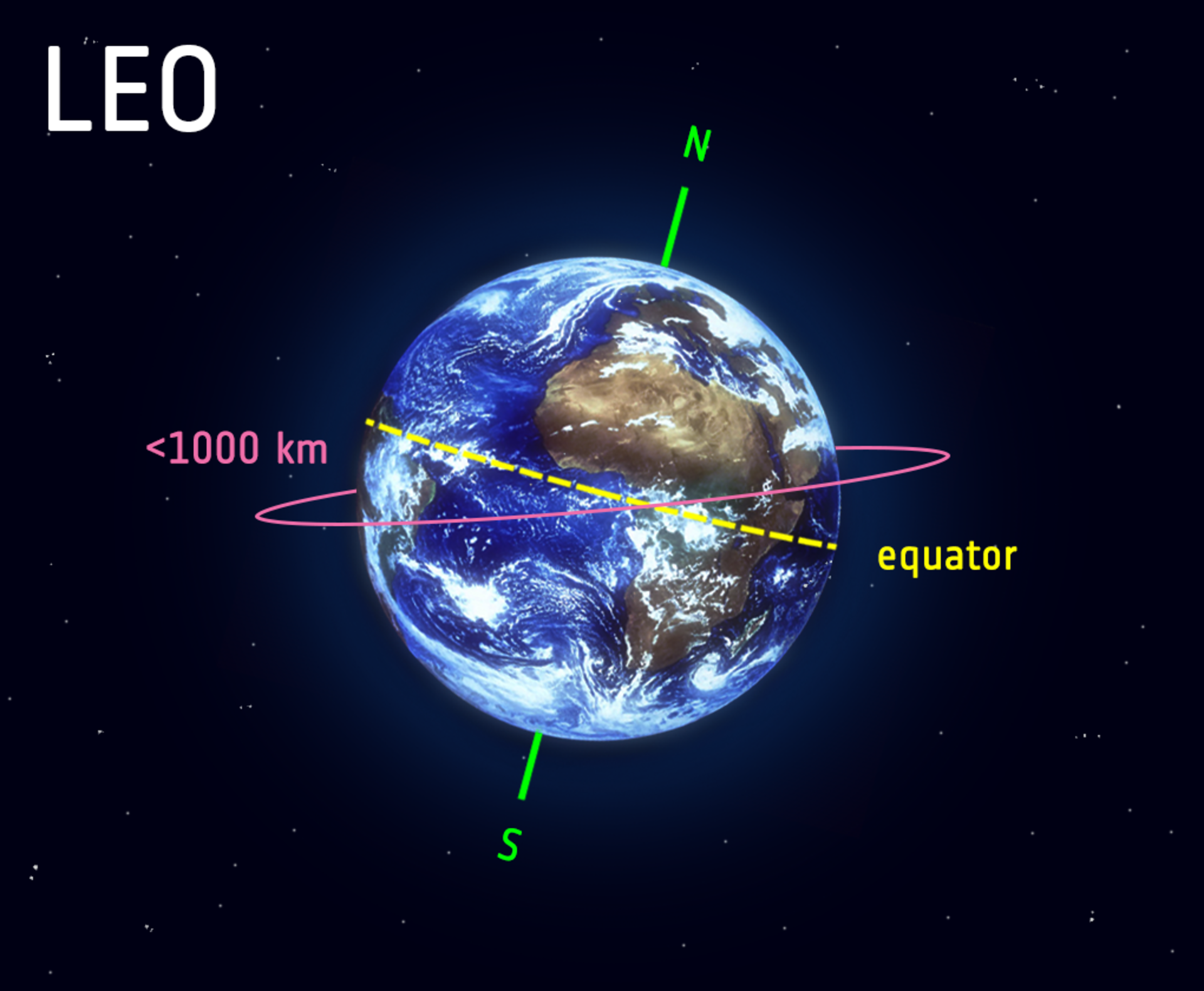
A low Earth orbit (LEO) is, as the name suggests, an orbit that is relatively close to Earth’s surface.
It is normally at an altitude of less than 1000 km but could be as low as 160 km above Earth – which is low compared to other orbits, but still very far above Earth’s surface.
By comparison, most commercial aeroplanes do not fly at altitudes much greater than approximately 14 km, so even the lowest LEO is more than ten times higher than that
Low Earth orbit
 
3.Significnce

Low Earth Orbit (LEO) is an orbit around Earth with an altitude of 2,000 kilometers (1,200 miles) or less. It is the most common type of orbit for artificial satellites, and it is used for a variety of purposes, including:

  • Earth observation: LEO satellites can provide high-resolution images of the Earth's surface, which can be used for a variety of purposes, such as monitoring environmental change, tracking weather patterns, and providing military intelligence.
  • Communication: LEO satellites can be used to relay communications signals between different parts of the Earth. This is especially useful in remote areas that are not served by terrestrial communications infrastructure.
  • Navigation: LEO satellites are used by the Global Positioning System (GPS) to provide accurate positioning information to users on the ground.
  • Scientific research: LEO satellites can be used to conduct a variety of scientific experiments, such as studying the Earth's atmosphere, the Sun, and the stars.
4. Advantages of Low earth Orbit (LEO)
LEO’s close proximity to Earth makes it useful for several reasons. It is the orbit most commonly used for satellite imaging, as being near the surface allows it to take images of higher resolution.
It is also the orbit used for the International Space Station (ISS), as it is easier for astronauts to travel to and from it at a shorter distance.
Satellites in this orbit travel at a speed of around 7.8 km per second; at this speed, a satellite takes approximately 90 minutes to circle Earth, meaning the ISS travels around Earth about 16 times a day
  • Shorter orbital periods: Satellites in LEO have shorter orbital periods than satellites in higher orbits. This means that they can transmit data to Earth more quickly.
  • Lower communication latency: The lower orbital period of LEO satellites also means that there is lower communication latency, which is the time it takes for a signal to travel from the satellite to Earth.
  • Closer to Earth: LEO satellites are closer to Earth than satellites in higher orbits. This means that they can be serviced more easily, and they are less likely to be affected by space debris.
5.What is ds-SAR?

DS-SAR stands for Dual-Speed Synthetic Aperture Radar. It is a Singaporean SAR Earth Observation satellite that was launched into orbit on July 30, 2023.

The satellite was developed and built by Israel Aerospace Industries (IAI) for the Defence Science and Technology Agency (DSTA) of Singapore.

DS-SAR is a dual-frequency SAR satellite, meaning that it can operate at two different radar frequencies: C-band and L-band.

This allows the satellite to produce images with different characteristics, depending on the frequency used. For example, C-band images are typically better at resolving fine details, while L-band images are better at penetrating clouds and other obscurants.

6.Polar Satellite Launch Vehicle (PSLV)

The Polar Satellite Launch Vehicle (PSLV) is an expendable launch vehicle developed and operated by the Indian Space Research Organisation (ISRO).

It is a three-stage, solid-and-liquid-fueled rocket that is capable of launching satellites into Low Earth Orbit (LEO), Sun-synchronous orbits, and Geosynchronous Transfer Orbit (GTO)

The PSLV has been used to launch a wide variety of satellites, including Earth observation satellites, communication satellites, and scientific satellites.

It has also been used to launch commercial satellites for customers around the world

7.Geosynchronous Satellite Launch Vehicle (GSLV)

The GSLV is an expendable launch vehicle developed and operated by the Indian Space Research Organisation (ISRO).

It is a three-stage, liquid-fueled rocket that is capable of launching satellites into geosynchronous transfer orbit (GTO)

The GSLV was first launched in 2001, and has since been used to launch a variety of satellites, including communication satellites, weather satellites, and scientific satellites


For Prelims: Low Earth Orbit (LEO), PSLV, GSLV
For Mains: 1.Discuss the significance of the Polar Satellite Launch Vehicle (PSLV) in India's space program. Highlight its features and capabilities that have made it a reliable and preferred launch vehicle for both domestic and international satellite missions
2.GSLV (Geosynchronous Satellite Launch Vehicle) is a crucial component of India's space endeavors. Elaborate on its design, stages, and payload capacity. Compare and contrast GSLV with PSLV in terms of their applications and advantages
 
 
Previous Year Questions
1.A low earth orbit satellite can provide large signal strength at an earth station because: (ESE Electronics 2011)
A. Path loss is low
B. These orbits are immune to noise
C. Large solar power can be generated at these orbits
D. Lower microwave frequencies in s-band can be used
 
Answer-A
 
Source: European Agency


DISTRICT DEVELOPMENT COUNCILS (DDC)

 
1. Context
 
The restructuring of Jammu and Kashmir’s political and administrative framework through the constitution of District Development Councils (DDCs) has remained the subject of legal and constitutional debate. Formed in 2021, the DDCs completed their five-year term on February 24, 2026
 
 
2. What do the 73rd and 74th Amendments provide for?
 
 
  • The 73rd and 74th Constitutional Amendment Acts, 1992 are regarded as landmark reforms in India's democratic framework because they provided constitutional status to local self-government institutions.
  • These amendments were enacted with the objective of decentralizing power, promoting grassroots democracy, and ensuring greater participation of people in governance.
  • While the 73rd Constitutional Amendment deals with rural local self-government through Panchayati Raj Institutions, the 74th Constitutional Amendment focuses on urban local self-government through Municipalities.
  • The 73rd Amendment came into effect on 24 April 1993, whereas the 74th Amendment became effective on 1 June 1993.
  • The 73rd Constitutional Amendment Act, 1992 inserted Part IX (Articles 243 to 243-O) into the Constitution and added the Eleventh Schedule, which contains 29 subjects that may be devolved to Panchayats.
  • The amendment established Panchayati Raj Institutions as the third tier of government in rural India and sought to strengthen democratic decentralization.
  • It envisages a three-tier Panchayati Raj system, consisting of the Gram Panchayat at the village level, the Panchayat Samiti at the intermediate or block level, and the Zila Parishad at the district level. However, states with a population of less than twenty lakh are not required to establish the intermediate tier.
  • An important feature of the 73rd Amendment is the recognition of the Gram Sabha as the foundation of village democracy.
  • The Gram Sabha comprises all registered voters in a village and serves as the primary forum through which people participate directly in local governance.
  • The amendment also mandates direct elections to all seats in Panchayats and provides for the reservation of seats for Scheduled Castes and Scheduled Tribes in proportion to their population.
  • Additionally, it reserves not less than one-third of the total seats and offices of Chairpersons for women, although several states have subsequently increased this reservation to fifty percent.
  • To ensure continuity and accountability, the amendment fixes the tenure of Panchayats at five years and requires fresh elections to be held within six months if a Panchayat is dissolved prematurely.
  • It also provides for the establishment of an independent State Election Commission to supervise, direct, and conduct elections to Panchayats.
  • Furthermore, every state is required to constitute a State Finance Commission every five years to recommend the distribution of financial resources between the State Government and local bodies, thereby strengthening their financial autonomy.
  • The 74th Constitutional Amendment Act, 1992 extended similar constitutional recognition to Urban Local Bodies by inserting Part IXA (Articles 243P to 243ZG) into the Constitution and adding the Twelfth Schedule, which lists 18 subjects related to urban governance.
  • The amendment aims to make urban local institutions more democratic, representative, and accountable while enabling them to manage the increasing challenges of urbanization effectively.
  • The amendment provides for three categories of urban local bodies depending on the size and nature of the urban area.
  • A Nagar Panchayat is established for transitional areas moving from rural to urban status, a Municipal Council is constituted for smaller urban areas, and a Municipal Corporation is created for larger urban areas.
  • Members of these bodies are elected directly by the people. Similar to the provisions under the 73rd Amendment, seats are reserved for Scheduled Castes, Scheduled Tribes, and not less than one-third of the seats for women, ensuring inclusive participation in urban governance.
  • The 74th Amendment also prescribes a five-year tenure for Municipalities and requires elections to be conducted within six months if a municipality is dissolved before completing its term.
  • It entrusts the State Election Commission with the responsibility of conducting municipal elections and requires the State Finance Commission to recommend measures for improving the financial position of urban local bodies.
  • Recognizing the need for coordinated planning, the amendment provides for the constitution of District Planning Committees (DPCs) to integrate rural and urban development plans at the district level.
  • It also mandates the establishment of Metropolitan Planning Committees (MPCs) in metropolitan areas to prepare comprehensive development plans by integrating the plans prepared by various municipalities and Panchayats within the metropolitan region.


3. Structure of Local Governance in India


  • India's constitutional framework establishes a well-defined multi-level system of local governance in which citizens elect their representatives directly at different tiers. This arrangement is intended to deepen democratic participation by bringing decision-making closer to the people.
  • In urban areas, local administration is carried out through Municipal Corporations, Municipal Councils, and Nagar Panchayats, each catering to different categories of urban settlements based on their size and stage of development.
  • In rural areas, governance is organised through a three-tier Panchayati Raj system consisting of the Gram Panchayat at the village level, the Block Development Council (or Panchayat Samiti) at the intermediate level, and the Zila Parishad at the district level. Together, these institutions are responsible for addressing local developmental needs and promoting participatory governance.
  • To ensure integrated planning at the district level, Article 243ZD of the Constitution provides for the establishment of a District Planning Committee (DPC). The DPC is entrusted with the responsibility of consolidating development plans prepared by both Panchayats and Municipalities and formulating a coordinated development strategy for the entire district.
  • Rather than functioning as an independent executive body, the District Planning Committee serves as a coordinating institution that harmonises the priorities and proposals emerging from elected rural and urban local bodies.
  • Its primary purpose is to encourage decentralised planning by incorporating local aspirations into district-wide development plans, thereby reinforcing the principles of democratic decentralisation.
  • Despite the constitutional importance accorded to District Planning Committees, their performance has varied considerably across states. In many parts of the country, DPCs have remained weak or inactive, limiting their effectiveness in district planning.
  • However, some states, particularly Kerala, have demonstrated more effective utilisation of these committees by integrating local planning with broader developmental objectives.


4. How are District Development Councils (DDCs) different from District Planning Committees (DPCs)?
 
 
  • The District Development Councils (DDCs) in Jammu and Kashmir were created through an executive order rather than by a legislative enactment.
  • Although the government describes DDCs as directly elected institutions intended to deepen democratic participation at the grassroots, their structure has generated considerable debate regarding their compatibility with the existing system of local governance.
  • One of the principal criticisms is that the DDC framework operates alongside, rather than through, constitutionally recognised local institutions such as Zila Parishads and Urban Local Bodies.
  • In contrast, the District Planning Committee (DPC), envisaged under Article 243ZD of the Constitution, is designed to consolidate development plans prepared by Panchayats and Municipalities into a unified district development strategy.
  • The DPC functions primarily as a coordinating body and does not exercise independent executive authority.
  • By comparison, DDCs have been vested with administrative and developmental responsibilities, creating a parallel layer of governance that alters the conventional relationship between elected local institutions and decision-making powers.
  • Another significant distinction lies in their approach to decentralisation. The DPC represents a bottom-up planning mechanism, where district-level priorities emerge from plans prepared by local elected bodies.
  • DDCs, on the other hand, are often viewed as following a top-down model, with authority flowing from higher levels of administration.
  • Critics contend that this arrangement places DDCs in competition with existing local institutions and reinforces bureaucratic oversight instead of promoting genuine democratic decentralisation.
  • Questions have also been raised regarding the principle of equal representation within the DDC system. Each district is allotted the same number of DDC constituencies irrespective of population size, resulting in disparities in the value of individual votes across districts.
  • For example, Srinagar, with a population of approximately 12 lakh, and Kishtwar, with nearly 2.5 lakh residents, are represented by an identical number of DDC members.
  • As a result, citizens in smaller districts enjoy relatively greater representation than those living in more populous districts, leading to concerns about unequal political representation.
  • Some analysts have likened DDCs to the Special Purpose Vehicles (SPVs) established under the Smart Cities Mission.
  • According to this view, while both structures appear to promote decentralised governance, they are largely administered through bureaucratic mechanisms and may override or sideline initiatives approved by elected local bodies. Consequently, DDCs are perceived by some as replacing, rather than complementing, constitutionally recognised local institutions.
  • The establishment of 280 elected DDC members across Jammu and Kashmir has also been interpreted by some observers as creating a parallel representative structure at the district level.
  • Historically, in regions experiencing political instability, higher levels of government have sometimes relied on district-based institutions to reduce the influence of state-level representative bodies.
  • In the context of Jammu and Kashmir, where the Legislative Assembly remained absent or functionally weakened for an extended period, critics argue that the DDC framework enabled several planning, developmental, and financial functions that would ordinarily be exercised by elected state representatives and local self-government institutions to remain under the influence of the Union administration.
 
 
5. Way Forward
 
Effective local self-governance extends beyond merely establishing administrative institutions or creating legal frameworks; it is essentially rooted in democratic political empowerment. Meaningful decentralisation can be achieved only by revitalising the District Planning Committee (DPC) framework envisioned under the 73rd and 74th Constitutional Amendments. This requires strengthening local governments with adequate financial resources, institutional autonomy, and accountability to the electorate of the State. Such an approach promotes governance that is responsive to local aspirations, rather than a centrally directed administrative system in which decision-making remains concentrated under the control of the Union government


For Prelims: Panchayat Raj institutions, Local Governance
 
For Mains: GS II - Indian Polity & Governance


Previous year Question

 
1. Consider the following statements: (UPSC 2016)
1. The minimum age prescribed for any person to be a member of Panchayat is 25 years.
2. A Panchayat reconstituted after premature dissolution continues only for the remainder period.
Which of the statements given above is/are correct? 
A. 1 only
B. 2 only
C. Both 1 and 2
D. Neither 1 nor 2
Answer: B
 
2. In areas covered under the Panchayat (Extension to the Scheduled Areas) Act, 1996, what is the role/power of Gram Sabha? (UPSC 2012)
1. Gram Sabha has the power to prevent the alienation of land in the Scheduled Areas.
2. Gram Sabha has the ownership of minor forest produce.
3. Recommendation of Gram Sabha is required for granting a prospecting license or mining lease, for any minerals in the Scheduled Areas.
Which of the statements given above is/are correct?
A. 1 only
B. 1 and 2 only
C. 2 and 3 only
D. 1, 2 and 3
Answer: B
 
3.The Government enacted the Panchayat Extension to Scheduled Areas (PESA) Act in 1996. Which one of the following is not identified as its objective? (UPSC 2013)
A. To provide self-governance
B. To recognize traditional rights
C. To create autonomous regions in tribal areas
D. To free tribal people from exploitation
Answer: C
 
 
Source: The Hindu


Share to Social